Logo Title
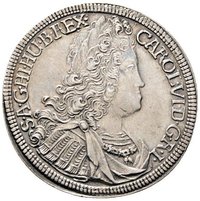
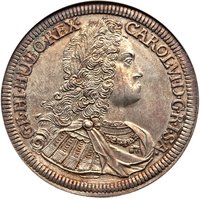
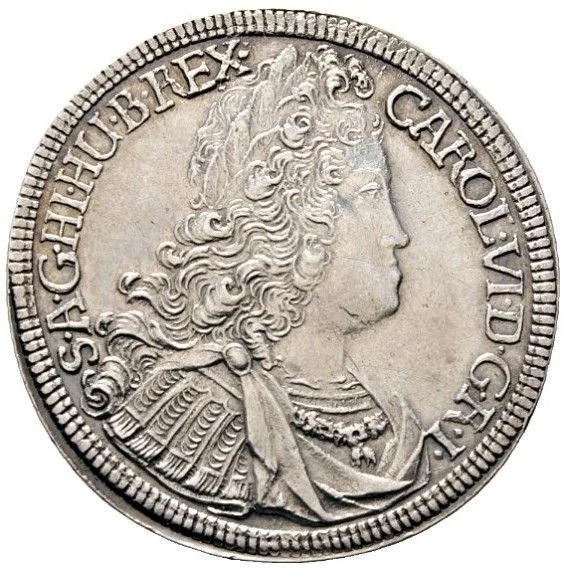
obverse
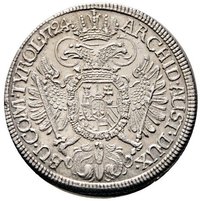
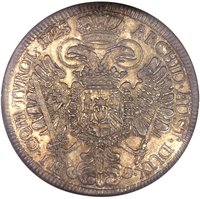
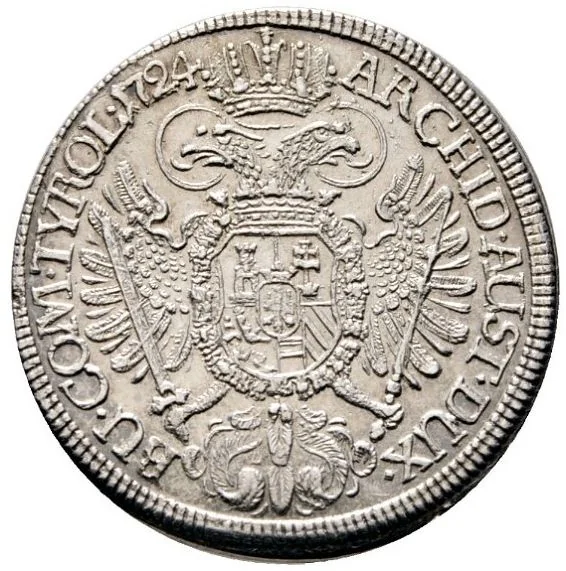
reverse
H. D. Rauch
Context
Year: 1724
Country: Austria Country flag
Currency:
Demonetized: Yes
Material
Shape: Round
Composition: 87.5% Silver
Magnetic: No
References
KM: #Click to copy to clipboard1616.1
Numista: #166496

Obverse

Description:
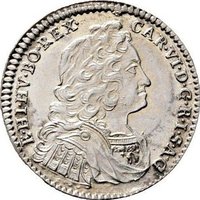
Bust ends at rim.
Inscription:
CAROL VI D G R I S A G HI HU B REX
Script: Latin

Reverse

Description:
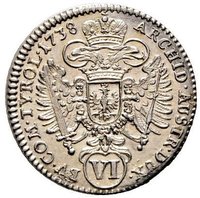
Imperial eagle with composite arms, small Tyrol shield at center. Legend around starts 1h, divided below.
Inscription:
ARCHID AUST DUX BU COM TYROL 1724
Script: Latin

Edge

Plain

Mints

NameMark
Hall

Mintings

YearMint MarkMintageQualityCollection
1724

Historical background

In 1724, the County of Tyrol, a strategic Alpine territory within the Habsburg Empire, grappled with a complex and fragmented currency system. The official currency was the Tyrolean Kreuzer, tied to the South German Gulden (florin), which was divided into 60 Kreuzer. However, the region's economic life was complicated by the widespread circulation of multiple foreign coins, particularly Venetian ducats and various German state thalers, due to Tyrol's position on major trade routes between Italy and the German lands. This created a constant challenge of exchange rates and valuation, often leading to confusion and facilitating debasement.

The underlying tension stemmed from the Habsburg state's chronic financial needs, especially to pay for the recent wars against the Ottoman Empire and ongoing military preparedness. The imperial government in Vienna frequently resorted to manipulating coinage to raise revenue, a practice known as Kipper- und Wipperzeit, which had caused severe inflation earlier in the century. While the worst excesses had subsided by 1724, the memory of devaluation lingered, and the authorities still faced pressure to ensure that the silver content of Tyrolean coins matched their face value to maintain public trust and stable commerce.

Furthermore, the local Tyrolean estates (Landschaft) held significant historic privileges, including oversight of mining at the vital silver mines of Schwaz, which provided the bullion for coinage. This created a delicate power dynamic with the central Habsburg financial authorities. In 1724, the system was in a precarious but functional equilibrium, with the Tiroler Kreuzer serving as the unit of account for daily transactions and taxes, but the stability was perpetually threatened by imperial fiscal policy and the influx of foreign specie, requiring constant negotiation between Innsbruck and Vienna.

Series: 1724 County of Tyrol circulation coins

6 Kreuzers obverse
6 Kreuzers reverse
6 Kreuzers
1724-1740
½ Thaler obverse
½ Thaler reverse
½ Thaler
1724
1 Thaler obverse
1 Thaler reverse
1 Thaler
1724-1734
Legendary