

Obverse
Description:
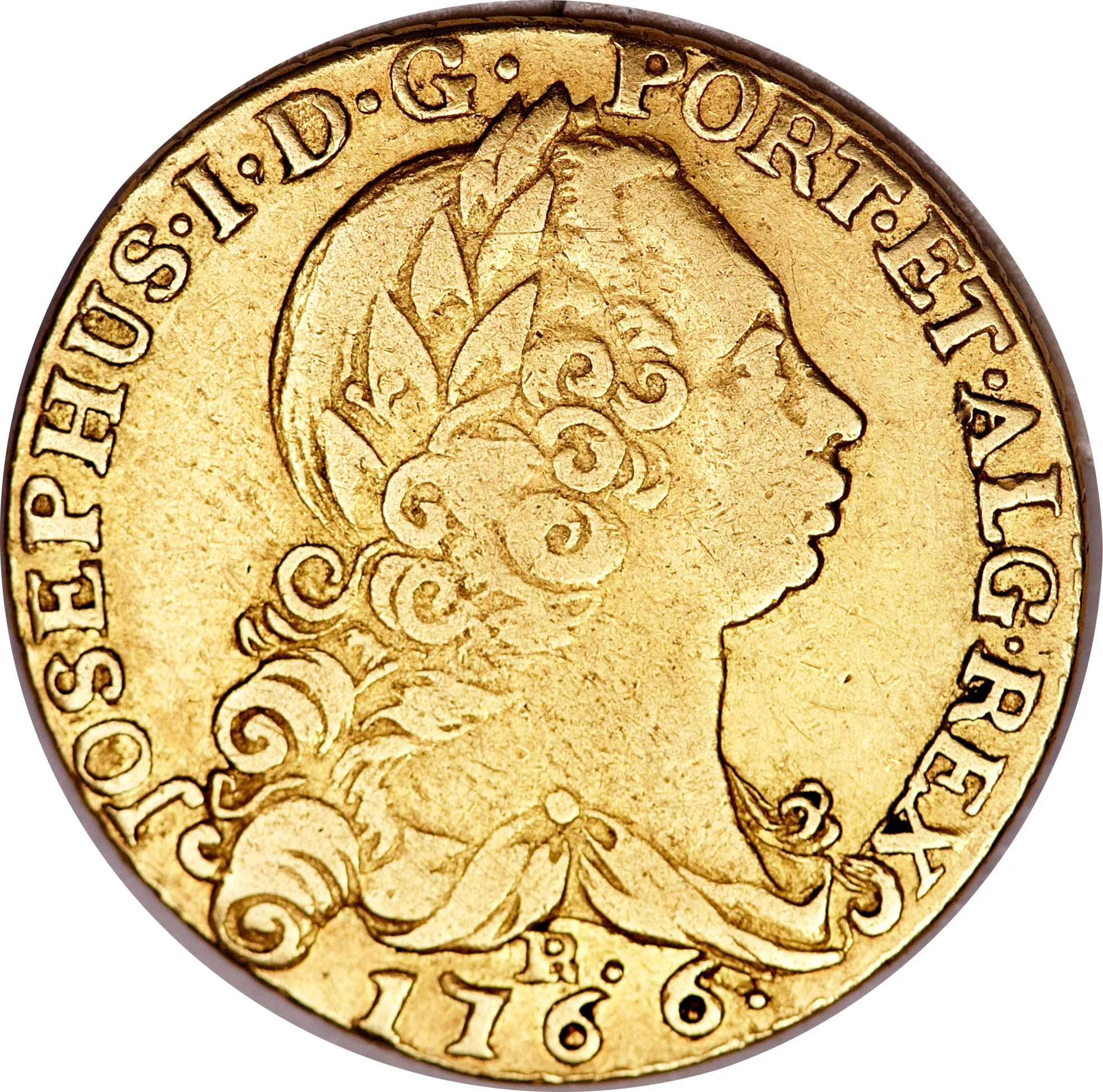
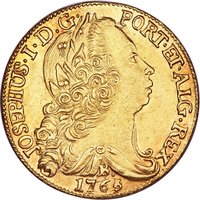
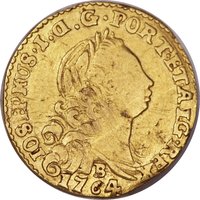
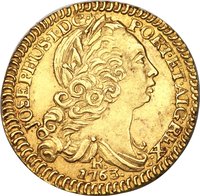
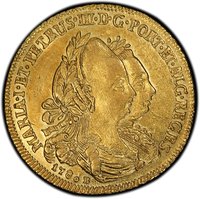
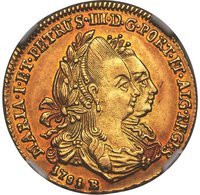
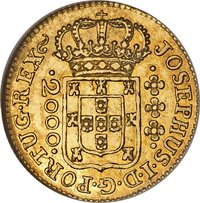
José I bust right, date, and mintmark B or R.
Inscription:
JOSEPHUS·I·D·G· PORT·ET·ALG·REX
R.
1766·
R.
1766·
Script: Latin
Reverse
Description:
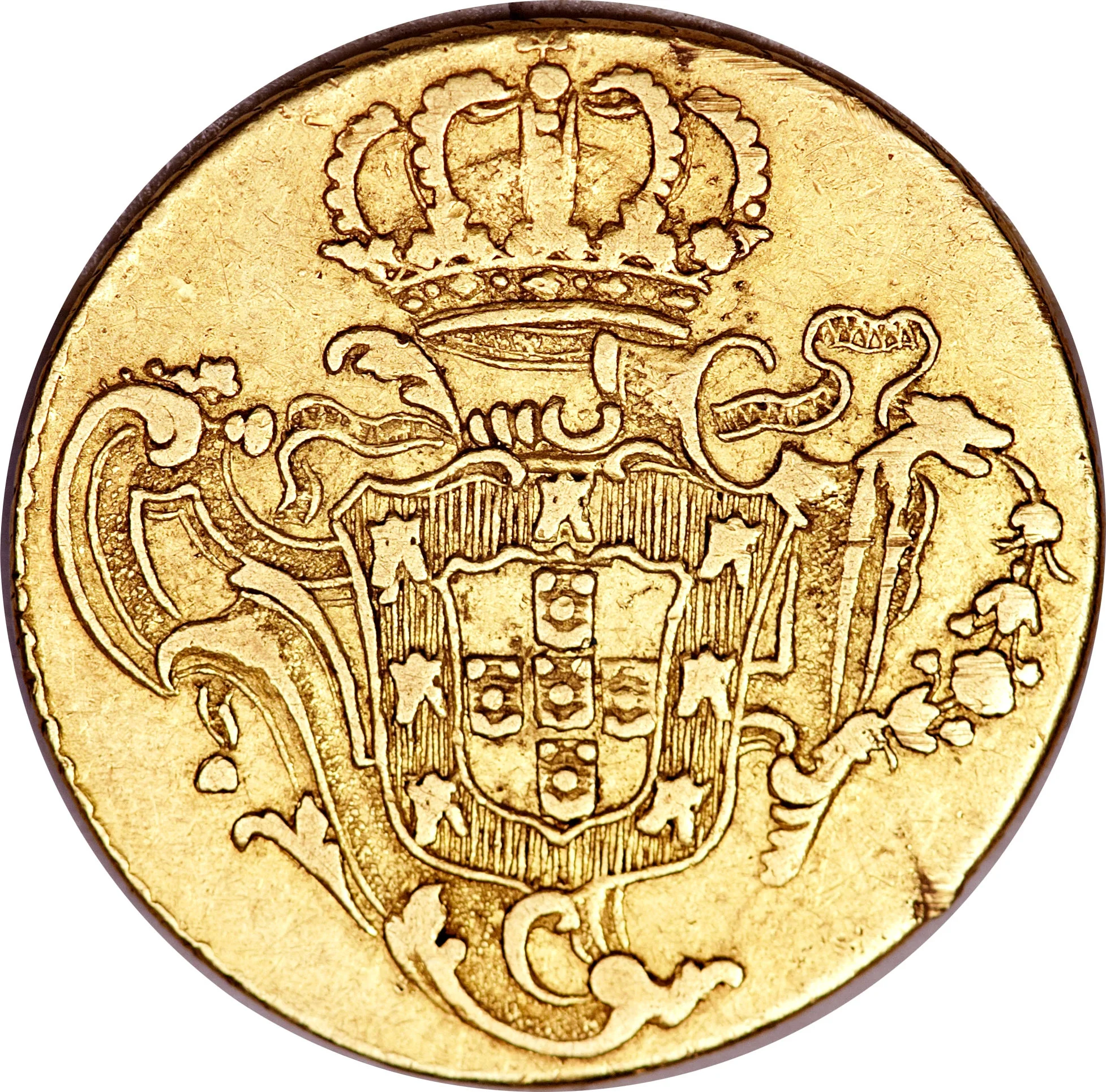
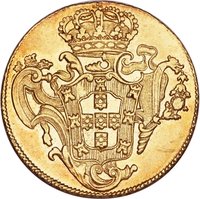
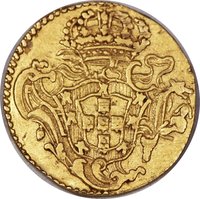
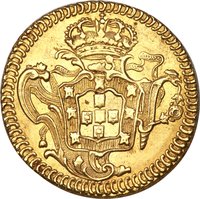
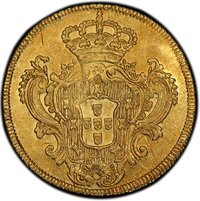
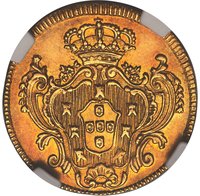
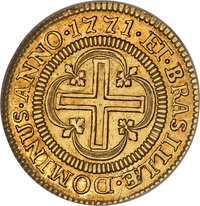
José I's baroque coat of arms: an italic shield with asymmetrical baroque ornaments.
Edge
Reeded.
Mints
| Name | Mark |
|---|---|
| Bahia | B |
| Casa da Moeda do Brasil | R |
Mintings
Historical background
In 1752, Brazil's currency situation was a complex and challenging reflection of its colonial economy under Portuguese rule. The primary circulating medium was the réis (plural: réis), a Portuguese unit of account, but the physical money in circulation was a chaotic mix. This included worn and clipped Portuguese coins, a variety of foreign coins (particularly Spanish pieces of eight from neighboring colonies), and a severe shortage of small-denomination currency for daily transactions. This scarcity was exacerbated by Portugal's mercantilist policies, which drained gold and silver from Brazil to the metropolis, leaving the colony perpetually starved of official specie.
The most significant monetary development of the era was the production of gold coins at the Casa da Moeda (Mint) in Rio de Janeiro, which had been relocated from Bahia in 1702 due to the mining boom. By 1752, the mint was actively striking moedas (gold coins) from the immense wealth of the Minas Gerais region. However, these high-value coins were ill-suited for everyday commerce. To address the chronic lack of small change, local authorities and even merchants often resorted to creating makeshift solutions, such as issuing crude moedas de necessidade (emergency tokens) or allowing the circulation of commodity money like sugar or tobacco in certain contexts, leading to a fragmented and unreliable monetary system.
This unstable environment occurred under the governance of the Marquis of Pombal, who was consolidating power in Lisbon. His administration sought greater control over Brazil's wealth, and the currency chaos was seen as an impediment to efficient tax collection and economic exploitation. The year 1752 falls within a period just prior to more concerted, though still only partially successful, efforts by the Portuguese Crown to reform and standardize the colonial currency, aiming to replace irregular coins and assert royal authority over the monetary system, which was fundamental to funding the empire's ambitions.
The most significant monetary development of the era was the production of gold coins at the Casa da Moeda (Mint) in Rio de Janeiro, which had been relocated from Bahia in 1702 due to the mining boom. By 1752, the mint was actively striking moedas (gold coins) from the immense wealth of the Minas Gerais region. However, these high-value coins were ill-suited for everyday commerce. To address the chronic lack of small change, local authorities and even merchants often resorted to creating makeshift solutions, such as issuing crude moedas de necessidade (emergency tokens) or allowing the circulation of commodity money like sugar or tobacco in certain contexts, leading to a fragmented and unreliable monetary system.
This unstable environment occurred under the governance of the Marquis of Pombal, who was consolidating power in Lisbon. His administration sought greater control over Brazil's wealth, and the currency chaos was seen as an impediment to efficient tax collection and economic exploitation. The year 1752 falls within a period just prior to more concerted, though still only partially successful, efforts by the Portuguese Crown to reform and standardize the colonial currency, aiming to replace irregular coins and assert royal authority over the monetary system, which was fundamental to funding the empire's ambitions.
Series: Serie of Shields
✨ Legendary