

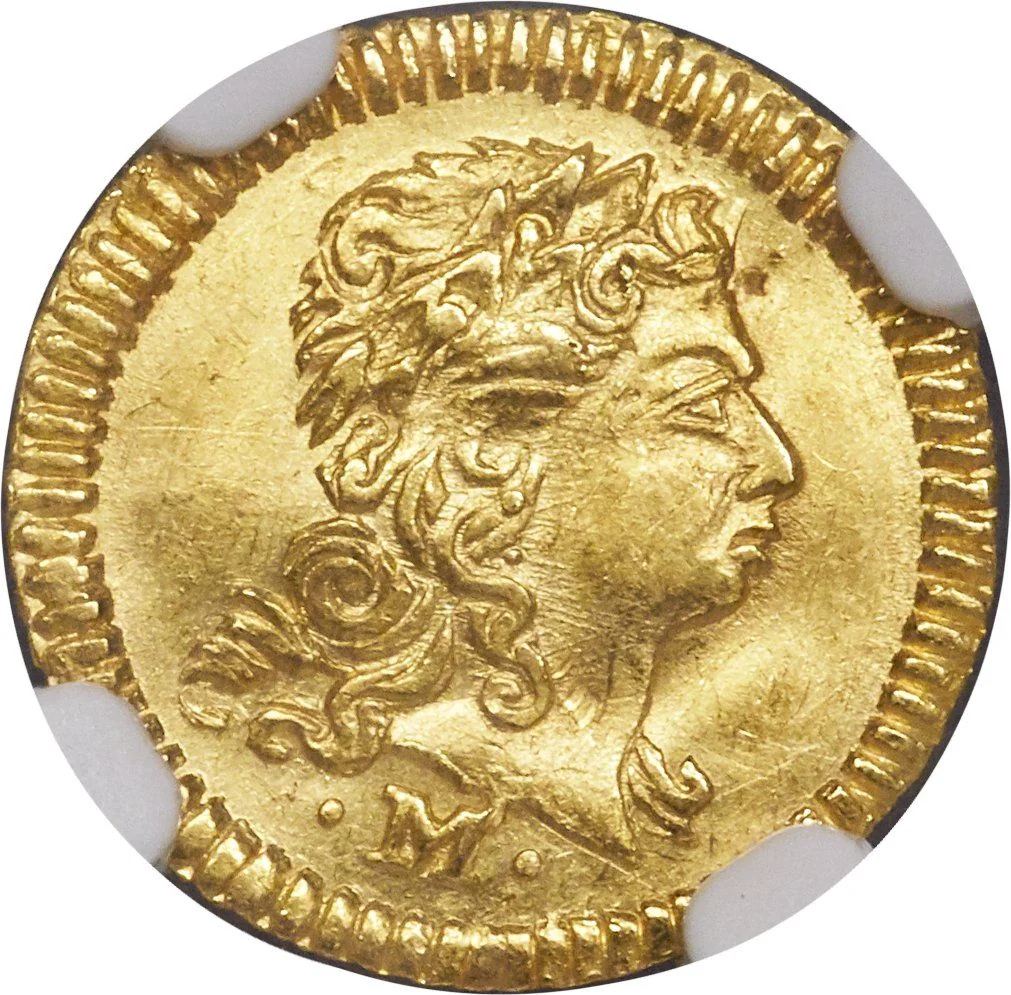
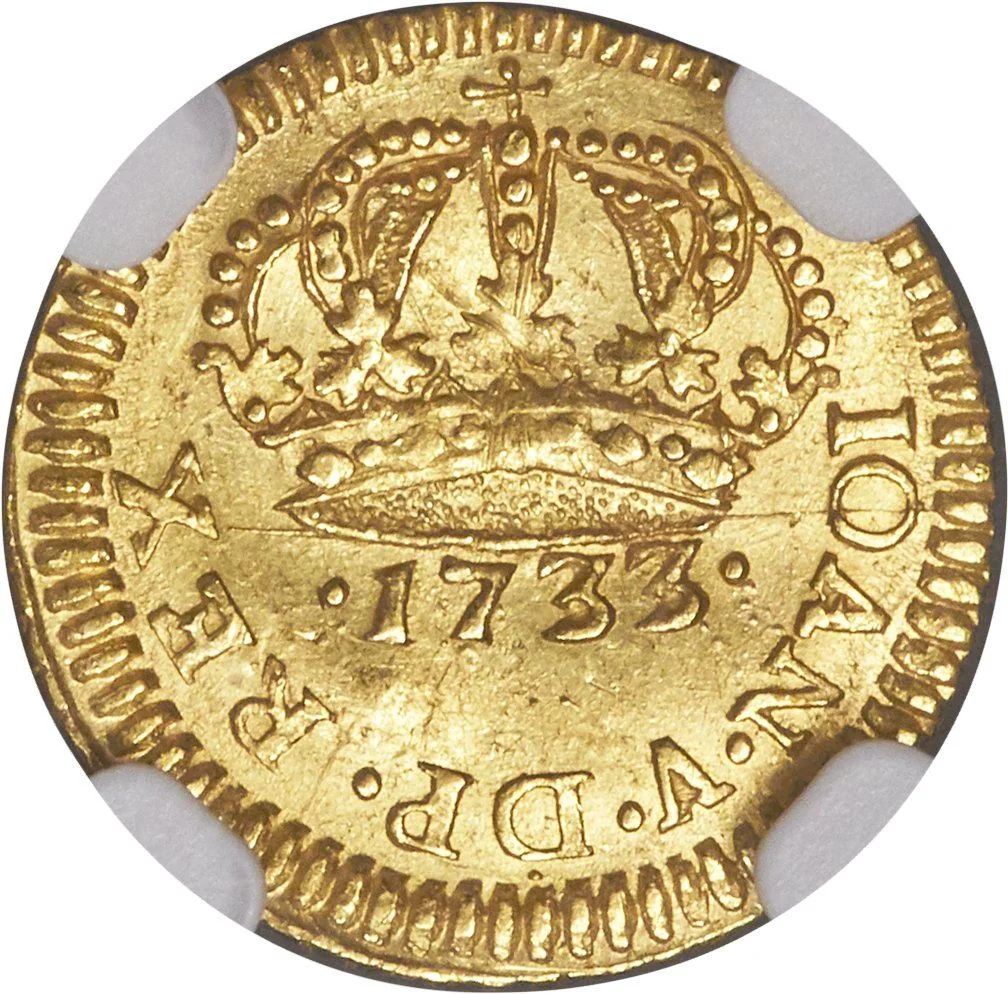
Obverse
Description:
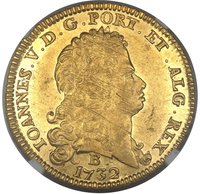
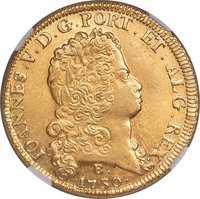
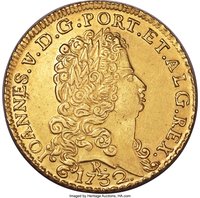
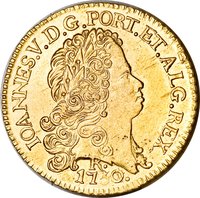
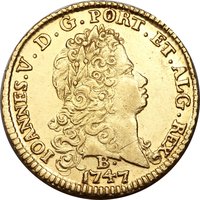
João V bust right, mintmark M between dots.
Inscription:
.M.
Script: Latin
Engraver: Antônio Mengin
Designer: Vieira Lusitano
Reverse
Edge
Reeded.
Mints
| Name | Mark |
|---|---|
| Vila Rica | M |
Historical background
In 1730, Brazil's currency situation was characterized by scarcity, inconsistency, and the logistical challenges of a vast colonial territory. The official currency was the Portuguese real (plural: réis), but the economy suffered from a chronic shortage of minted coinage. This was due to Portugal's mercantilist policies, which drained gold and silver from the colony to the metropolis. While significant gold discoveries in Minas Gerais in the late 17th century were flooding Portugal with wealth, little of it was minted into coins for local use in Brazil itself, creating a paradoxical scarcity amidst plenty.
To facilitate daily transactions, a wide variety of substitute currencies circulated alongside any official coins. These included irregularly cut and weighed gold flakes (ouro em pó), commodity money like sugar, tobacco, and cacao, and even makeshift lead or copper tokens issued by local merchants and municipal councils. Most significantly, due to a shortage of small change, the Spanish American silver real, known as the pataca, served as the dominant circulating coin for everyday trade. This created a complex and unstable monetary environment where values constantly fluctuated based on the metal content and trust in the issuer.
The Portuguese crown attempted to impose order. In 1694, it established the first mint in Brazil in Salvador, later moving it to Rio de Janeiro in 1698 to be closer to the gold mines. These mints primarily produced gold coins, such as the 6,400 réis piece, but output was insufficient for the growing economy. The monetary chaos hindered tax collection and commercial efficiency, leading to ongoing contraband and fraud. Thus, in 1730, Brazil's currency system remained a fragmented and inefficient patchwork, a direct reflection of its colonial status where local economic needs were subordinated to the extraction of wealth for the Portuguese empire.
To facilitate daily transactions, a wide variety of substitute currencies circulated alongside any official coins. These included irregularly cut and weighed gold flakes (ouro em pó), commodity money like sugar, tobacco, and cacao, and even makeshift lead or copper tokens issued by local merchants and municipal councils. Most significantly, due to a shortage of small change, the Spanish American silver real, known as the pataca, served as the dominant circulating coin for everyday trade. This created a complex and unstable monetary environment where values constantly fluctuated based on the metal content and trust in the issuer.
The Portuguese crown attempted to impose order. In 1694, it established the first mint in Brazil in Salvador, later moving it to Rio de Janeiro in 1698 to be closer to the gold mines. These mints primarily produced gold coins, such as the 6,400 réis piece, but output was insufficient for the growing economy. The monetary chaos hindered tax collection and commercial efficiency, leading to ongoing contraband and fraud. Thus, in 1730, Brazil's currency system remained a fragmented and inefficient patchwork, a direct reflection of its colonial status where local economic needs were subordinated to the extraction of wealth for the Portuguese empire.
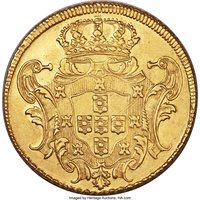
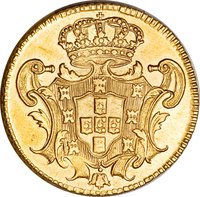
Series: Serie of Shields

💎 Extremely Rare