

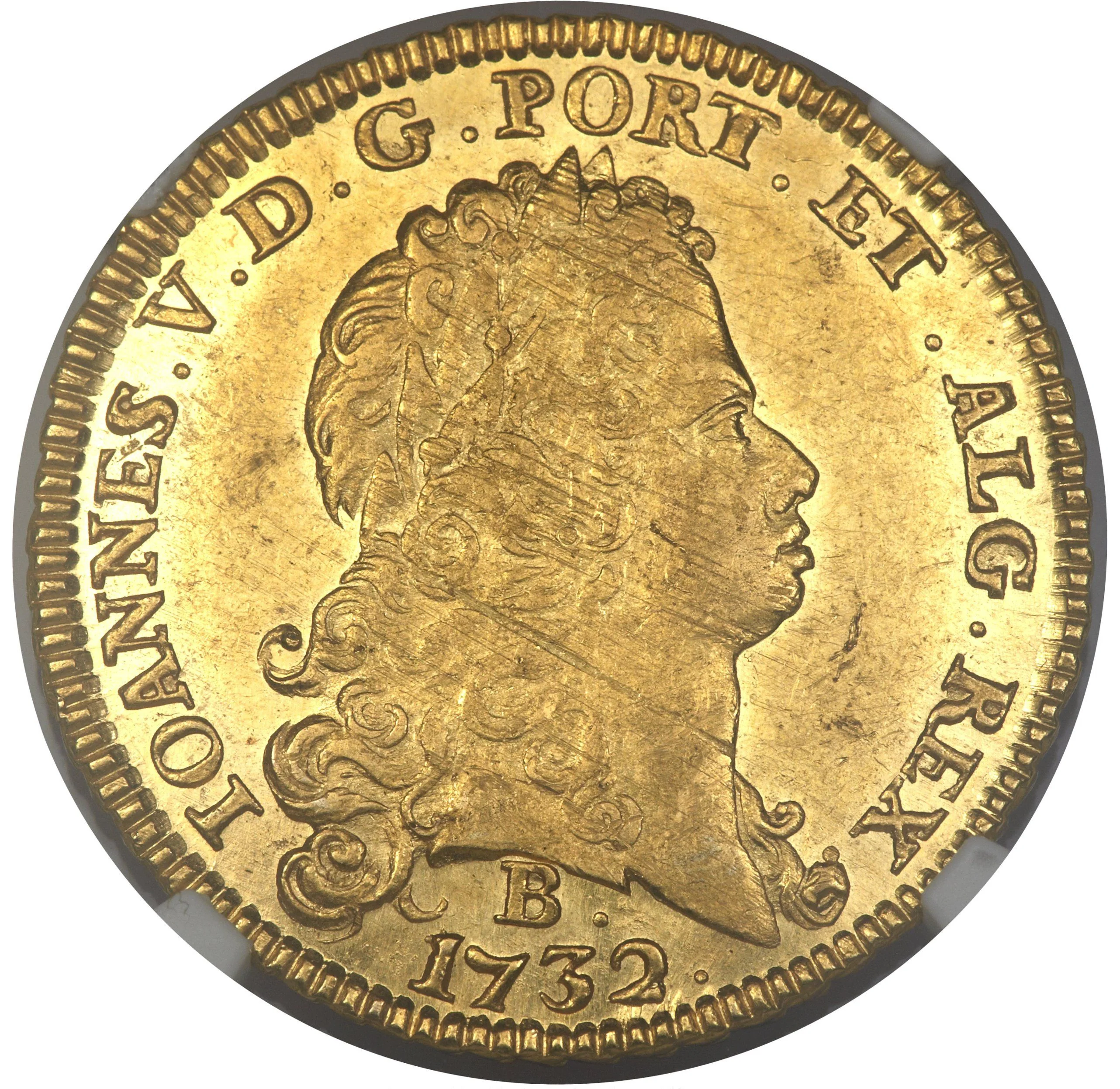
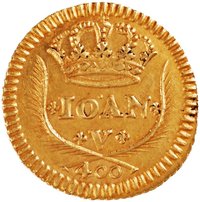
Obverse
Description:
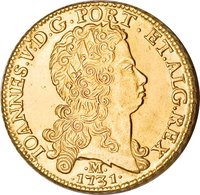
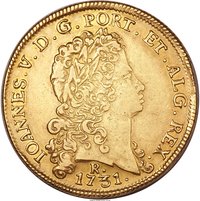
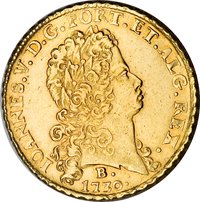
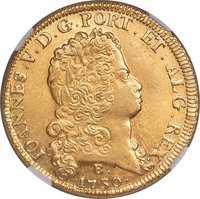
João V bust right, date, and mintmark B.
Inscription:
IOANNES. V. D. G. PORT. ET. ALG. REX.
B
1732
B
1732
Script: Latin
Engraver: Antônio Mengin
Designer: Vieira Lusitano
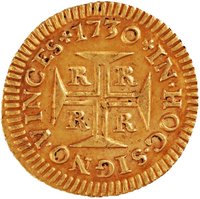
Reverse
Description:
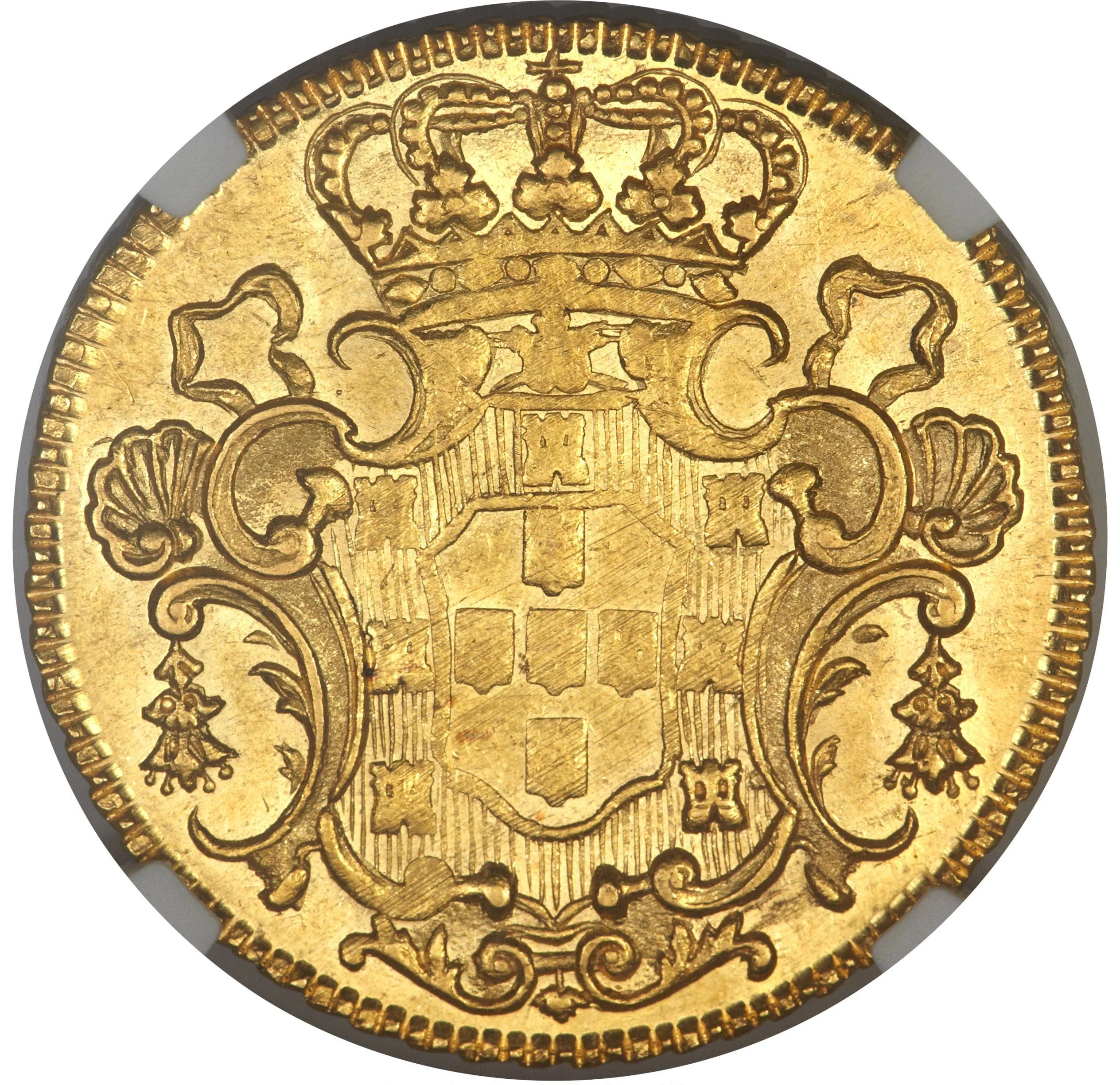
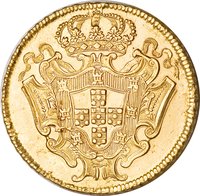
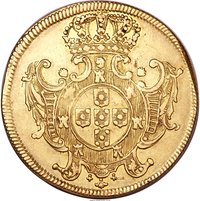
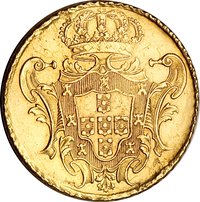
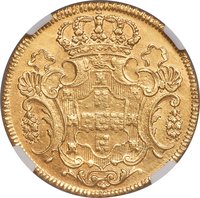
João V's crowned coat of arms.
Edge
Reeded.
Mints
| Name | Mark |
|---|---|
| Bahia | B |
Historical background
In 1729, Brazil's currency situation was defined by scarcity, inconsistency, and the overwhelming dominance of gold dust as the primary medium of exchange in the mining regions. The colony lacked a formal, unified mint; the first official Brazilian mint, the Casa da Moeda da Bahia, had been established in 1694 but was primarily focused on striking silver coins from Peruvian bullion and had been closed in 1699. Consequently, the economy relied heavily on a chaotic mix of foreign coins—primarily Spanish silver reales (pieces of eight) and Portuguese coins from the metropolis—alongside crude gold óculos (ingots) and even commodity money like sugar and tobacco in some areas.
The recent discovery of immense gold deposits in Minas Gerais had fundamentally altered the colonial economy, flooding Portugal with wealth but creating acute monetary problems within Brazil itself. In the mining districts, gold dust itself became the de facto currency, measured by weight in oitavas and dobrões. This system was fraught with fraud, as dust was easily adulterated with other metals, and weighing was imprecise. The Portuguese Crown, eager to control and tax this wealth, had implemented the Casas de Fundição (Smelting Houses) starting in 1725, where all mined gold was required to be cast into standardized bars, stamped with the royal seal, and taxed one-fifth (o quinto). However, this system was widely resisted by miners and far from universally enforced.
This monetary instability severely hampered commerce and governance. The lack of sufficient small-denomination coinage crippled everyday transactions, while the Crown's focus on extracting raw bullion for export to Lisbon starved the local economy of a reliable circulating medium. The situation would create intense pressure for reform, leading King João V to finally authorize the establishment of mints in the heart of the mining region. Indeed, 1729 was the pivotal year just before this change, as plans were finalized for the opening of the Casas da Moeda in Vila Rica and Rio de Janeiro in 1730, which would begin striking the first official gold coins (moedas de ouro) on Brazilian soil, aiming to bring order to the chaotic currency system.
The recent discovery of immense gold deposits in Minas Gerais had fundamentally altered the colonial economy, flooding Portugal with wealth but creating acute monetary problems within Brazil itself. In the mining districts, gold dust itself became the de facto currency, measured by weight in oitavas and dobrões. This system was fraught with fraud, as dust was easily adulterated with other metals, and weighing was imprecise. The Portuguese Crown, eager to control and tax this wealth, had implemented the Casas de Fundição (Smelting Houses) starting in 1725, where all mined gold was required to be cast into standardized bars, stamped with the royal seal, and taxed one-fifth (o quinto). However, this system was widely resisted by miners and far from universally enforced.
This monetary instability severely hampered commerce and governance. The lack of sufficient small-denomination coinage crippled everyday transactions, while the Crown's focus on extracting raw bullion for export to Lisbon starved the local economy of a reliable circulating medium. The situation would create intense pressure for reform, leading King João V to finally authorize the establishment of mints in the heart of the mining region. Indeed, 1729 was the pivotal year just before this change, as plans were finalized for the opening of the Casas da Moeda in Vila Rica and Rio de Janeiro in 1730, which would begin striking the first official gold coins (moedas de ouro) on Brazilian soil, aiming to bring order to the chaotic currency system.
Series: Serie of Shields

✨ Legendary