

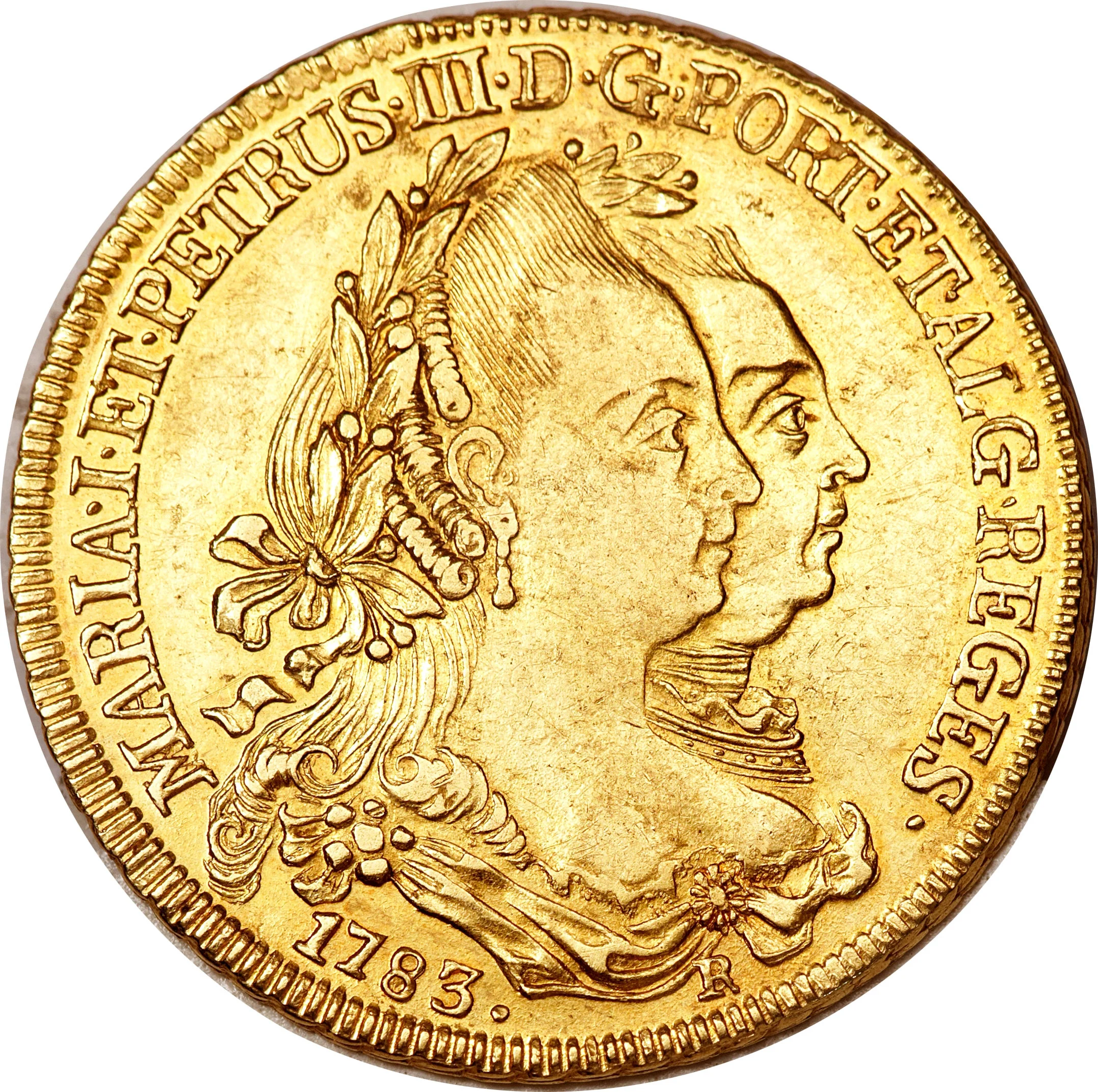

Obverse
Description:
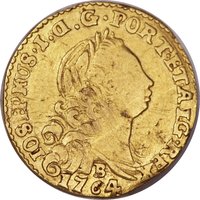
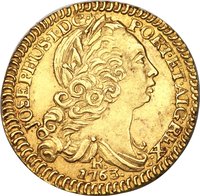
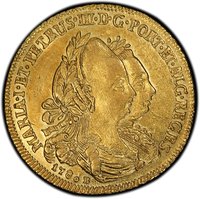
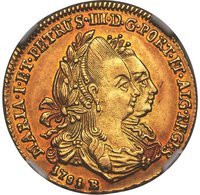
Conjoined busts of Maria I and Peter III facing right, with date and mintmark below.
Inscription:
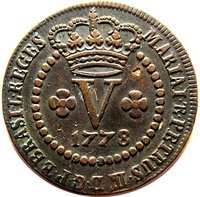
MARIA.I.ET.PETRUS.III.D.G.PORT.ET.ALG.REGES
1783_R
1783_R
Script: Latin
Engraver: José Gaspard
Reverse
Edge
Reeded.
Categories
| Person> Monarch |
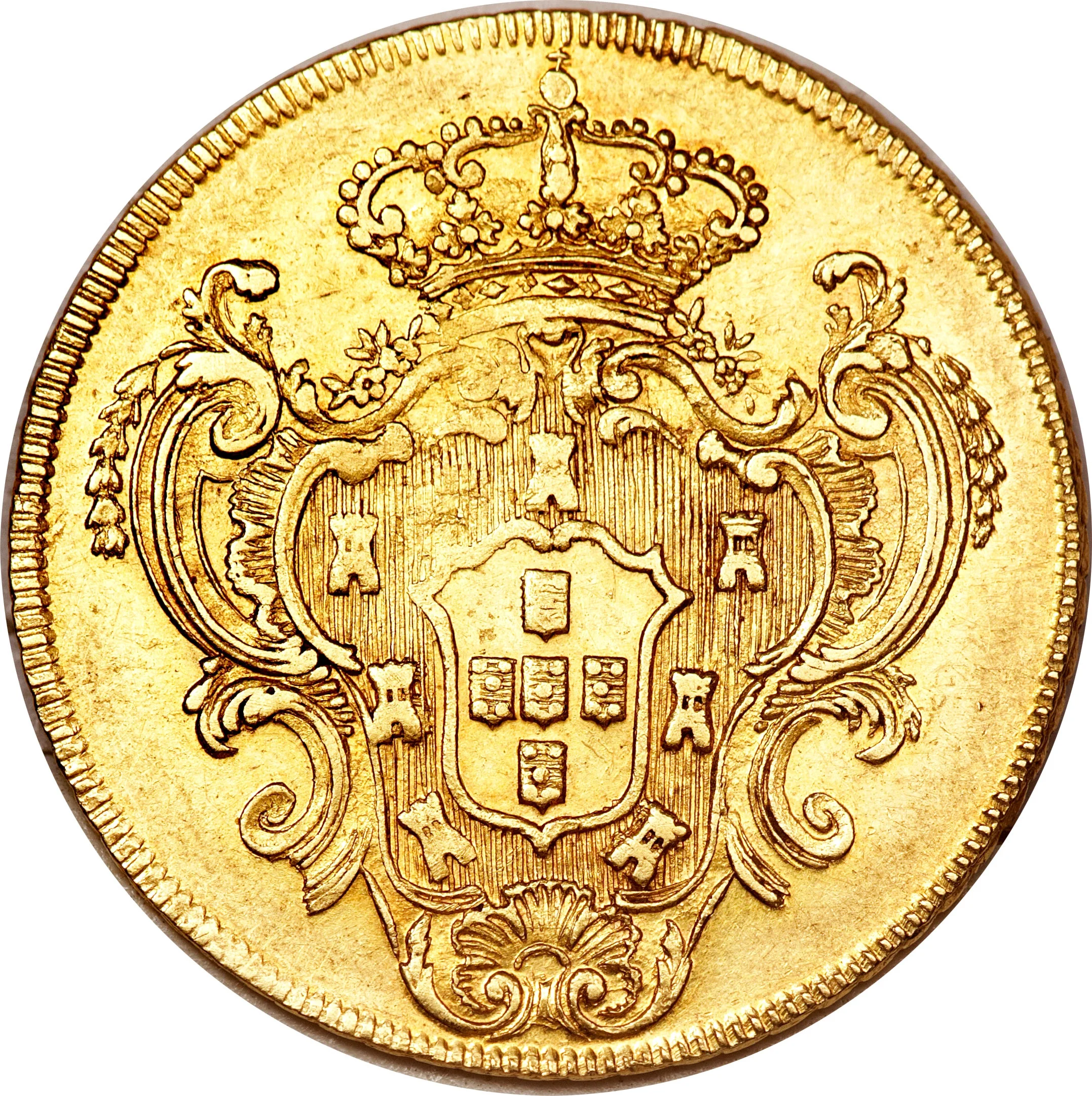
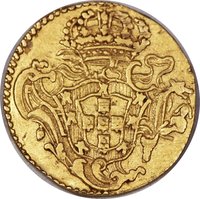
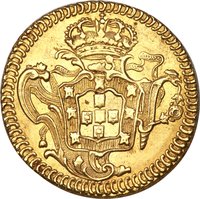
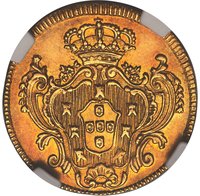
| Symbols> Coat of Arms |
Mints
| Name | Mark |
|---|---|
| Bahia | B |
| Casa da Moeda do Brasil | R |
Mintings
Historical background
In 1777, Brazil's currency situation was a complex and strained system, reflecting its colonial status under the Portuguese Crown. The primary circulating medium was a confusing mix of Portuguese coins, including réis (the base unit), alongside older Spanish-American pesos (often called "patacas") and even crude locally minted copper coins known as "macucos." The scarcity of official, high-value coinage from the Lisbon mint was a chronic problem, severely hampering larger commercial transactions and the colony's economic development. This scarcity forced reliance on less reliable currencies and complicated trade both internally and with the mother country.
The monetary landscape was further burdened by the policies of the Marquis of Pombal, Portugal's powerful minister. His mercantilist reforms aimed to centralize control and extract wealth, but they often disrupted Brazil's economy. A significant issue was the massive outflow of gold from the Minas Gerais region to Portugal, which drained the colony of bullion needed to back a stable currency. Furthermore, the Crown frequently resorted to debasement—reducing the precious metal content in coins—and issuing fiduciary copper currency to finance its expenditures, which led to inflation and a loss of public confidence in the money's value.
Consequently, the economy operated under significant duress. Barter remained common in many areas, and merchants and planters relied heavily on credit and bills of exchange to conduct business. The instability and inconsistency of the currency stifled internal markets, created arbitrary price fluctuations, and became a source of constant grievance among the colonial elite. This dysfunctional monetary environment underscored the growing tensions between Brazil's economic reality and Portugal's restrictive colonial administration, laying groundwork for future fiscal crises and contributing to the simmering discontent that would later fuel movements for independence.
The monetary landscape was further burdened by the policies of the Marquis of Pombal, Portugal's powerful minister. His mercantilist reforms aimed to centralize control and extract wealth, but they often disrupted Brazil's economy. A significant issue was the massive outflow of gold from the Minas Gerais region to Portugal, which drained the colony of bullion needed to back a stable currency. Furthermore, the Crown frequently resorted to debasement—reducing the precious metal content in coins—and issuing fiduciary copper currency to finance its expenditures, which led to inflation and a loss of public confidence in the money's value.
Consequently, the economy operated under significant duress. Barter remained common in many areas, and merchants and planters relied heavily on credit and bills of exchange to conduct business. The instability and inconsistency of the currency stifled internal markets, created arbitrary price fluctuations, and became a source of constant grievance among the colonial elite. This dysfunctional monetary environment underscored the growing tensions between Brazil's economic reality and Portugal's restrictive colonial administration, laying groundwork for future fiscal crises and contributing to the simmering discontent that would later fuel movements for independence.
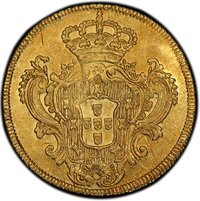
Series: Serie of Shields

💎 Very Rare