

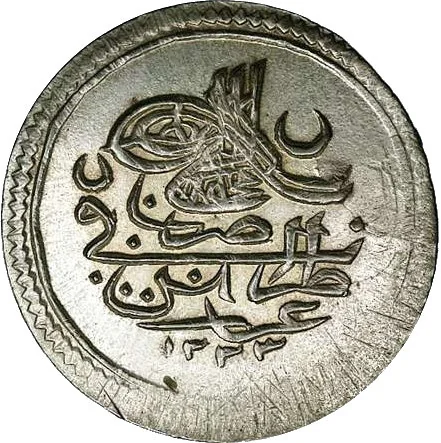
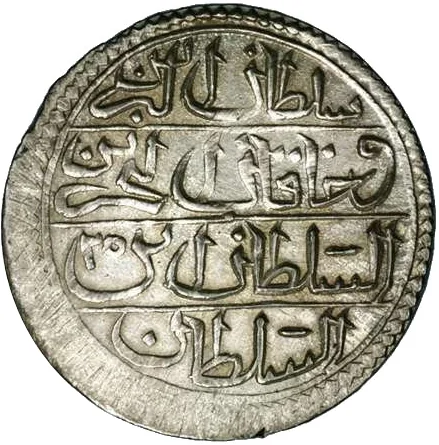
40 Para – Regency of Tripoli
Libya
Context
Years: 1827–1831
Islamic (Hijri) Year: 1223
Country: Libya 
Issuer: Regency of Tripoli
Ruler: Mahmud II
Currency:
(1688—1844)
Demonetized: Yes
References
KM: #Click to copy to clipboard215
Numista: #50315
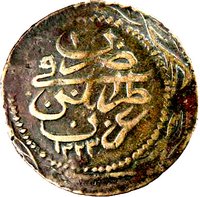
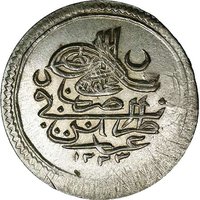
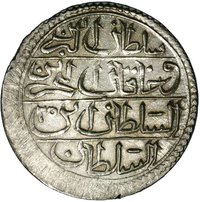
Obverse
Reverse
Edge
Mintings
| Year | Mint Mark | Mintage | Quality | Collection |
|---|---|---|---|---|
| 1827 | — | — | ||
| 1828 | — | — | ||
| 1830 | — | — | ||
| 1831 | — | — |
Historical background
In 1827, the Regency of Tripoli, a semi-autonomous Ottoman province on the Barbary Coast, was navigating a complex and deteriorating monetary environment. The state's primary revenue sources—maritime predation (privateering), tribute payments from European powers, and modest trade—were in steep decline following the Barbary Wars and increased European naval dominance. This fiscal crisis directly impacted the currency situation, which was characterized by a chaotic multiplicity of coins in circulation. The official Ottoman kurus (piastre) existed alongside a flood of foreign silver coins, most notably Spanish dollars (pieces of eight), Austrian thalers, and other European issues, all circulating at fluctuating values set by the ruling Qaramanli dynasty.
The Pasha, Yusuf Qaramanli, responded to his empty treasury by engaging in severe currency debasement. He frequently issued decrees altering the official exchange rates between gold, silver, and copper coins, often mandating that taxes be paid in full-weight silver while paying government expenses in debased coinage. This practice, essentially a form of forced revenue extraction, created widespread confusion and damaged commercial confidence. Merchants and the populace had to constantly negotiate the value of coins, which were often physically mutilated or clipped to test their metal content.
This unstable monetary system exacerbated the Regency's economic stagnation and social discontent. The lack of a reliable, standardized currency hindered both local trade and the fading international commerce that the port of Tripoli depended upon. The currency chaos of 1827 was therefore a key symptom of the broader collapse of the old Barbary political economy, contributing to the internal weakness that would lead to a civil war just three years later and the eventual reoccupation of Tripoli by direct Ottoman rule in 1835.
The Pasha, Yusuf Qaramanli, responded to his empty treasury by engaging in severe currency debasement. He frequently issued decrees altering the official exchange rates between gold, silver, and copper coins, often mandating that taxes be paid in full-weight silver while paying government expenses in debased coinage. This practice, essentially a form of forced revenue extraction, created widespread confusion and damaged commercial confidence. Merchants and the populace had to constantly negotiate the value of coins, which were often physically mutilated or clipped to test their metal content.
This unstable monetary system exacerbated the Regency's economic stagnation and social discontent. The lack of a reliable, standardized currency hindered both local trade and the fading international commerce that the port of Tripoli depended upon. The currency chaos of 1827 was therefore a key symptom of the broader collapse of the old Barbary political economy, contributing to the internal weakness that would lead to a civil war just three years later and the eventual reoccupation of Tripoli by direct Ottoman rule in 1835.

✨ Legendary