Log In
Sign Up
Stephen Album Rare Coins
60 para
– Tripoli
Add to wishlist
Standard circulation coins
Series:
1827 Regency of Tripoli circulation coins
Libya
Context
Year:
1827
Islamic (Hijri)
Year::
1223
Country:
Libya
Issuer:
Tripoli
Period:
Regency
Ruler:
Mahmud II
Currency:
Kuruş
(1688—1844)
Demonetized
: Yes
Material
Weight:
18.27 g
Shape:
Irregular round
Composition:
Billon
Technique:
Hammered
References
KM:
#
Click to copy to clipboard
196
Numista:
#80397
Obverse
Description:
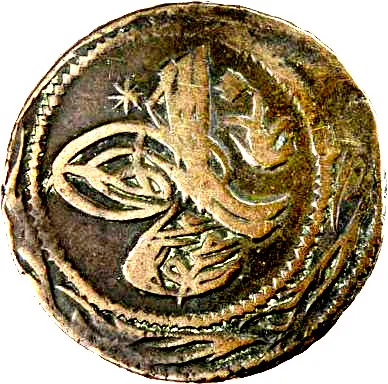
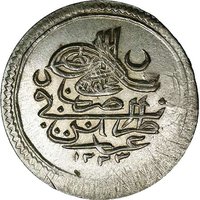
Mahmud II toughra with floral right, eight-pointed star left, within beaded circle and floral border.
Inscription:
محمود
Translation:
Mahmud
Script:
Arabic
Language:
Arabic
Reverse
Description:
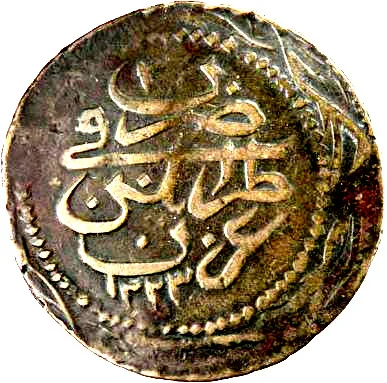
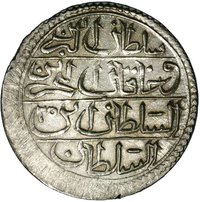
Mint and date within beaded circle, floral border.
Inscription:
٢٠
ضرب
في
طرابلس
غرب
١٢٢٣
Translation:
Twenty
Struck
in
Tarabulus
West
1223
Script:
Arabic
Language:
Arabic
Edge
Irregular hammered
Mintings
Year
Mint Mark
Mintage
Quality
Collection
1827
—
—
+
Series:
1827 Regency of Tripoli circulation coins
1 para
1827
60 para
1827
40 para
1827-1831
Navigation
Standard circulation coins of Tripoli
Previous
1 para
1827
Next
40 para
1827-1831
✨
Legendary