Logo Title
Context
Year: 1828
Islamic (Hijri) Year: 1223
Country: Libya Country flag
Ruler: Mahmud II
Currency:
(1688—1844)
Demonetized: Yes
Material
Composition: Copper
Magnetic: No
Technique: Hammered
References
KM: #Click to copy to clipboard105
Numista: #79922

Obverse

Description:
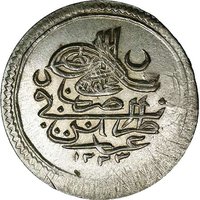
Arabesque in garland.

Reverse

Edge

Irregular hammered

Mintings

YearMint MarkMintageQualityCollection
1828

Historical background

In 1828, the Regency of Tripoli, a semi-autonomous Ottoman province on the North African coast, was navigating a complex and deteriorating currency situation. The state’s finances, heavily reliant on piracy and tribute payments, had been severely undermined following the Barbary Wars with the United States and subsequent European naval pressure. The costly peace treaties and the loss of captive ransom income created chronic budget deficits. To meet its obligations, the ruling Qaramanli dynasty increasingly resorted to debasing the local currency, primarily the mahbub (a gold coin) and the qirsh (a silver coin), by reducing their precious metal content. This led to rampant inflation, a loss of public confidence, and economic hardship for the local population.

The currency chaos was exacerbated by the circulation of a wide variety of foreign coins, a common feature in Mediterranean trade ports. Spanish dollars, Austrian thalers, and other European currencies circulated alongside Ottoman kurush and locally minted coins, creating a confusing exchange environment. The Regency’s own debased coins often traded at a steep discount against these more stable foreign currencies, disrupting commerce. Furthermore, the central Ottoman government’s own periodic monetary reforms and debasements in Constantinople indirectly affected Tripoli, adding another layer of instability to an already fragile system.

This monetary instability reflected and accelerated the broader political decline of the Qaramanli dynasty. By 1828, internal strife between claimants to the throne was escalating, further diverting resources from sound fiscal management. The currency crisis eroded the Pasha’s ability to pay his troops and maintain loyalty, contributing to the growing unrest that would culminate in a civil war (1829-1832) and, ultimately, direct Ottoman re-conquest in 1835. Thus, the currency situation of 1828 was both a symptom of the Regency’s deep-seated troubles and a direct catalyst for its impending collapse.

Series: 1828 Regency of Tripoli circulation coins

1 Para obverse
1 Para reverse
1 Para
1828
1 Para obverse
1 Para reverse
1 Para
1828
40 Para obverse
40 Para reverse
40 Para
1828
50 Para obverse
50 Para reverse
50 Para
1828
Legendary