

½ Penny – Jamaica
Jamaica
Context
Material
Diameter: 22.5 mm
Weight: 4.5 g
Thickness: 1.5 mm
Shape: Round
Composition: Nickel brass
Magnetic: No
Technique: Milled
Alignment: Medal alignment
flip
References
KM: #Click to copy to clipboard28
Numista: #9577
Obverse
Description:
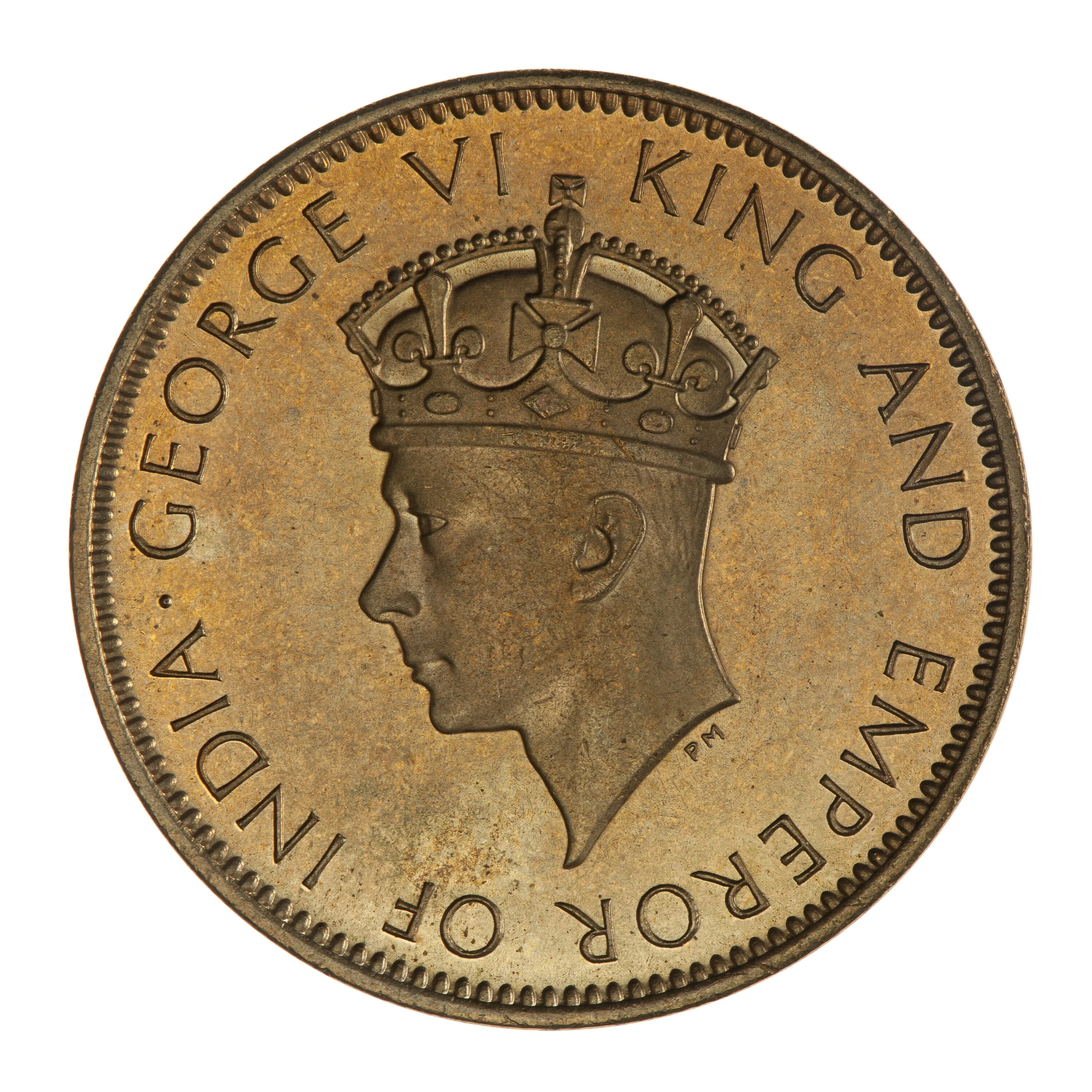
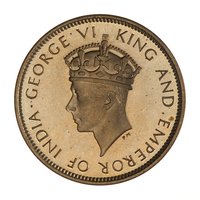
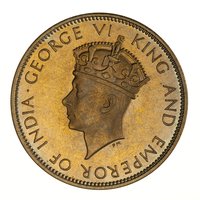
King George VI left-facing portrait, surrounded by legend.
Inscription:
· GEORGE VI KING AND EMPEROR OF INDIA
PM
PM
Translation:
GEORGE VI KING AND EMPEROR OF INDIA
Script: Latin
Language: English
Engraver: Percy Metcalfe
Reverse
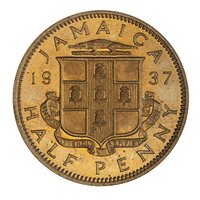
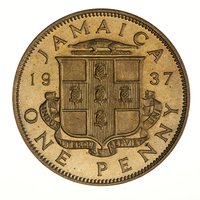
Description:
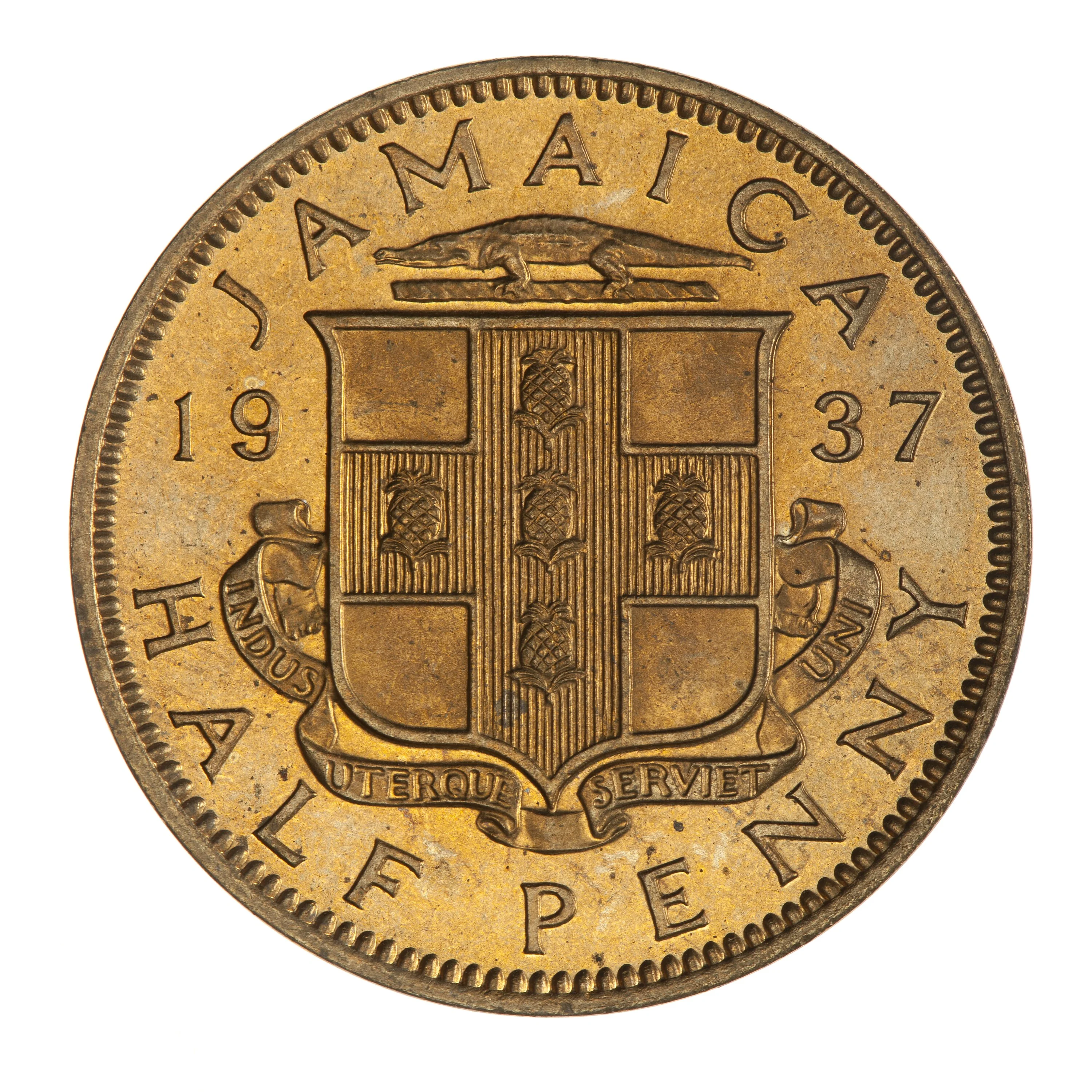
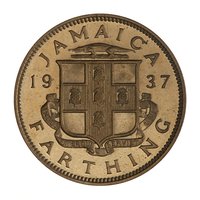
Jamaican coat of arms with encircling legend.
Inscription:
JAMAICA
HALF PENNY
1937
INDUS UTERQUE SERVIET UNI
HALF PENNY
1937
INDUS UTERQUE SERVIET UNI
Translation:
JAMAICA
HALF PENNY
1937
BOTH INDUSTRIES WILL SERVE ONE
HALF PENNY
1937
BOTH INDUSTRIES WILL SERVE ONE
Script: Latin
Engraver: Percy Metcalfe
Edge
Plain
Mints
| Name | Mark |
|---|---|
| Royal Mint (Tower Hill) | — |
Mintings
| Year | Mint Mark | Mintage | Quality | Collection |
|---|---|---|---|---|
| 1937 | — | 960,000 | ||
| 1937 | — | — | Proof |
Historical background
In 1937, Jamaica's currency situation was firmly anchored within the British colonial monetary system. The island operated on a sterling exchange standard, where the local currency, the Jamaican pound (£J), was fixed at parity with the British pound sterling. This meant that Jamaican banknotes and coins were effectively backed by and freely convertible into sterling reserves held in London. The currency was issued by a private entity, the Colonial Bank (later Barclays Bank), under a government mandate, with the system designed to facilitate trade and financial integration with the United Kingdom, the island's dominant economic partner.
This rigid monetary framework, however, existed within a context of severe economic distress and social unrest. The Jamaican economy was heavily dependent on sugar and banana exports, and the global depression of the 1930s had crippled these industries, leading to widespread unemployment, plummeting wages, and desperate poverty. The fixed currency system did not allow for any independent monetary policy to stimulate the local economy, while the colony's budget was constrained by the need to maintain sterling reserves. Consequently, the government had little fiscal flexibility to address the growing social crisis, with taxation falling heavily on the poor through regressive measures like the much-loathed "land and cattle taxes."
The currency situation, therefore, was a key component of the structural grievances that exploded in the Jamaican labor rebellions of May-June 1938. While not the direct spark, the sterling-based system symbolized the island's subservient colonial economic relationship, which prioritized external stability over internal welfare. The rebellions, led by figures like Alexander Bustamante, forced a fundamental re-evaluation of Jamaica's governance. The subsequent Moyne Commission investigation would lead to significant political and social reforms, setting the stage for a move toward greater self-government and, eventually, the establishment of a central bank and a more independent Jamaican currency in the post-war period.
This rigid monetary framework, however, existed within a context of severe economic distress and social unrest. The Jamaican economy was heavily dependent on sugar and banana exports, and the global depression of the 1930s had crippled these industries, leading to widespread unemployment, plummeting wages, and desperate poverty. The fixed currency system did not allow for any independent monetary policy to stimulate the local economy, while the colony's budget was constrained by the need to maintain sterling reserves. Consequently, the government had little fiscal flexibility to address the growing social crisis, with taxation falling heavily on the poor through regressive measures like the much-loathed "land and cattle taxes."
The currency situation, therefore, was a key component of the structural grievances that exploded in the Jamaican labor rebellions of May-June 1938. While not the direct spark, the sterling-based system symbolized the island's subservient colonial economic relationship, which prioritized external stability over internal welfare. The rebellions, led by figures like Alexander Bustamante, forced a fundamental re-evaluation of Jamaica's governance. The subsequent Moyne Commission investigation would lead to significant political and social reforms, setting the stage for a move toward greater self-government and, eventually, the establishment of a central bank and a more independent Jamaican currency in the post-war period.
Series: 1937 series
🌟 Uncommon