

10 Gulden – Netherlands
Netherlands
Context
Year: 1842
Issuer: Netherlands 
Ruler: William II
Currency:
(1817—2001)
Demonetized: Yes
Total mintage: 860
Material
References
KM: #Click to copy to clipboard71
Numista: #95702
Value
Exchange value: 10 NLG
Bullion value: $1011.60
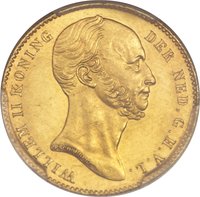
Obverse
Description:
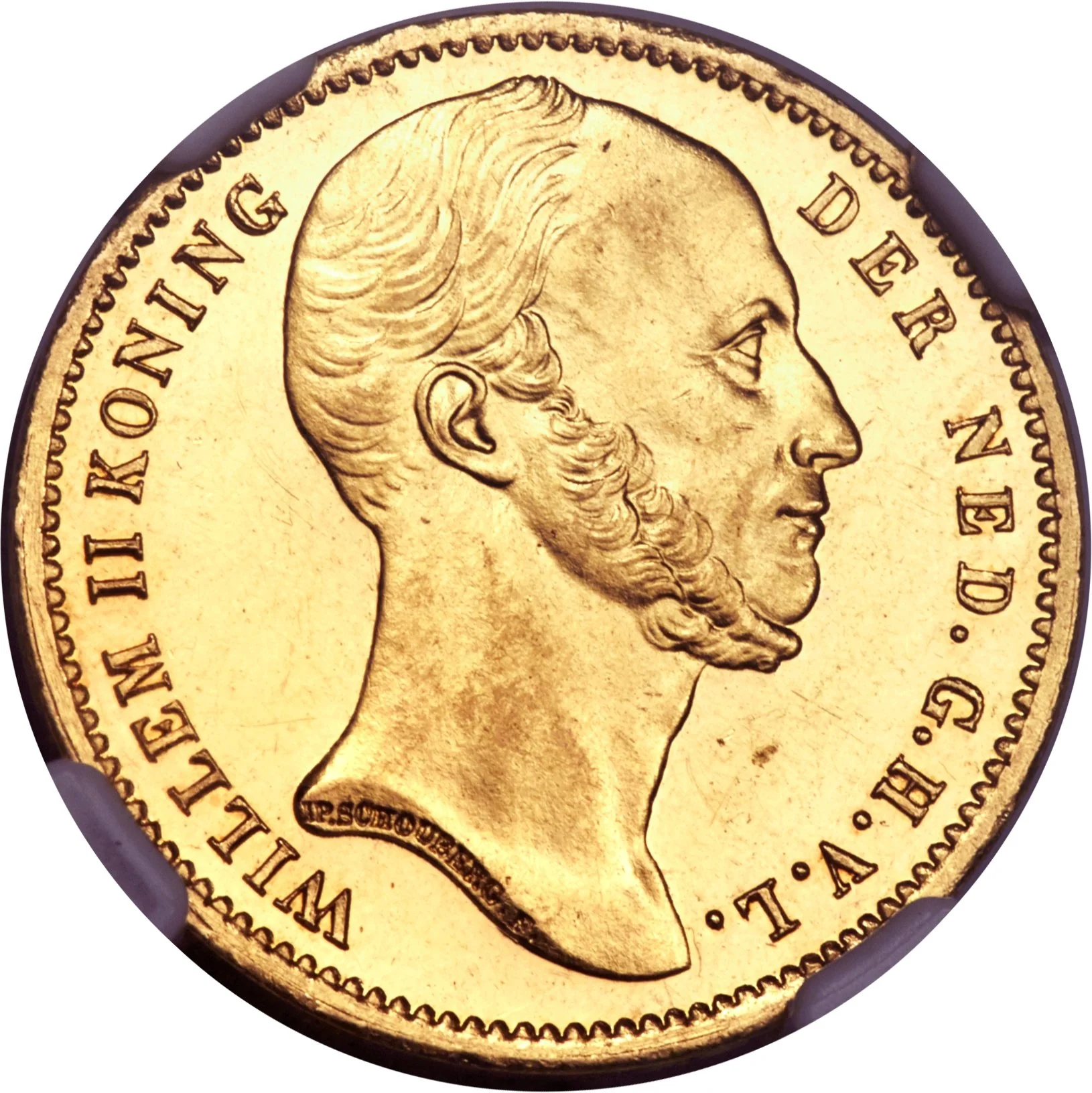
King Willem II, right-facing portrait.
Inscription:
WILLEM II KONING DER NED. G.H.V.L.
Translation:
William II King of the Netherlands, Grand Duke of Luxembourg
Script: Latin
Language: Dutch
Engraver: Johannes Petrus Schouberg
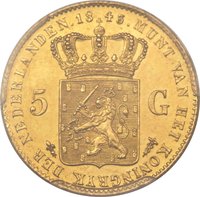
Reverse
Description:
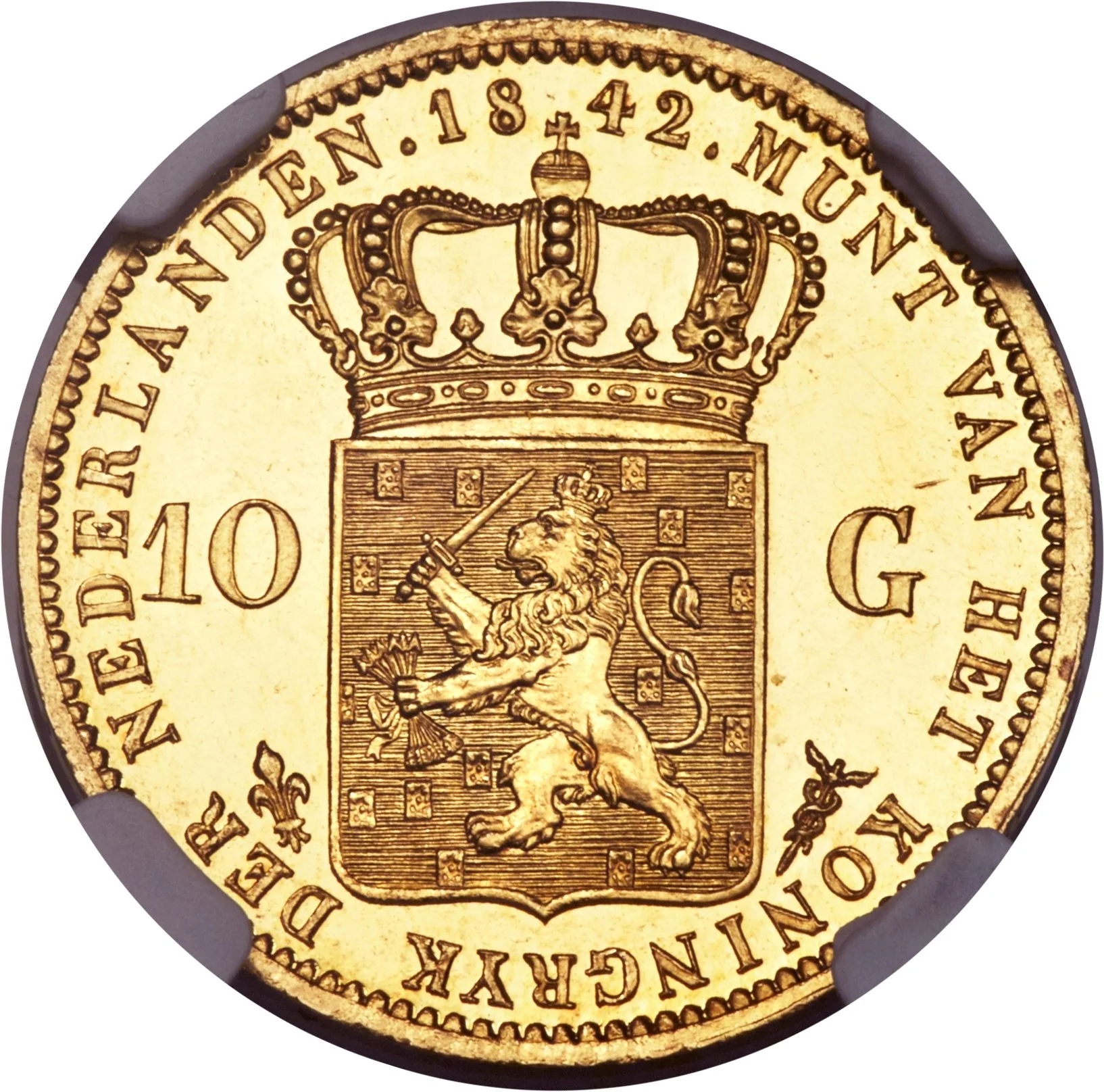
Crowned arms split value
Inscription:
MUNT VAN HET KONINGRYK DER NEDERLANDEN . 1842 .
10 G
10 G
Translation:
Coin of the Kingdom of the Netherlands . 1842 .
10 Cents
10 Cents
Script: Latin
Language: Dutch
Engraver: Johannes Petrus Schouberg
Edge
Categories
| Symbol> Crown |
| Symbols> Coat of Arms |
Mints
| Name | Mark |
|---|---|
| Royal Dutch Mint | — |
Mintings
| Year | Mint Mark | Mintage | Quality | Collection |
|---|---|---|---|---|
| 1842 | — | 860 |
Historical background
In 1842, the Netherlands operated under a complex and fragmented monetary system, a legacy of its provincial history and the Napoleonic era. The official currency was the Dutch guilder (gulden), which was on a silver standard. However, the system was not unified; alongside full-value silver coins, there was a widespread circulation of underweight silver coins and banknotes from the De Nederlandsche Bank (founded in 1814), which were not yet legal tender but were accepted in major commercial centres. This created a practical duality between "bank money" (bankbiljetten) and "current money" (staatkasmunt), with the former often trading at a slight premium.
The situation was further complicated by the lingering influence of the rijksdaalder, a large silver coin, and the persistent use of outdated provincial coins. A key issue was the discrepancy between the nominal and intrinsic value of smaller silver coins, leading to frequent hoarding of full-weight coins and the export of silver bullion. This instability hampered both domestic trade and international commerce, as merchants had to navigate varying exchange rates between different forms of money. The government and De Nederlandsche Bank were engaged in an ongoing struggle to establish confidence and uniformity.
Consequently, 1842 fell within a period of transition and debate towards monetary modernization. The authorities recognized the need for a stronger, unified currency to support economic growth. This pressure would culminate in the pivotal Coin Act of 1847, which finally established a firm silver standard, defined the guilder clearly against the French franc, and mandated the recoinage of all old money, laying the foundation for a stable and modern national currency system in the second half of the 19th century.
The situation was further complicated by the lingering influence of the rijksdaalder, a large silver coin, and the persistent use of outdated provincial coins. A key issue was the discrepancy between the nominal and intrinsic value of smaller silver coins, leading to frequent hoarding of full-weight coins and the export of silver bullion. This instability hampered both domestic trade and international commerce, as merchants had to navigate varying exchange rates between different forms of money. The government and De Nederlandsche Bank were engaged in an ongoing struggle to establish confidence and uniformity.
Consequently, 1842 fell within a period of transition and debate towards monetary modernization. The authorities recognized the need for a stronger, unified currency to support economic growth. This pressure would culminate in the pivotal Coin Act of 1847, which finally established a firm silver standard, defined the guilder clearly against the French franc, and mandated the recoinage of all old money, laying the foundation for a stable and modern national currency system in the second half of the 19th century.
✨ Legendary