

5 Gulden – Netherlands
Netherlands
Context
Year: 1843
Issuer: Netherlands 
Ruler: William II
Currency:
(1817—2001)
Demonetized: Yes
Total mintage: 1,595
Material
References
KM: #Click to copy to clipboard72
Numista: #43775
Value
Exchange value: 5 NLG
Bullion value: $504.48
Obverse
Description:
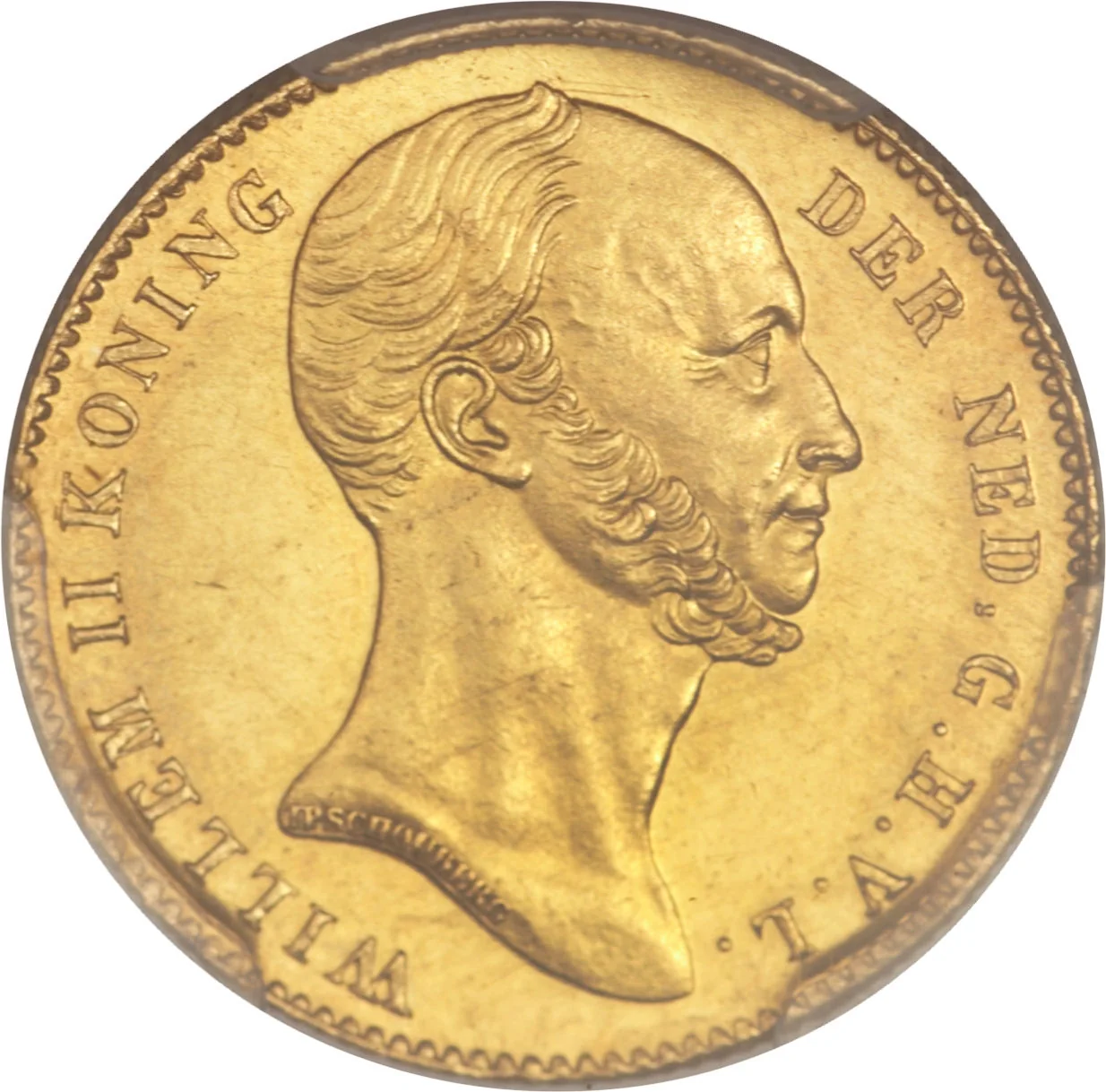
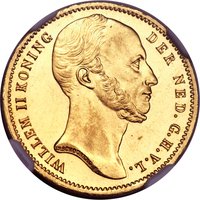
Bust of Willem II, right-facing.
Inscription:
WILLEM II KONING DER NED. G.H.V.L.
I.P. SCHOUBERG
I.P. SCHOUBERG
Translation:
WILLEM II KING OF THE NED. G.H.V.L.
I.P. SCHOUBERG
I.P. SCHOUBERG
Script: Latin
Language: Dutch
Engraver: Johannes Petrus Schouberg
Reverse
Description:
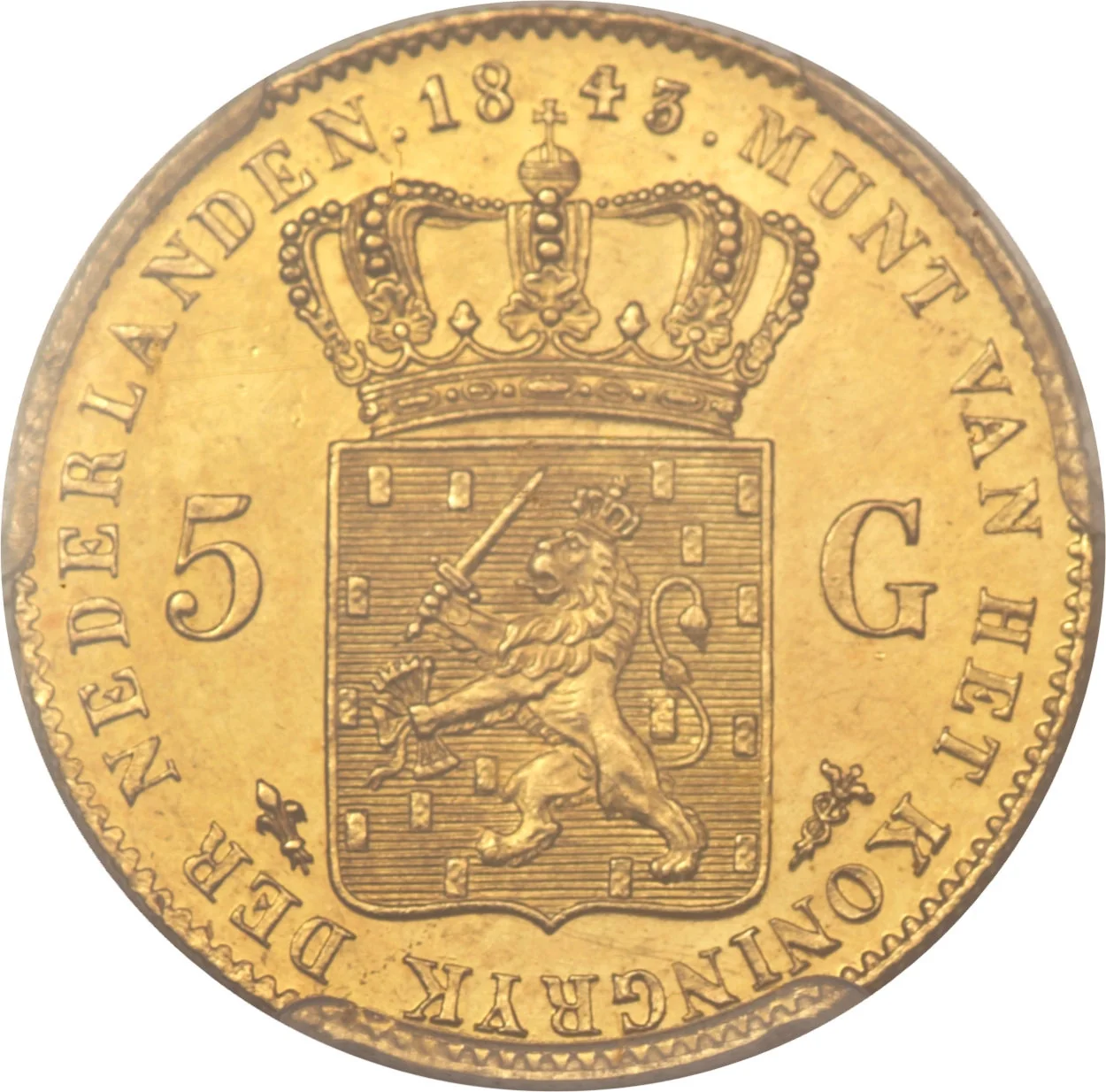
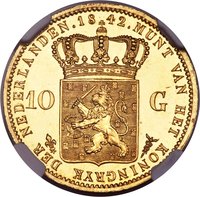
Dutch royal crest divides value.
Inscription:
MUNT VAN HET KONINGRYK DER NEDERLANDEN . 1843 .
Translation:
Coin of the Kingdom of the Netherlands . 1843 .
Script: Latin
Language: Dutch
Engraver: Johannes Petrus Schouberg
Edge
Reeded
Categories
| Symbol> Crown |
| Symbols> Coat of Arms |
Mints
| Name | Mark |
|---|---|
| Royal Dutch Mint | — |
Mintings
| Year | Mint Mark | Mintage | Quality | Collection |
|---|---|---|---|---|
| 1843 | — | 1,595 |
Historical background
In 1843, the Netherlands operated under a complex and fragmented monetary system, a legacy of its provincial history and the Napoleonic era. The official currency was the Dutch guilder (gulden), which was on a silver standard following the law of 1816. However, the reality in daily commerce was far from uniform. Alongside full-value silver coins, there circulated a multitude of foreign coins, heavily worn domestic coins, and banknotes issued by the Nederlandsche Bank (founded in 1814), whose value in relation to specie could fluctuate. This created significant practical confusion and inefficiency for trade and daily transactions.
The situation was further complicated by the coexistence of two distinct accounting systems: the "bank money" (bankgeld) used for large financial transactions and trading at the Amsterdam Exchange, and "current money" (currentgeld) used in everyday commerce. These systems had different valuations, with bank money generally at a premium. Additionally, the southern provinces (modern-day Belgium), which had been part of the Kingdom until the 1830 revolution, had left a lingering influence, and the German states' thalers were also common in border regions. This monetary plurality hindered economic integration and modernisation.
Consequently, the 1840s were a period of mounting pressure for reform. The government and the Nederlandsche Bank sought to establish a more uniform, reliable, and nationally controlled currency. The year 1843 falls within this transitional period, just a few years before a major reform. In 1847, the government would introduce new, standardized coinage and take stronger measures to withdraw worn and foreign coins from circulation, paving the way for the more stable and uniform monetary system that would characterize the latter half of the 19th century.
The situation was further complicated by the coexistence of two distinct accounting systems: the "bank money" (bankgeld) used for large financial transactions and trading at the Amsterdam Exchange, and "current money" (currentgeld) used in everyday commerce. These systems had different valuations, with bank money generally at a premium. Additionally, the southern provinces (modern-day Belgium), which had been part of the Kingdom until the 1830 revolution, had left a lingering influence, and the German states' thalers were also common in border regions. This monetary plurality hindered economic integration and modernisation.
Consequently, the 1840s were a period of mounting pressure for reform. The government and the Nederlandsche Bank sought to establish a more uniform, reliable, and nationally controlled currency. The year 1843 falls within this transitional period, just a few years before a major reform. In 1847, the government would introduce new, standardized coinage and take stronger measures to withdraw worn and foreign coins from circulation, paving the way for the more stable and uniform monetary system that would characterize the latter half of the 19th century.
💎 Extremely Rare