

100 Zlotys – Poland
Non-circulating coins
Commemoration: Józef Haller
Poland

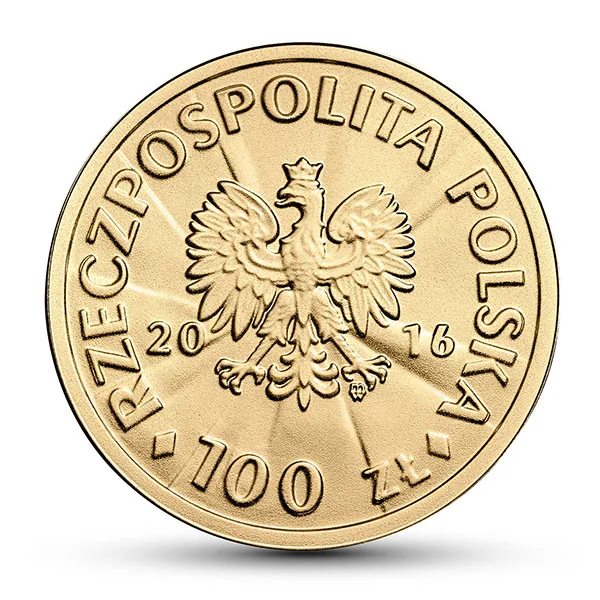
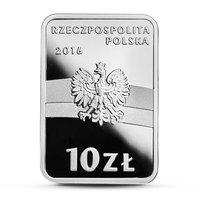
Obverse
Inscription:
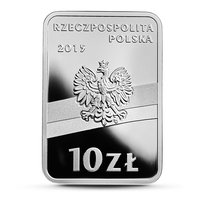
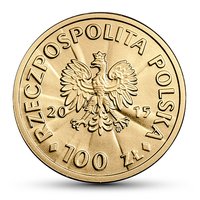
RZECZPOSPOLITA POLSKA
♦ 100ZŁ ♦
2016
mw
♦ 100ZŁ ♦
2016
mw
Translation:
REPUBLIC OF POLAND
♦ 100 ZŁ ♦
2016
m w
♦ 100 ZŁ ♦
2016
m w
Script: Latin
Language: Polish
Designer: Dobrochna Surajewska
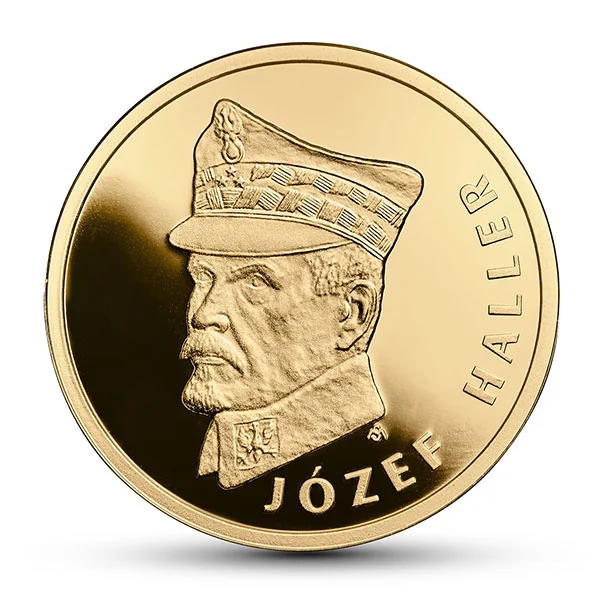
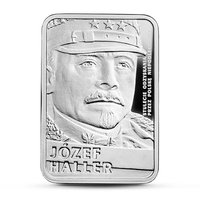
Reverse
Inscription:
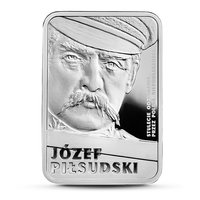
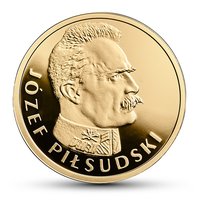
JÓZEF HALLER
SM
SM
Translation:
Józef Haller
Script: Latin
Language: Polish
Designer: Sebastian Mikołajczak
Edge
Plain with inspription
Legend:
STULECIE ODYZSKANIA PRZEZ POLSKĘ NIEPODLEGŁOŚCI
Translation:
The Century of Poland Regaining Independence
Language: Polish
Mints
| Name | Mark |
|---|---|
| Mint of Poland | (MW) |
Mintings
| Year | Mint Mark | Mintage | Quality | Collection |
|---|---|---|---|---|
| 2016 | MW | 2,000 | Proof |
Historical background
In 2016, Poland's currency, the złoty (PLN), navigated a year of significant political uncertainty and external market pressures. The primary driver was the domestic political shift following the 2015 election of the Law and Justice (PiS) party, whose policies—including increased social spending, banking sector reforms, and conflicts with the European Union over rule-of-law issues—raised concerns among international investors. This led to bouts of volatility and downward pressure on the złoty, as markets weighed the risks of potential credit rating downgrades and reduced EU cohesion funds.
Externally, the currency was heavily influenced by global factors, particularly the policies of major central banks. The ultra-low interest rate environment in the Eurozone and the delayed pace of interest rate hikes by the U.S. Federal Reserve provided some support, as the relatively higher Polish interest rates made złoty-denominated assets attractive for carry trades. However, this also made the currency sensitive to shifts in global risk sentiment and the strength of the euro. Furthermore, the aftermath of the UK's Brexit referendum in June 2016 injected additional volatility into European currencies, including the złoty.
Despite these headwinds, the Polish economy demonstrated fundamental resilience, with strong GDP growth (over 3% annually) and stable macroeconomic indicators. This underlying strength, coupled with the proactive stance of the National Bank of Poland (NBP) under Governor Adam Glapiński—which maintained a steady interest rate throughout the year—helped prevent a sharp depreciation. Consequently, the złoty ended 2016 relatively stable against the euro, having weathered the political turbulence without a full-blown crisis, though it remained weaker than levels seen earlier in the decade.
Externally, the currency was heavily influenced by global factors, particularly the policies of major central banks. The ultra-low interest rate environment in the Eurozone and the delayed pace of interest rate hikes by the U.S. Federal Reserve provided some support, as the relatively higher Polish interest rates made złoty-denominated assets attractive for carry trades. However, this also made the currency sensitive to shifts in global risk sentiment and the strength of the euro. Furthermore, the aftermath of the UK's Brexit referendum in June 2016 injected additional volatility into European currencies, including the złoty.
Despite these headwinds, the Polish economy demonstrated fundamental resilience, with strong GDP growth (over 3% annually) and stable macroeconomic indicators. This underlying strength, coupled with the proactive stance of the National Bank of Poland (NBP) under Governor Adam Glapiński—which maintained a steady interest rate throughout the year—helped prevent a sharp depreciation. Consequently, the złoty ended 2016 relatively stable against the euro, having weathered the political turbulence without a full-blown crisis, though it remained weaker than levels seen earlier in the decade.
✨ Legendary