

20 kroner – Denmark
Add to wishlist
Circulating commemorative coins
Commemoration: Silver Jubilee of Queen Margreth II
Denmark
Context
Material
Diameter: 27 mm
Weight: 9.3 g
Thickness: 2.35 mm
Shape: Round
Composition: Aluminium bronze
Magnetic: No
Technique: Milled
Alignment: Medal alignment
flip
References
KM: #
Numista: #9403
Value
Exchange value: 20 DKK
Inflation-adjusted value: 34.30 DKK
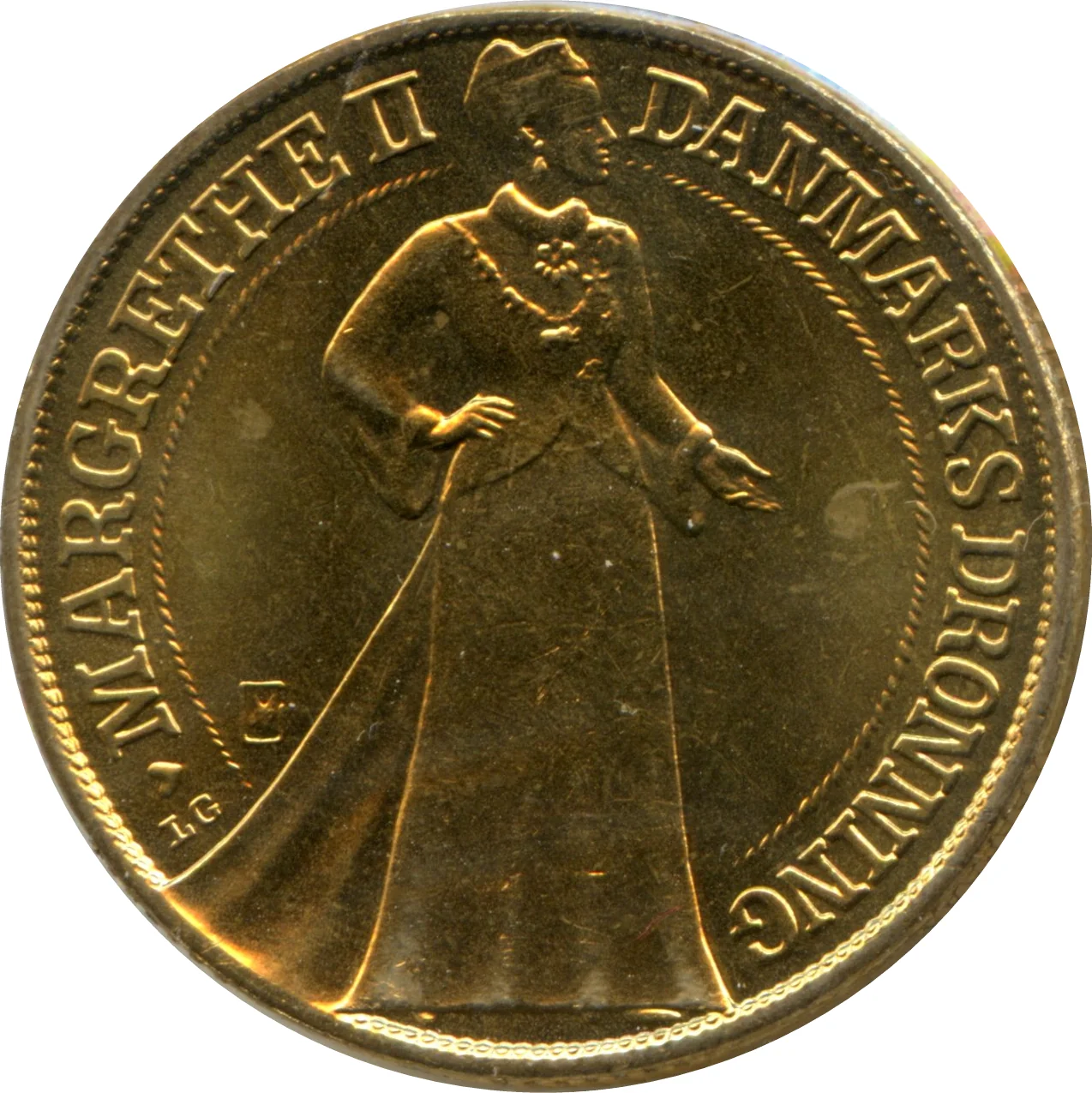
Obverse
Description:
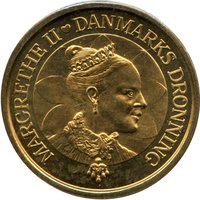
A non-traditional full-figure portrait of the Queen holding her scepter and crown.
Inscription:
MARGRETHE II DANMARKS DRONNING
Translation:
Margrethe II Denmark's Queen
Script: Latin
Language: Danish
Engraver: Jan Petersen
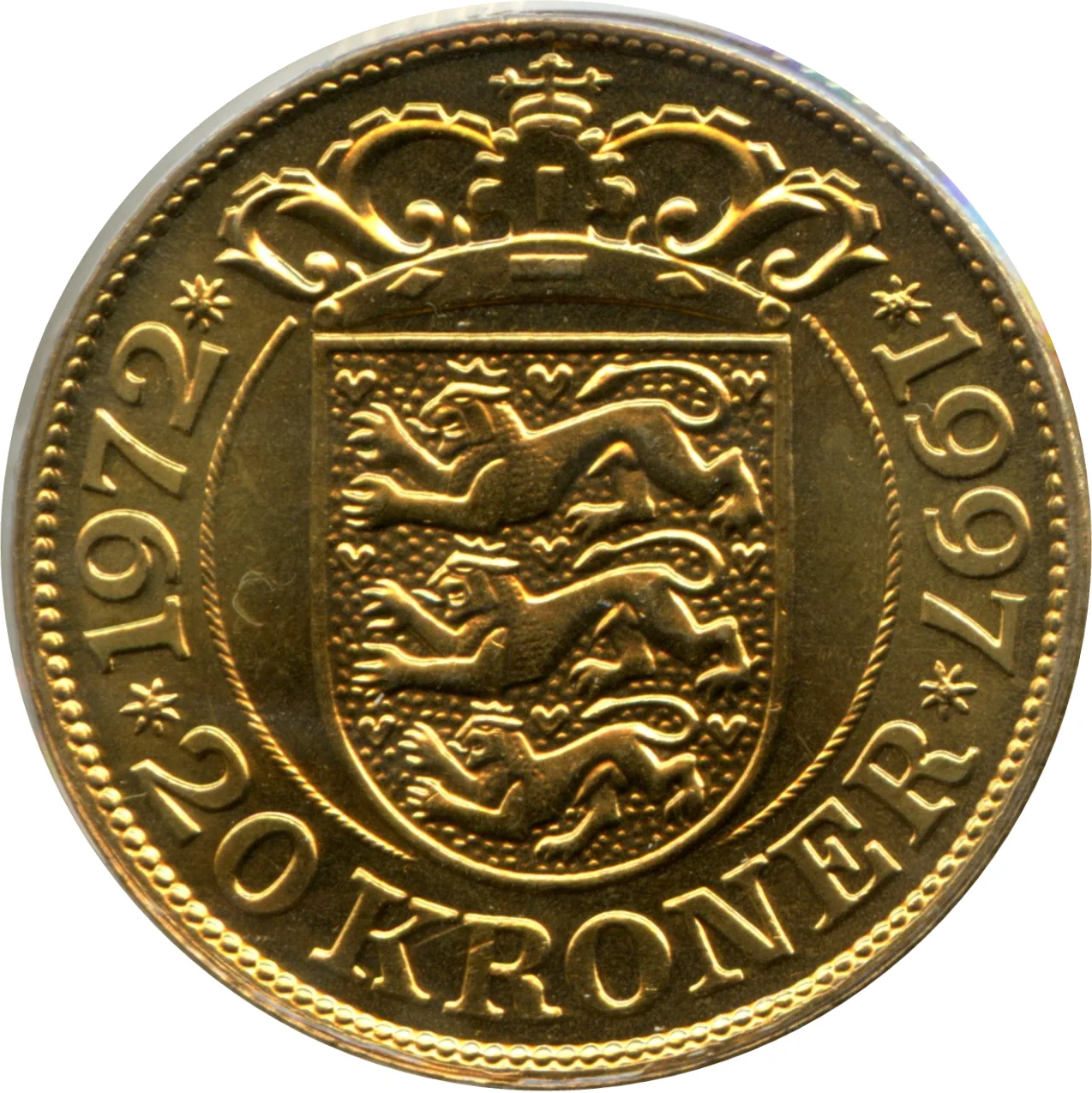
Reverse
Edge
Alternating smooth and reeded segments
Mints
| Name | Mark |
|---|---|
| Royal Danish Mint | — |
Mintings
| Year | Mint Mark | Mintage | Quality | Collection |
|---|---|---|---|---|
| 1997 | LG;JP | 1,000,000 |
Historical background
In 1997, Denmark's currency situation was defined by its long-standing and politically central membership of the European Exchange Rate Mechanism (ERM II). Following the turbulence of the 1992-93 ERM crisis, where speculative attacks forced the krone's bands to be widened to ±15%, Denmark had successfully maintained a stable and credible fixed exchange rate policy. The krone was pegged to the Deutsche Mark (DEM) at a central rate of 3.6275, with very narrow fluctuation bands of ±2.25%, demonstrating a firm commitment to monetary stability and low inflation, which was largely imported from the Bundesbank's policies.
This stability existed within a complex political context regarding European integration. While Denmark had secured an opt-out from the third stage of Economic and Monetary Union (EMU) in the 1992 Edinburgh Agreement, the government maintained a clear policy of shadowing the future euro. The fixed exchange rate served as a de facto substitute for full EMU membership, anchoring the economy to the core of Europe. Consequently, Danish monetary policy in 1997 was effectively set by the German central bank, with Danmarksbanken intervening in foreign exchange markets to maintain the peg, a system that functioned smoothly throughout the year.
Therefore, 1997 was a year of quiet confidence for the krone, situated between the past upheavals of the ERM crisis and the imminent launch of the euro in 1999. The system enjoyed broad political and public support, as it delivered economic stability without the political controversy of adopting the single currency. The focus was less on any currency crisis and more on the technical management required to maintain the peg in a period of global economic growth, solidifying the krone's role as a stable and reliable European currency.
This stability existed within a complex political context regarding European integration. While Denmark had secured an opt-out from the third stage of Economic and Monetary Union (EMU) in the 1992 Edinburgh Agreement, the government maintained a clear policy of shadowing the future euro. The fixed exchange rate served as a de facto substitute for full EMU membership, anchoring the economy to the core of Europe. Consequently, Danish monetary policy in 1997 was effectively set by the German central bank, with Danmarksbanken intervening in foreign exchange markets to maintain the peg, a system that functioned smoothly throughout the year.
Therefore, 1997 was a year of quiet confidence for the krone, situated between the past upheavals of the ERM crisis and the imminent launch of the euro in 1999. The system enjoyed broad political and public support, as it delivered economic stability without the political controversy of adopting the single currency. The focus was less on any currency crisis and more on the technical management required to maintain the peg in a period of global economic growth, solidifying the krone's role as a stable and reliable European currency.
🌱 Fairly Common