

2000 réis – Brazil
Add to wishlist
Brazil
Context
Years: 1937–1938
Issuer: Brazil
Period:
(1889—1967)
Currency:
(1799—1942)
Demonetized: Yes
Total mintage: 4,000,000
Material
Diameter: 26.45 mm
Weight: 8.7 g
Thickness: 2.38 mm
Shape: Icositetragonal
Composition: Aluminium bronze
Magnetic: No
Technique: Milled
Alignment: Medal alignment
flip
References
KM: #
Numista: #9367
Obverse
Description:
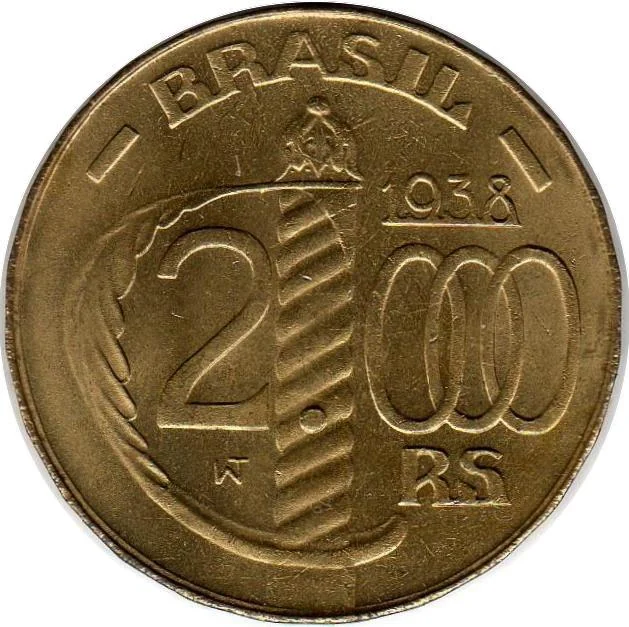
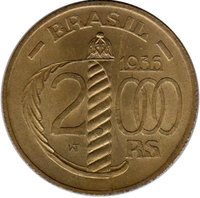
Hilt divides denomination, date upper right.
Inscription:
BRASIL
1938
2000
W RS
1938
2000
W RS
Translation:
BRASIL
1938
2000 REIS
1938
2000 REIS
Script: Latin
Languages: Portuguese, English
Reverse
Description:
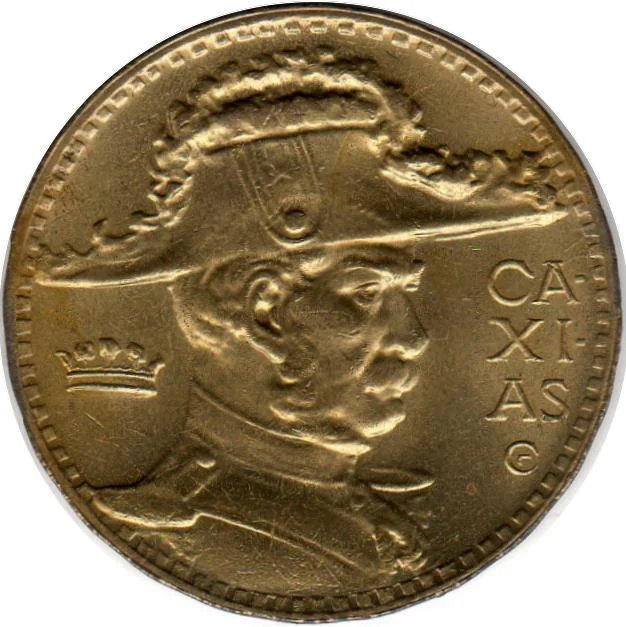
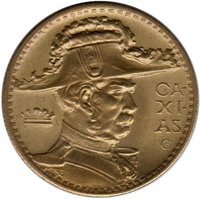
Armored bust of Duke of Caxias right, crown to left.
Inscription:
CA
XI
AS
C
XI
AS
C
Script: Latin
Edge
Plain
Categories
| Object> Hat |
| Person> Politician |
Mints
| Name | Mark |
|---|---|
| Casa da Moeda do Brasil | — |
Mintings
| Year | Mint Mark | Mintage | Quality | Collection |
|---|---|---|---|---|
| 1937 | — | — | ||
| 1938 | — | 4,000,000 |
Historical background
In 1937, Brazil's currency situation was characterized by the dominance of the mil-réis and the profound influence of the Coffee Valorization policies that had long shaped the nation's economy. The country operated under a de facto managed exchange rate system, where the government, through the Bank of Brazil, actively intervened to support the currency's value, primarily to facilitate debt servicing and import needs. However, the economy remained acutely vulnerable to the volatile global price of coffee, its principal export, creating cycles of trade surpluses and damaging deficits that put constant pressure on foreign reserves and the mil-réis's stability.
This fragile financial backdrop was a key factor in the political upheaval of November 1937, when President Getúlio Vargas instituted the Estado Novo dictatorship. Vargas used the pretext of a fabricated communist threat and the ongoing economic instability to justify dissolving Congress and centralizing power. The new regime immediately sought to impose greater control over the economy, viewing the existing currency challenges and dependence on a single commodity as national security issues requiring authoritarian solutions.
Consequently, the Estado Novo government began laying the groundwork for a comprehensive overhaul of the financial system, which would culminate in major reforms later in the decade. While the mil-réis remained the official currency in 1937, the year marked a critical turning point toward increased state intervention. The policies set in motion would lead directly to the creation of new regulatory bodies and, in 1942, the introduction of the cruzeiro, a currency reform intended to modernize Brazil's monetary system and solidify state control over the economy under Vargas's centralized rule.
This fragile financial backdrop was a key factor in the political upheaval of November 1937, when President Getúlio Vargas instituted the Estado Novo dictatorship. Vargas used the pretext of a fabricated communist threat and the ongoing economic instability to justify dissolving Congress and centralizing power. The new regime immediately sought to impose greater control over the economy, viewing the existing currency challenges and dependence on a single commodity as national security issues requiring authoritarian solutions.
Consequently, the Estado Novo government began laying the groundwork for a comprehensive overhaul of the financial system, which would culminate in major reforms later in the decade. While the mil-réis remained the official currency in 1937, the year marked a critical turning point toward increased state intervention. The policies set in motion would lead directly to the creation of new regulatory bodies and, in 1942, the introduction of the cruzeiro, a currency reform intended to modernize Brazil's monetary system and solidify state control over the economy under Vargas's centralized rule.
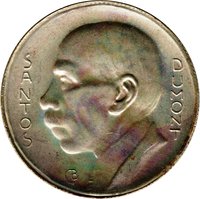
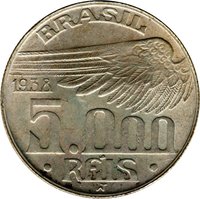
Series: Illustrious Brazilian Series
🌱 Common