

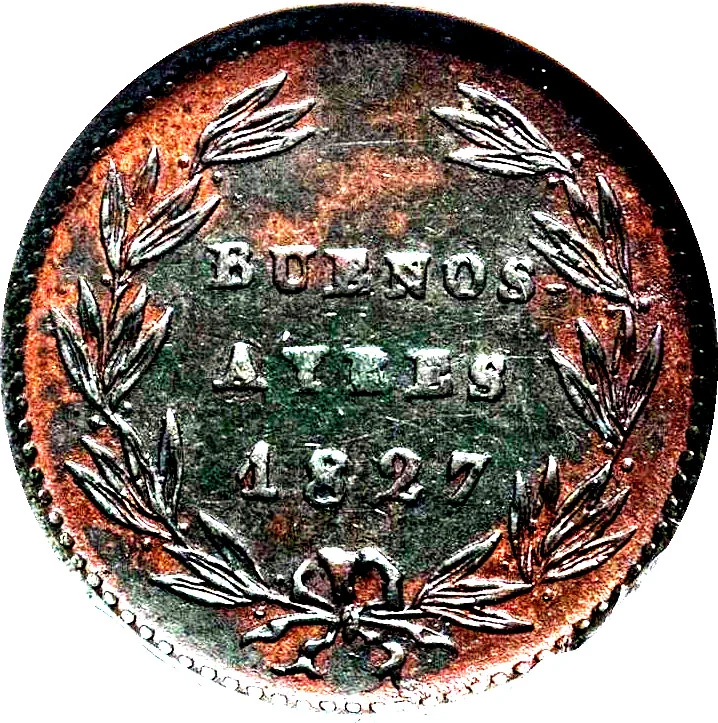
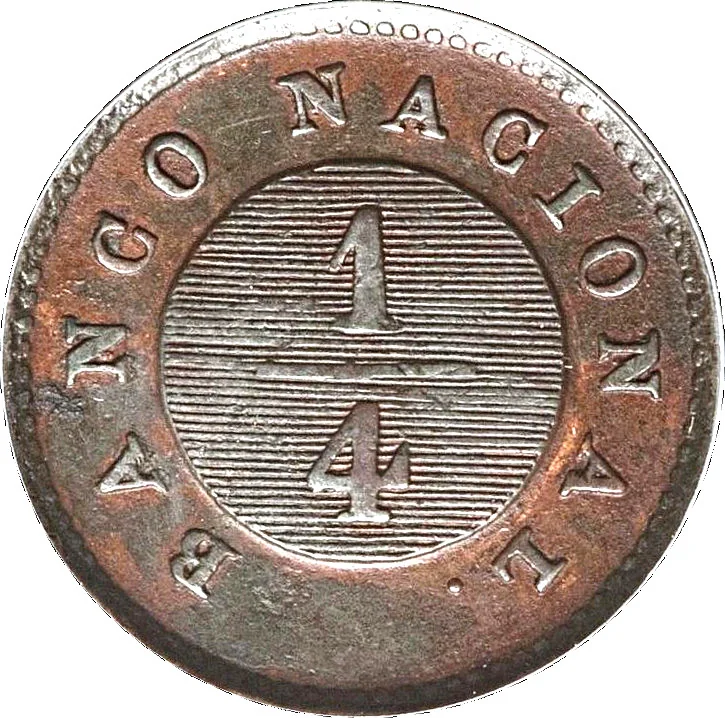
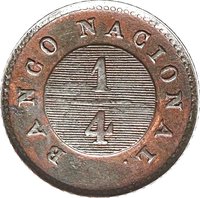
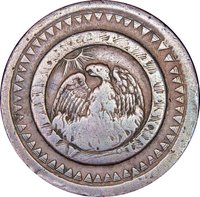
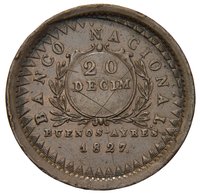
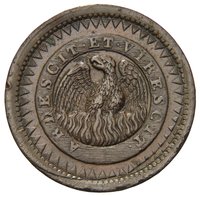
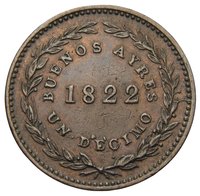
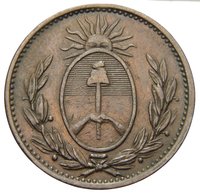
¼ Real – Buenos Aires
Argentina
Context
Year: 1827
Country: Argentina 
Issuer: Buenos Aires
Period:
(1810—1831)
Currency:
(1822—1861)
Demonetized: Yes
Material
References
KM: #Click to copy to clipboard2
Numista: #91234
Mintings
| Year | Mint Mark | Mintage | Quality | Collection |
|---|---|---|---|---|
| 1827 | — | — |
Historical background
In 1827, Buenos Aires found itself in a precarious monetary crisis, a direct consequence of the costly and unresolved war with the Empire of Brazil over the Banda Oriental (modern-day Uruguay). The prolonged conflict had drained the provincial treasury, forcing the government under Governor Manuel Dorrego to resort to the printing press to finance military operations and cover administrative costs. This led to a massive over-issuance of unbacked paper money, primarily the peso moneda corriente, which flooded the economy and rapidly depreciated in value.
The currency situation was characterized by a chaotic duality. While the government paid its expenses and salaries in the depreciating paper currency, hard currency—silver pesos fuertes and gold—virtually disappeared from daily circulation, hoarded by the public or used for foreign trade. This created a severe gap between the official face value of paper money and its real market worth, leading to price inflation, widespread speculation, and a profound loss of public confidence. Merchants and international traders often refused the paper money or demanded exorbitant premiums, crippling commerce.
This monetary instability was not merely an economic issue but a potent political one, deeply undermining the authority of the Dorrego government. The crisis eroded the purchasing power of soldiers, public employees, and citizens, fueling social discontent. The financial disarray, intertwined with federalist-unitarian political tensions and the aftermath of the war, created a tinderbox of instability that would contribute directly to Dorrego's overthrow and execution in December 1828, setting the stage for the rise of Juan Manuel de Rosas.
The currency situation was characterized by a chaotic duality. While the government paid its expenses and salaries in the depreciating paper currency, hard currency—silver pesos fuertes and gold—virtually disappeared from daily circulation, hoarded by the public or used for foreign trade. This created a severe gap between the official face value of paper money and its real market worth, leading to price inflation, widespread speculation, and a profound loss of public confidence. Merchants and international traders often refused the paper money or demanded exorbitant premiums, crippling commerce.
This monetary instability was not merely an economic issue but a potent political one, deeply undermining the authority of the Dorrego government. The crisis eroded the purchasing power of soldiers, public employees, and citizens, fueling social discontent. The financial disarray, intertwined with federalist-unitarian political tensions and the aftermath of the war, created a tinderbox of instability that would contribute directly to Dorrego's overthrow and execution in December 1828, setting the stage for the rise of Juan Manuel de Rosas.
💎 Very Rare