

10000 Lei – Romania
Romania
Context

Material
Diameter: 27 mm
Weight: 7.5 g
Thickness: 1.86 mm
Shape: Round
Composition: Nickel brass
Magnetic: No
Technique: Milled
Alignment: Coin alignment
flip
References
KM: #Click to copy to clipboard76
Numista: #9123
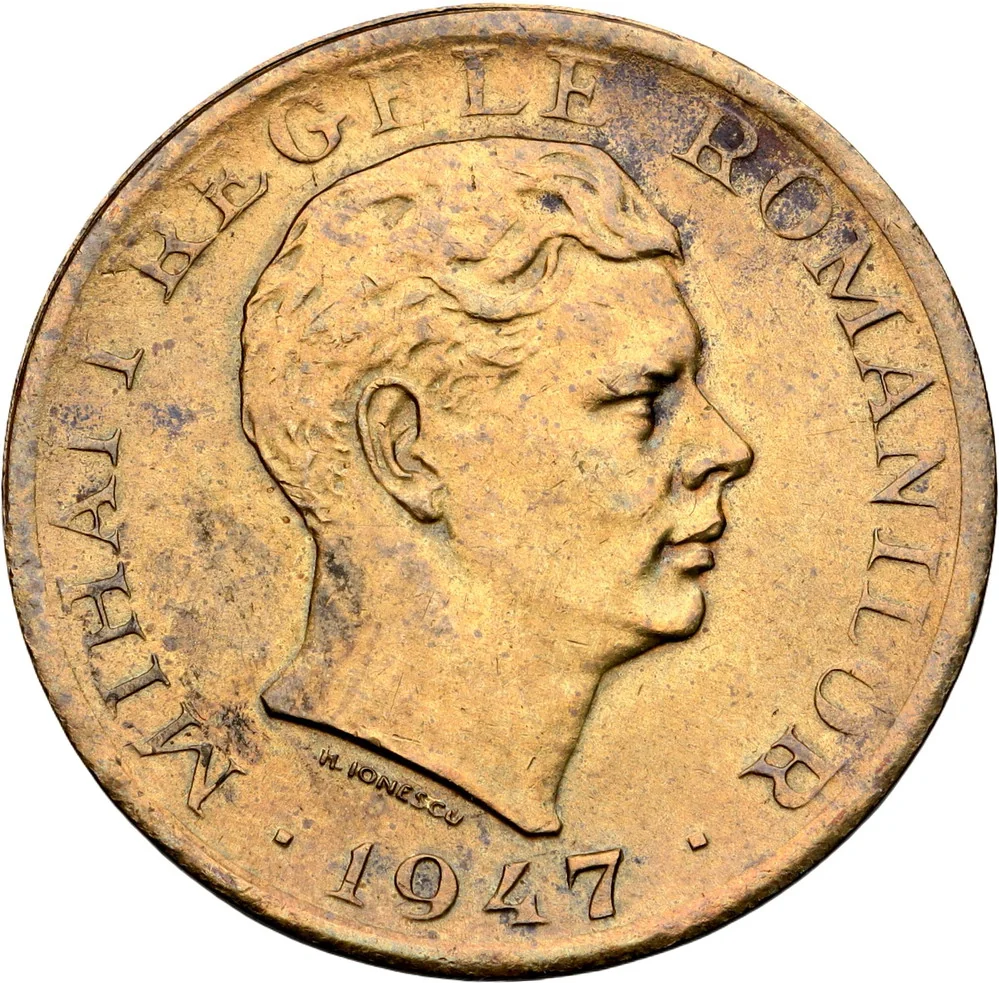
Obverse
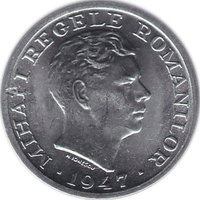
Description:
Go right
Inscription:
MIHAI I REGELE ROMANILOR
1947
H. IONESCU
1947
H. IONESCU
Translation:
Michael I King of the Romanians
1947
H. Ionescu
1947
H. Ionescu
Script: Latin
Language: Romanian
Engraver: Haralambie Ionescu
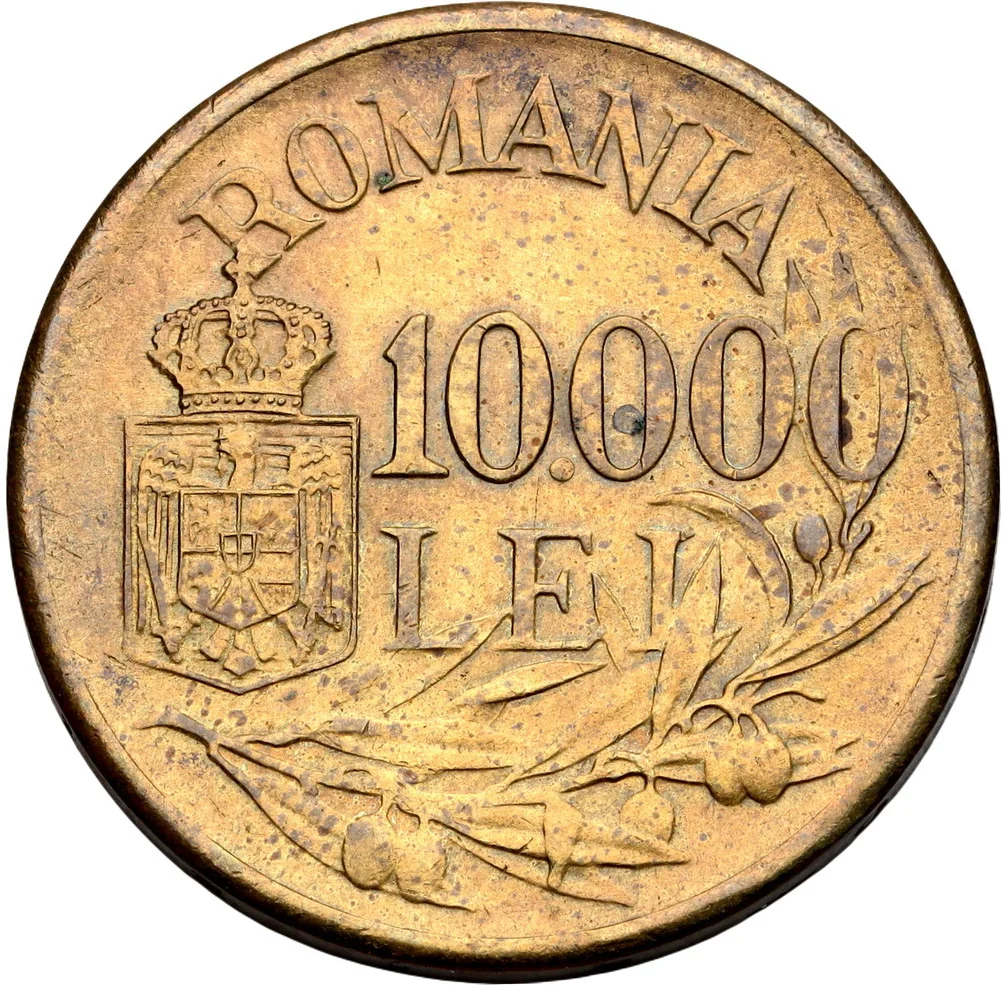
Reverse
Edge
Categories
| Symbols> Coat of Arms |
| Person> Monarch |
Mints
| Name | Mark |
|---|---|
| State Mint | — |
Mintings
| Year | Mint Mark | Mintage | Quality | Collection |
|---|---|---|---|---|
| 1947 | — | 11,850,000 |
Historical background
In 1947, Romania’s currency situation was marked by a profound monetary crisis and a politically driven reform that solidified communist control. Following World War II, the economy was devastated, and the National Bank had financed massive government deficits by printing money, leading to hyperinflation and a collapse in the value of the leu. A thriving black market operated alongside the official economy, with the U.S. dollar or barter often preferred over the vastly depreciated currency, causing severe hardship for the population.
On August 15, 1947, the communist government, which had forcibly taken power that year, enacted a drastic monetary reform. Old banknotes were abruptly demonetized and replaced with new lei at wildly discriminatory rates. While small savings were converted at 20,000 old lei for 1 new leu, larger holdings—deemed to be the "ill-gotten gains" of the former bourgeoisie and class enemies—were confiscated entirely or exchanged at rates as severe as 4 million to 1. The reform was presented as a strike against war profiteers and speculators, but its true purpose was socio-political.
The primary consequences were the destruction of private savings and the complete eradication of any remaining economic independence for the middle and upper classes. This effectively centralized financial control in the state, cleared the way for the nationalization of industry the following year, and established the framework for a Soviet-style command economy. Thus, the 1947 currency reform was less an economic stabilization measure and more a decisive tool of social engineering and communist consolidation, impoverishing many and eliminating the financial basis for potential political opposition.
On August 15, 1947, the communist government, which had forcibly taken power that year, enacted a drastic monetary reform. Old banknotes were abruptly demonetized and replaced with new lei at wildly discriminatory rates. While small savings were converted at 20,000 old lei for 1 new leu, larger holdings—deemed to be the "ill-gotten gains" of the former bourgeoisie and class enemies—were confiscated entirely or exchanged at rates as severe as 4 million to 1. The reform was presented as a strike against war profiteers and speculators, but its true purpose was socio-political.
The primary consequences were the destruction of private savings and the complete eradication of any remaining economic independence for the middle and upper classes. This effectively centralized financial control in the state, cleared the way for the nationalization of industry the following year, and established the framework for a Soviet-style command economy. Thus, the 1947 currency reform was less an economic stabilization measure and more a decisive tool of social engineering and communist consolidation, impoverishing many and eliminating the financial basis for potential political opposition.

🌱 Common