


Obverse
Description:
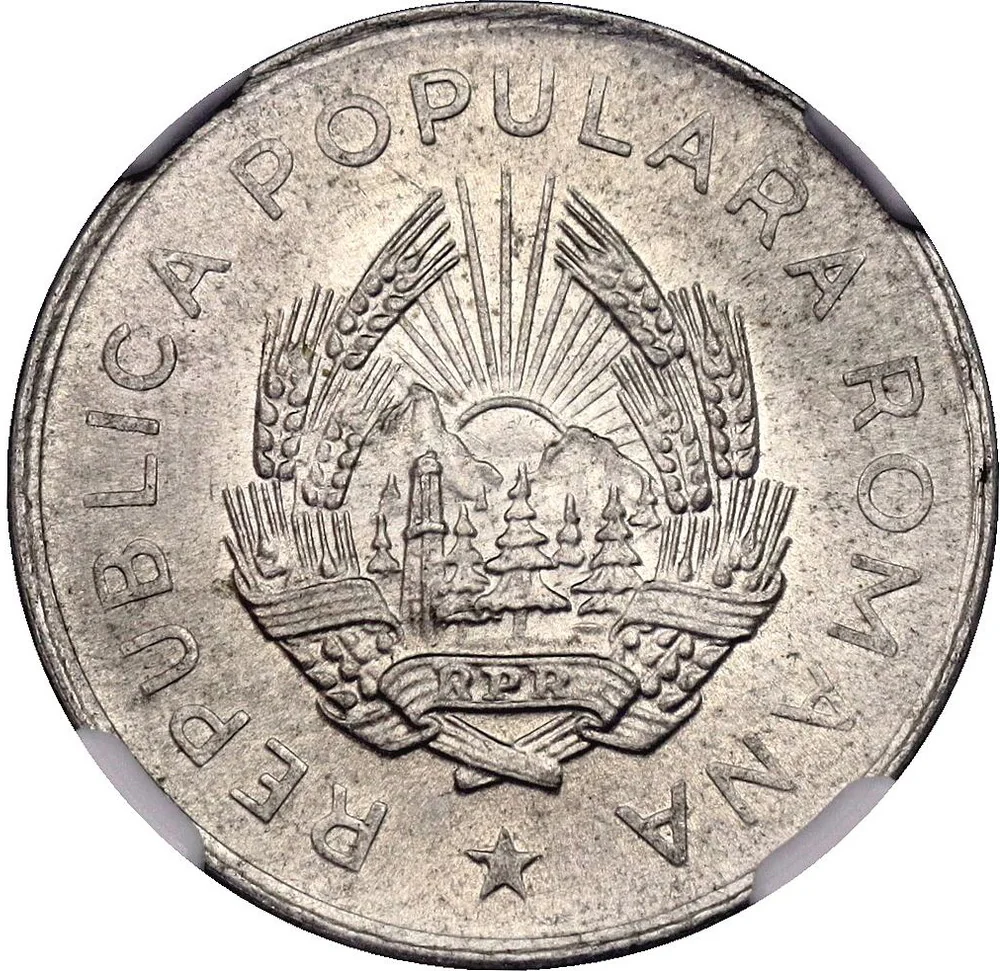
Romanian People's Republic Coat of Arms
Inscription:
REPUBLICA POPULARA ROMANA
RPR
RPR
Translation:
ROMANIAN PEOPLE'S REPUBLIC
RPR
RPR
Script: Latin
Language: Romanian
Engraver: Haralambie Ionescu
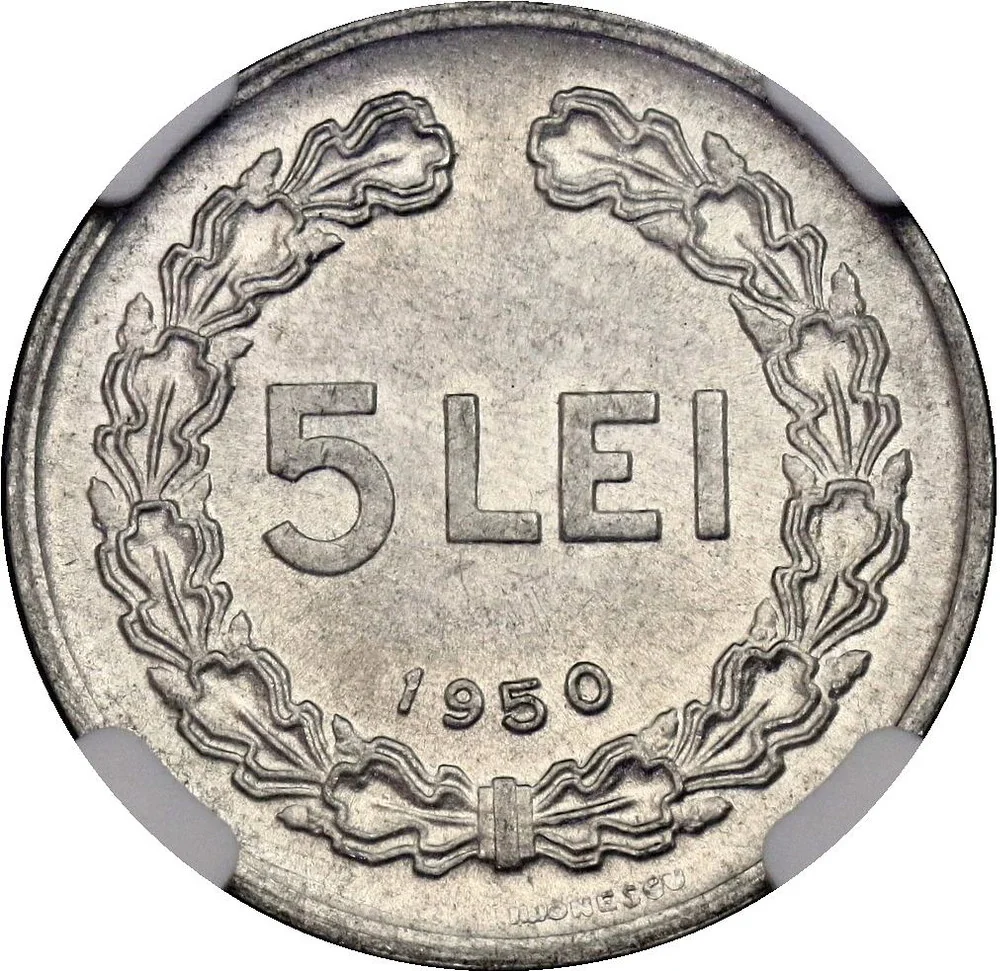
Reverse
Edge
Plain
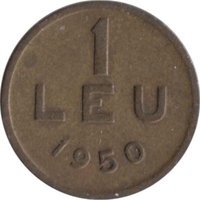
Mintings
| Year | Mint Mark | Mintage | Quality | Collection |
|---|---|---|---|---|
| 1948 | — | — | ||
| 1949 | — | — | ||
| 1950 | — | — | ||
| 1951 | — | — |
Historical background
In 1948, Romania underwent a profound and coercive currency reform that was a direct instrument of the country's rapid Sovietization under the new communist regime. This reform, enacted on August 15-21, was not a simple redenomination but a confiscatory measure designed to solidify state control over the economy and eliminate the wealth of the pre-war elite, the middle class, and the peasantry. The old Romanian Leu (ROL) was replaced at wildly discriminatory rates: while small sums necessary for basic transactions were exchanged at a rate of 100 old lei for 1 new leu, larger holdings—the savings of entrepreneurs, professionals, and landowners—were either exchanged at a rate of 400 to 1 or simply rendered worthless, as vast amounts were declared invalid and blocked.
The immediate consequences were catastrophic for much of the population. Overnight, personal savings and monetary assets were wiped out, destroying the economic foundation of the existing social structure. The state, however, used this seized capital to fund its new industrialization plans and to fully nationalize industry, banking, and other means of production. The reform was executed with severe restrictions on bank withdrawals and under a veil of secrecy to prevent citizens from protecting their assets, effectively transferring all financial power to the communist government.
This monetary event was a pivotal step in establishing a centrally planned, command economy in Romania. By eradicating private capital and concentrating all financial resources in state hands, the 1948 reform created the conditions for the complete collectivization of agriculture and the launch of forced industrialization in the following years. It marked the definitive end of the market economy and integrated Romania firmly into the Soviet Bloc's economic sphere, setting the stage for decades of communist rule characterized by scarcity and a state-controlled monetary system.
The immediate consequences were catastrophic for much of the population. Overnight, personal savings and monetary assets were wiped out, destroying the economic foundation of the existing social structure. The state, however, used this seized capital to fund its new industrialization plans and to fully nationalize industry, banking, and other means of production. The reform was executed with severe restrictions on bank withdrawals and under a veil of secrecy to prevent citizens from protecting their assets, effectively transferring all financial power to the communist government.
This monetary event was a pivotal step in establishing a centrally planned, command economy in Romania. By eradicating private capital and concentrating all financial resources in state hands, the 1948 reform created the conditions for the complete collectivization of agriculture and the launch of forced industrialization in the following years. It marked the definitive end of the market economy and integrated Romania firmly into the Soviet Bloc's economic sphere, setting the stage for decades of communist rule characterized by scarcity and a state-controlled monetary system.

🌱 Common