

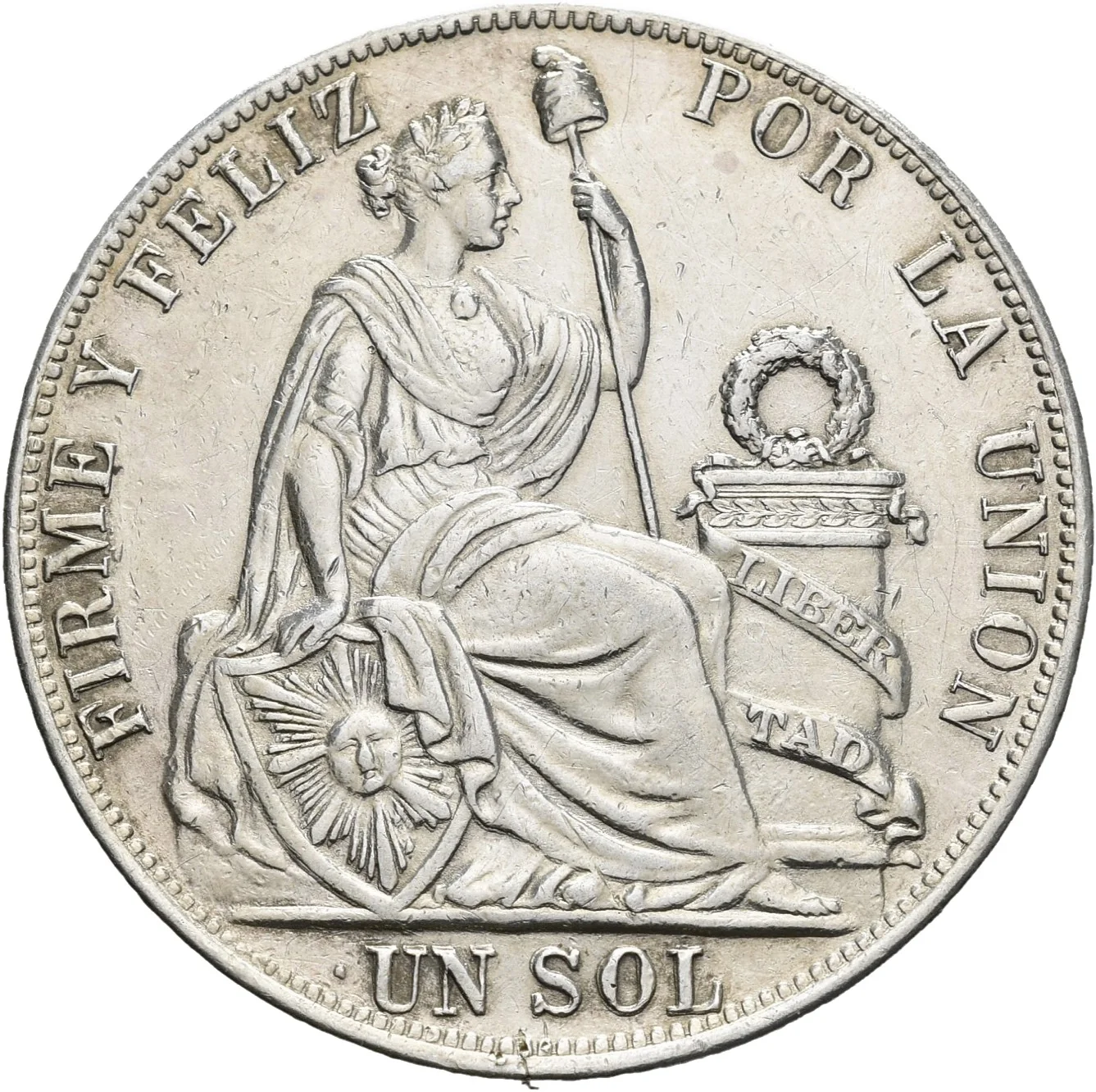

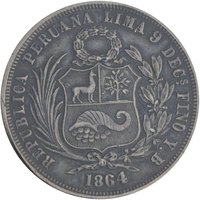
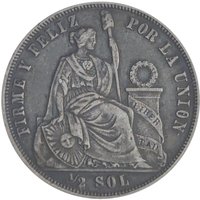
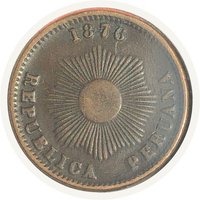
Obverse
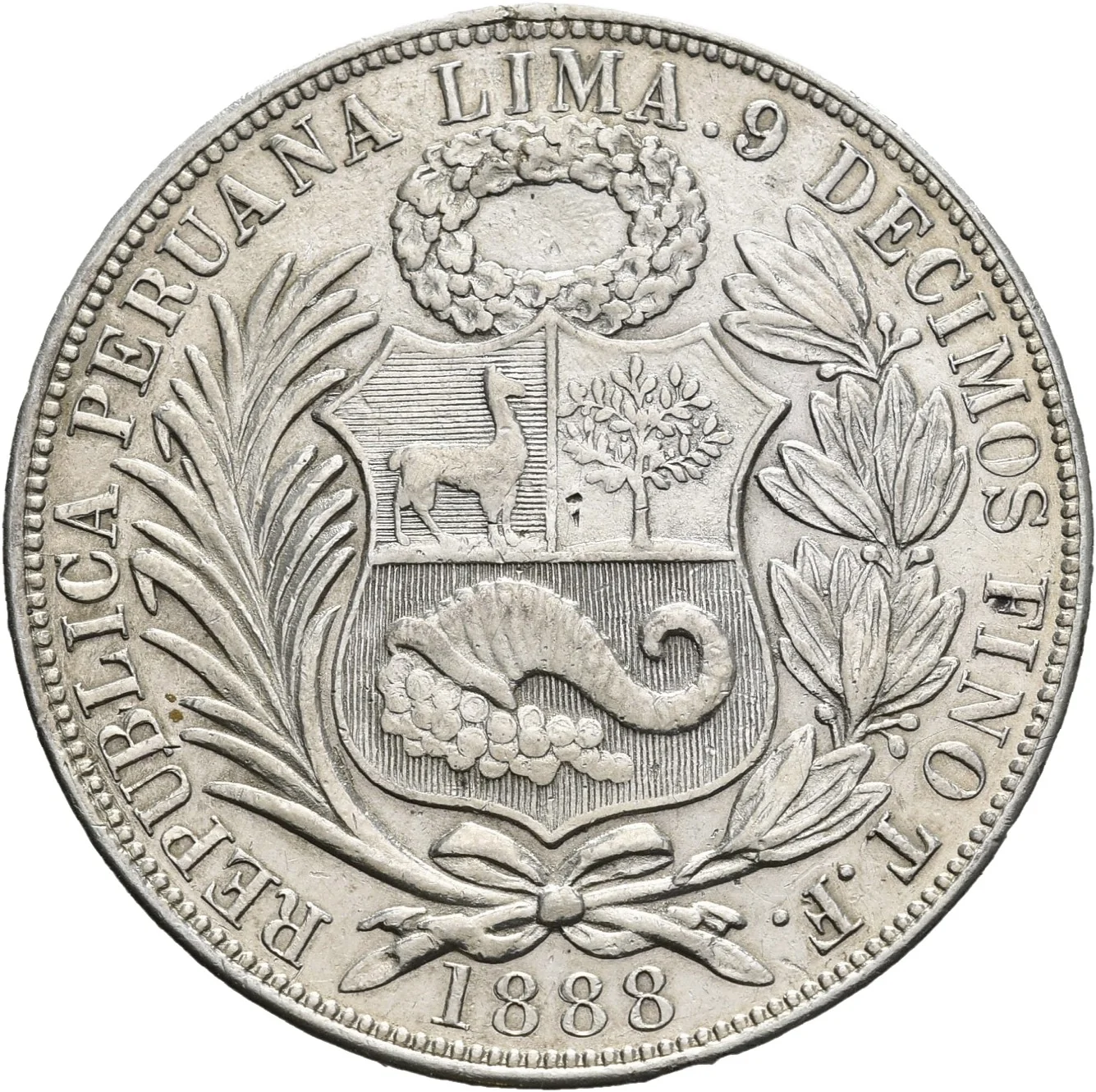
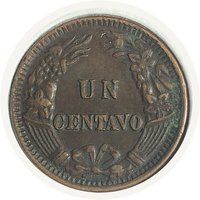
Reverse
Edge
Reeded
Categories
| Symbol> Allegory |
| Symbols> Coat of Arms |
| Symbol> Cornucopia |
Mints
| Name | Mark |
|---|---|
| Casa de Moneda de Chile | — |
| Lima | LIMA |
Mintings
| Year | Mint Mark | Mintage | Quality | Collection |
|---|---|---|---|---|
| 1864 | Y.B. | — | ||
| 1864 | YB | — | ||
| 1865 | Y.B. | — | ||
| 1865 | Y.B./B.B. | — | ||
| 1865 | YB | — | ||
| 1866 | Y.B. | — | ||
| 1867 | Y.B. | — | ||
| 1868 | Y.B. | — | ||
| 1868 | YB | — | ||
| 1869 | YB | — | ||
| 1870 | YB | — | ||
| 1870 | YJ | — | ||
| 1871 | YJ | — | ||
| 1872 | YJ | — | ||
| 1873 | LD | 445,230 | ||
| 1873 | YJ | — | ||
| 1873 | — | — | ||
| 1874 | YJ | — | ||
| 1875 | YJ | — | ||
| 1876 | YJ | — | ||
| 1879 | YJ | — | ||
| 1880 | JY | — | ||
| 1880 | YJ | — | ||
| 1881 | BF | — | ||
| 1882 | BF | — | ||
| 1882 | FN/BN | — | ||
| 1882 | FN | — | ||
| 1883 | FN | — | ||
| 1884 | BD | — | ||
| 1884 | BD/BF | — | ||
| 1884 | RD | — | ||
| 1885 | TD/BD | — | ||
| 1885 | TD/BF | — | ||
| 1885 | TD/TF | — | ||
| 1885 | RD/BD | — | ||
| 1885 | RD/BF | — | ||
| 1885 | TD | — | ||
| 1885 | RD | — | ||
| 1886 | TF | — | ||
| 1886 | TF/BR | — | ||
| 1887 | TF | — | ||
| 1887 | TF/BF | — | ||
| 1888 | TF | 3,147,000 | ||
| 1888 | TF/BF | — | ||
| 1889 | TF | 2,842,000 | ||
| 1889 | TF/BF | — | ||
| 1890 | TF | 2,304,000 | ||
| 1890 | TF/BF | — | ||
| 1891 | TF | 2,981,000 | ||
| 1891 | TF/BF | — | ||
| 1892 | TF | 2,270,000 | ||
| 1892 | TF/BF | — | ||
| 1893 | TF | — | ||
| 1894 | TF | — | ||
| 1895 | TF | — | ||
| 1896 | F | — | ||
| 1896 | TF | — | ||
| 1897 | JF | — | ||
| 1914 | FG | — | ||
| 1915 | FG | — | ||
| 1916 | FG | — |
Historical background
In 1864, Peru's currency situation was characterized by significant instability and a complex transition between monetary standards. The nation was still grappling with the economic aftermath of independence and internal conflicts, which had led to a severe shortage of minted coinage in circulation. To fill this void, a chaotic mix of foreign coins—primarily Bolivian, Chilean, and Spanish—circulated alongside Peru's own minted silver pesos and gold escudos, creating a confusing and inefficient monetary environment that hampered commerce and state finances.
The government of President Juan Antonio Pezet sought to modernize and unify the system by formally adopting a decimal-based, silver standard currency. This effort culminated in the Law of February 14, 1863, which established the Sol as the new national unit of account, divided into 100 centavos. However, the practical implementation of this reform was slow and incomplete throughout 1864. While new silver soles and gold dineros were authorized, the minting capacity was limited, meaning that old and foreign coins continued to dominate everyday transactions, and the public remained skeptical of the new fiduciary currency.
This monetary fragility was exacerbated by a severe fiscal crisis. The state treasury was depleted, and the government resorted to issuing paper money (billetes fiscales) to pay its debts and fund operations, including the looming conflict with Spain. These notes, not fully backed by specie, quickly began to depreciate. Thus, by the end of 1864, Peru found itself in a precarious position: caught between an aspirational new silver standard and the reality of depreciating paper currency, all while facing the financial strains of the impending war with the Spanish fleet, which would further destabilize the economy.
The government of President Juan Antonio Pezet sought to modernize and unify the system by formally adopting a decimal-based, silver standard currency. This effort culminated in the Law of February 14, 1863, which established the Sol as the new national unit of account, divided into 100 centavos. However, the practical implementation of this reform was slow and incomplete throughout 1864. While new silver soles and gold dineros were authorized, the minting capacity was limited, meaning that old and foreign coins continued to dominate everyday transactions, and the public remained skeptical of the new fiduciary currency.
This monetary fragility was exacerbated by a severe fiscal crisis. The state treasury was depleted, and the government resorted to issuing paper money (billetes fiscales) to pay its debts and fund operations, including the looming conflict with Spain. These notes, not fully backed by specie, quickly began to depreciate. Thus, by the end of 1864, Peru found itself in a precarious position: caught between an aspirational new silver standard and the reality of depreciating paper currency, all while facing the financial strains of the impending war with the Spanish fleet, which would further destabilize the economy.
🌱 Common