

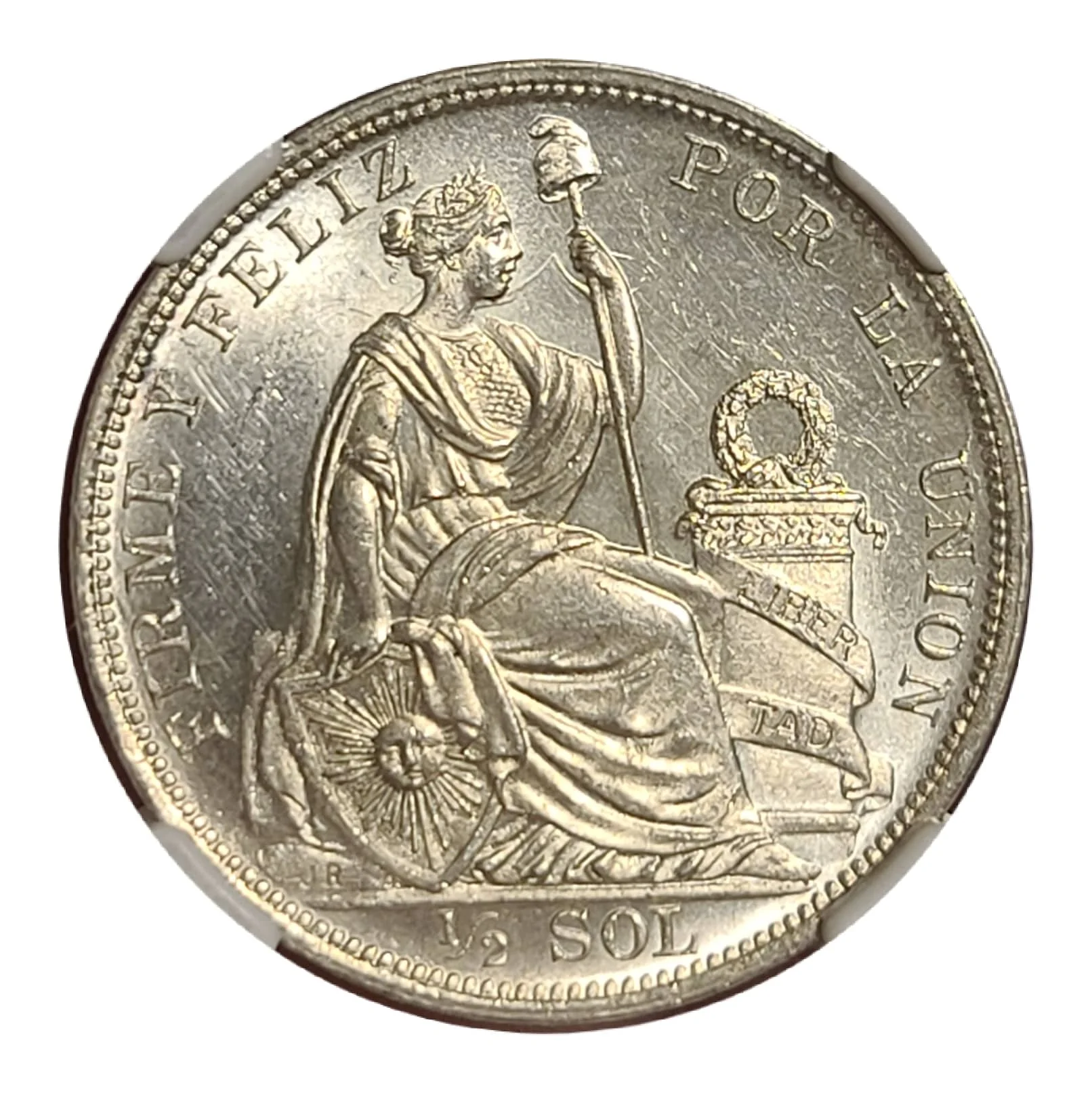

Obverse
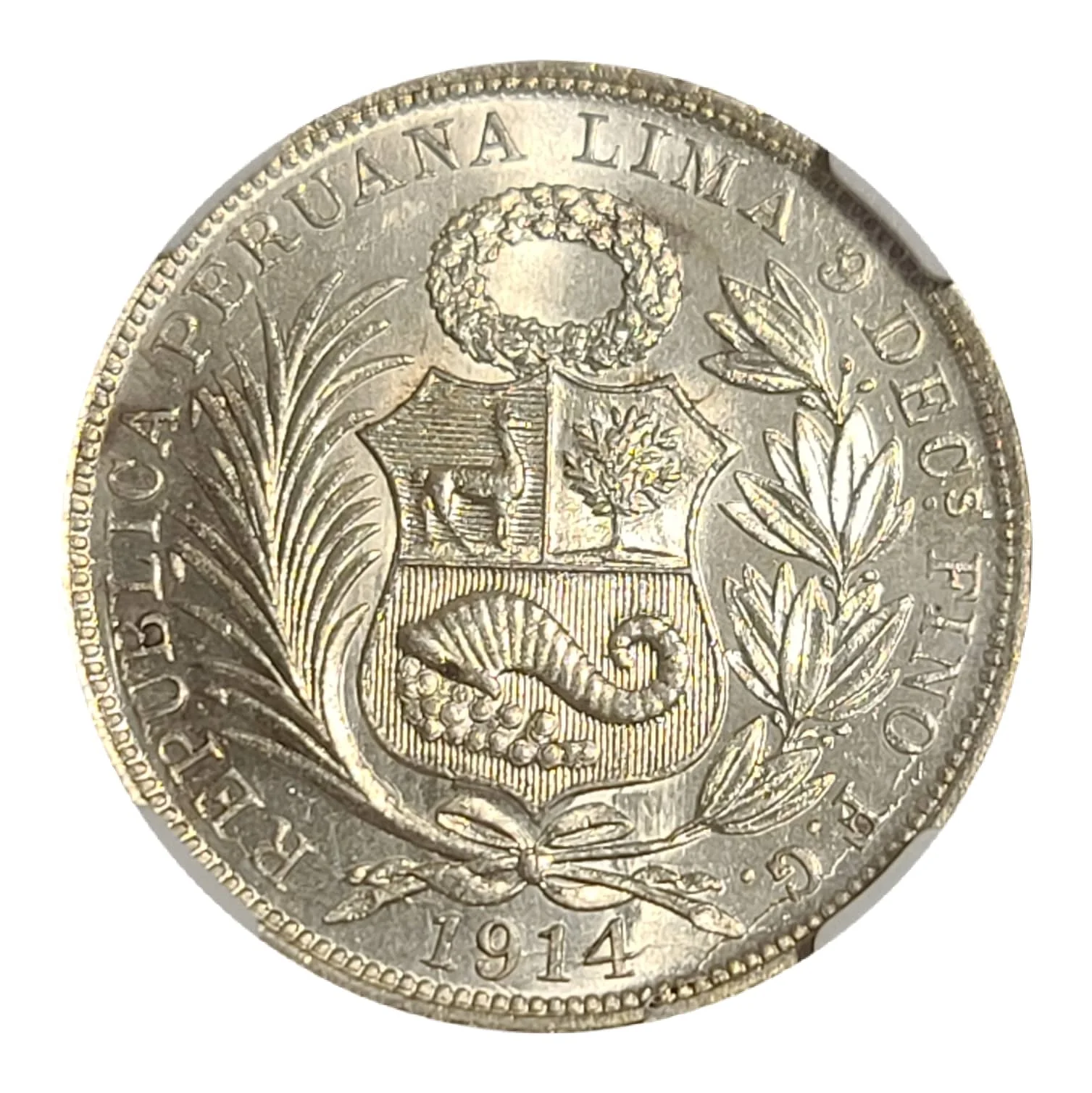
Reverse
Description:
Liberty seated right, holding a shield and a staff with a Phrygian cap.
Inscription:
FIRME Y FELIZ POR LA UNION
LIBERTAD
JR
1/2 SOL
LIBERTAD
JR
1/2 SOL
Script: Latin
Edge
Reeded
Categories
| Symbol> Cornucopia |
| Symbol> Phrygian cap |
| Symbol> Sun |
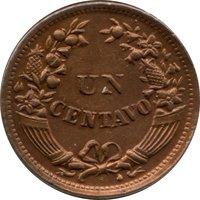
| Symbol> Wreath |
| Animal> Camel |
| Symbol> Allegory |
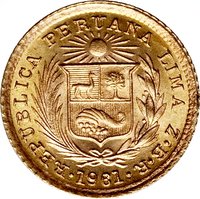
| Symbols> Coat of Arms |
Mintings
| Year | Mint Mark | Mintage | Quality | Collection |
|---|---|---|---|---|
| 1907 | LIMA | 1,000,000 | ||
| 1908 | LIMA | 30,000 | ||
| 1914 | LIMA | 173,000 | ||
| 1915 | LIMA | 570,000 | ||
| 1916 | LIMA | 384,000 | ||
| 1917 | LIMA | 178,000 |
Historical background
In 1907, Peru's currency situation was characterized by a complex and unstable bimetallic system, a legacy of the 19th century. The official monetary standard was the silver sol, but the country also circulated gold British sovereigns and Peruvian gold pounds (libra peruana de oro), creating a de facto dual system. This arrangement was problematic because the fixed legal exchange rate between gold and silver rarely matched their fluctuating market values, leading to chronic arbitrage, Gresham's Law in action (where "bad" money drives out "good"), and general monetary confusion that hampered both domestic commerce and foreign trade.
The period followed the devastating fiscal and monetary chaos of the War of the Pacific (1879-1884), from which Peru was still recovering. A key attempt at stabilization was the creation of the Caja de Emisión (Issue House) in 1887, which held a monopoly on note issuance but lacked full central bank functions and struggled with credibility. By 1907, the paper notes issued by the Caja circulated alongside silver and gold coins, but their convertibility was often in question, and public preference for hard currency, especially gold, persisted. This fragmentation reflected a deep-seated lack of trust in paper money and state institutions following previous episodes of hyperinflation and economic collapse.
Consequently, 1907 fell within a pivotal decade of reform that would culminate in the major monetary reform of 1909. The government, recognizing the inefficiencies and the need to attract foreign investment for export-led growth (particularly in copper and oil), was moving decisively toward adopting a full gold standard. The situation in 1907 was thus one of transition, with policymakers actively working to abandon the unstable bimetallic and multi-currency system in favor of a unified, gold-backed currency to provide stability and integrate Peru more firmly into the global financial system.
The period followed the devastating fiscal and monetary chaos of the War of the Pacific (1879-1884), from which Peru was still recovering. A key attempt at stabilization was the creation of the Caja de Emisión (Issue House) in 1887, which held a monopoly on note issuance but lacked full central bank functions and struggled with credibility. By 1907, the paper notes issued by the Caja circulated alongside silver and gold coins, but their convertibility was often in question, and public preference for hard currency, especially gold, persisted. This fragmentation reflected a deep-seated lack of trust in paper money and state institutions following previous episodes of hyperinflation and economic collapse.
Consequently, 1907 fell within a pivotal decade of reform that would culminate in the major monetary reform of 1909. The government, recognizing the inefficiencies and the need to attract foreign investment for export-led growth (particularly in copper and oil), was moving decisively toward adopting a full gold standard. The situation in 1907 was thus one of transition, with policymakers actively working to abandon the unstable bimetallic and multi-currency system in favor of a unified, gold-backed currency to provide stability and integrate Peru more firmly into the global financial system.
🌱 Fairly Common