

1 Shilling – Australia
Australia
Context
Years: 1955–1963
Issuer: Australia 
Ruler: Elizabeth II
Currency:
(1788—1966)
Total mintage: 107,569,041
Material
References
KM: #Click to copy to clipboard59
Numista: #9088
Value
Bullion value: $8.03
Obverse
Description:
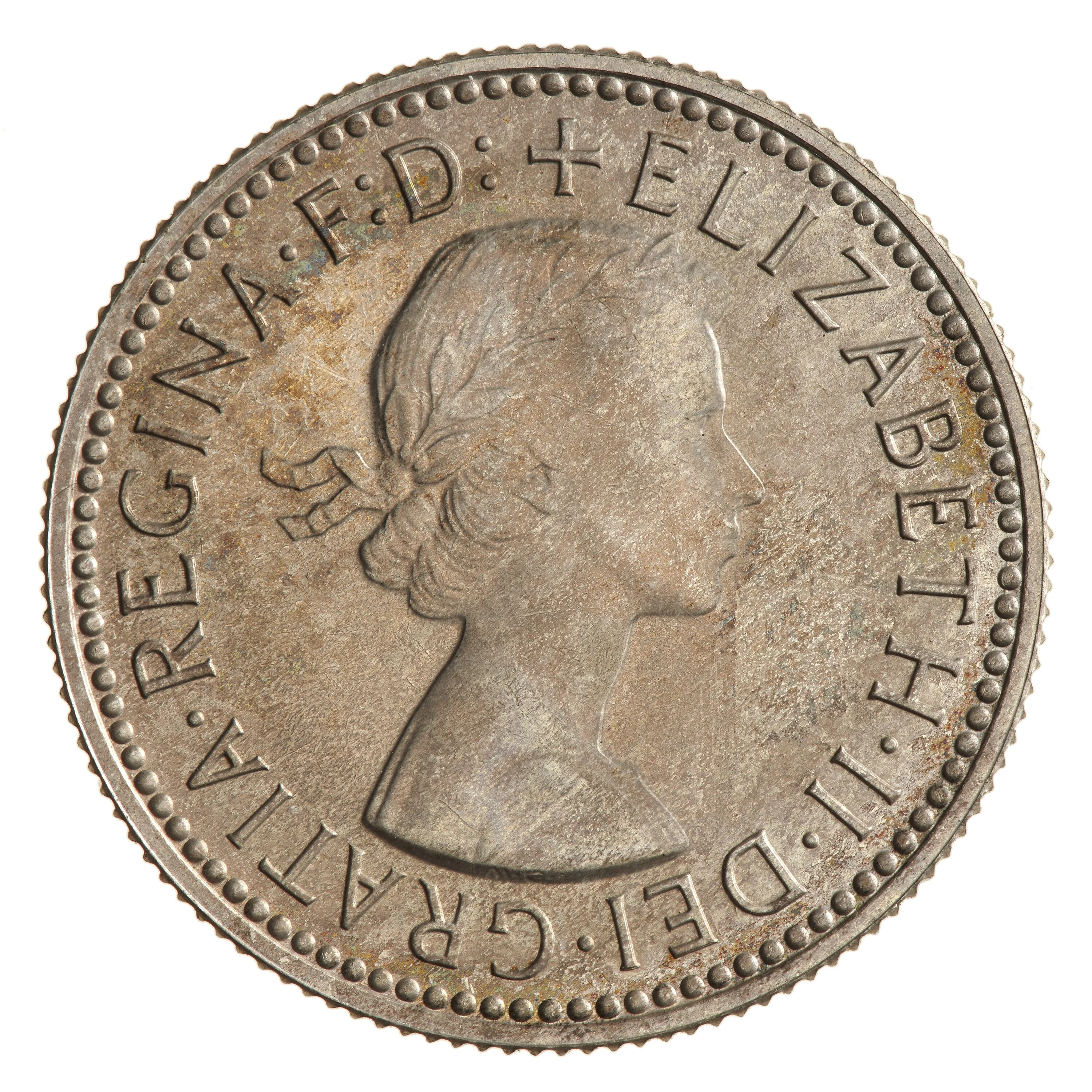
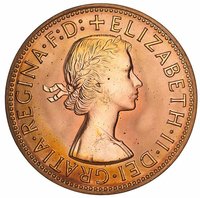
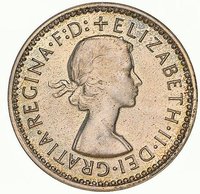
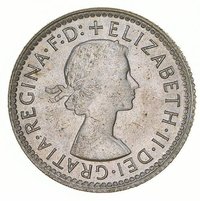
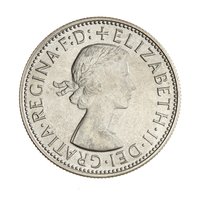
First portrait of Queen Elizabeth II, laurel-crowned, facing right.
Inscription:
+ELIZABETH·II·DEI·GRATIA·REGINA·F:D:
M · G ·
M · G ·
Translation:
Elizabeth the Second, by the Grace of God, Queen, Defender of the Faith:
M G
M G
Script: Latin
Language: Latin
Engraver: Mary Gillick
Reverse
Description:
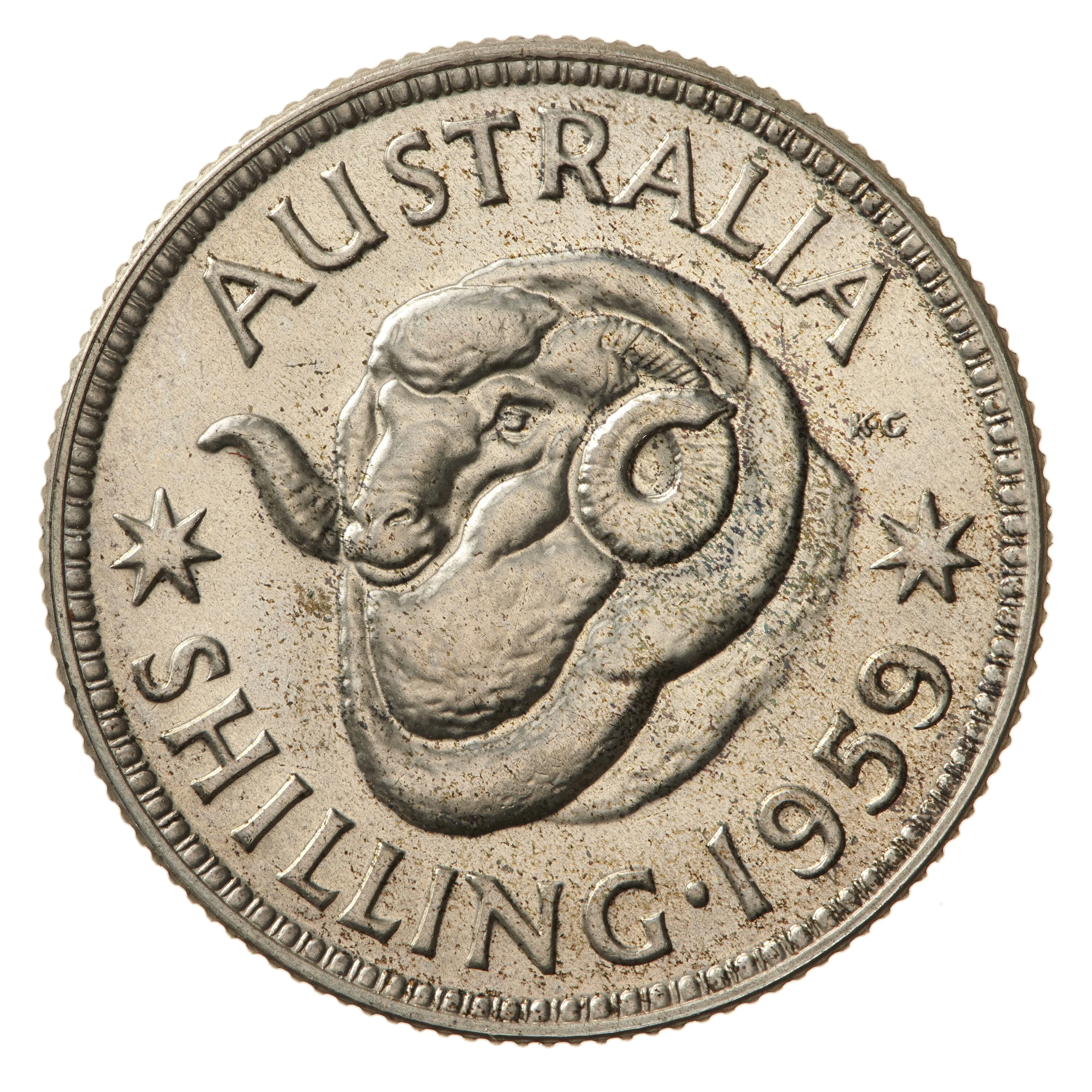
Ram's head above value and date.
Inscription:
AUSTRALIA
KG
SHILLING·1956
KG
SHILLING·1956
Script: Latin
Engraver: George Kruger Gray
Edge
Reeded
Mints
| Name | Mark |
|---|---|
| Royal Mint | — |
Mintings
| Year | Mint Mark | Mintage | Quality | Collection |
|---|---|---|---|---|
| 1955 | — | 7,492,000 | ||
| 1955 | — | 1,200 | Proof | |
| 1956 | — | 1,500 | Proof | |
| 1956 | — | 6,064,000 | ||
| 1957 | — | 1,256 | Proof | |
| 1957 | — | 12,668,000 | ||
| 1958 | — | 1,506 | Proof | |
| 1958 | — | 7,412,000 | ||
| 1959 | — | 1,506 | Proof | |
| 1959 | — | 10,876,000 | ||
| 1960 | — | 14,512,000 | ||
| 1960 | — | 1,509 | Proof | |
| 1961 | — | 31,864,000 | ||
| 1961 | — | 1,506 | Proof | |
| 1962 | — | 6,592,000 | ||
| 1962 | — | 2,016 | Proof | |
| 1963 | — | 10,072,000 | ||
| 1963 | — | 5,042 | Proof |
Historical background
In 1955, Australia's currency operated under the established framework of the Australian pound (£A), which was pegged to the British pound sterling (£Stg) as part of the Sterling Area. This fixed exchange rate, maintained by the Reserve Bank of Australia (established just a year prior in 1954), meant the value of the Australian pound was directly tied to Britain's currency. The system facilitated trade with the United Kingdom, which was still a dominant economic partner, but it also meant Australia's monetary policy was heavily influenced by British economic conditions and decisions made in London.
Economically, the period was one of post-war prosperity and expansion, often called the "long boom." However, this growth brought inflationary pressures. The Menzies government and the Reserve Bank were primarily concerned with managing this inflation and maintaining the sterling peg, which was seen as crucial for economic stability and confidence. Tools like interest rates and import controls were used to manage the balance of payments and protect the nation's gold and foreign exchange reserves, ensuring the peg remained defensible.
Despite the apparent stability, this system contained the seeds of future change. The rigid peg limited Australia's ability to set independent monetary policy suited to its own cyclical needs. Furthermore, the nation's trade was gradually diversifying away from the United Kingdom, particularly towards Asia and the United States, prompting early debates about the peg's long-term suitability. Thus, while 1955 represented a year of relative currency stability within a familiar imperial system, it was a stability that would be increasingly questioned in the coming decades, culminating in the historic shift to the decimal Australian dollar in 1966.
Economically, the period was one of post-war prosperity and expansion, often called the "long boom." However, this growth brought inflationary pressures. The Menzies government and the Reserve Bank were primarily concerned with managing this inflation and maintaining the sterling peg, which was seen as crucial for economic stability and confidence. Tools like interest rates and import controls were used to manage the balance of payments and protect the nation's gold and foreign exchange reserves, ensuring the peg remained defensible.
Despite the apparent stability, this system contained the seeds of future change. The rigid peg limited Australia's ability to set independent monetary policy suited to its own cyclical needs. Furthermore, the nation's trade was gradually diversifying away from the United Kingdom, particularly towards Asia and the United States, prompting early debates about the peg's long-term suitability. Thus, while 1955 represented a year of relative currency stability within a familiar imperial system, it was a stability that would be increasingly questioned in the coming decades, culminating in the historic shift to the decimal Australian dollar in 1966.
Series: 1955 Australia circulation coins
🌱 Very Common