

1 Florin – Australia
Australia
Context
Years: 1956–1963
Issuer: Australia 
Ruler: Elizabeth II
Currency:
(1788—1966)
Total mintage: 80,817,841
Material
References
KM: #Click to copy to clipboard60
Numista: #6759
Value
Bullion value: $16.07
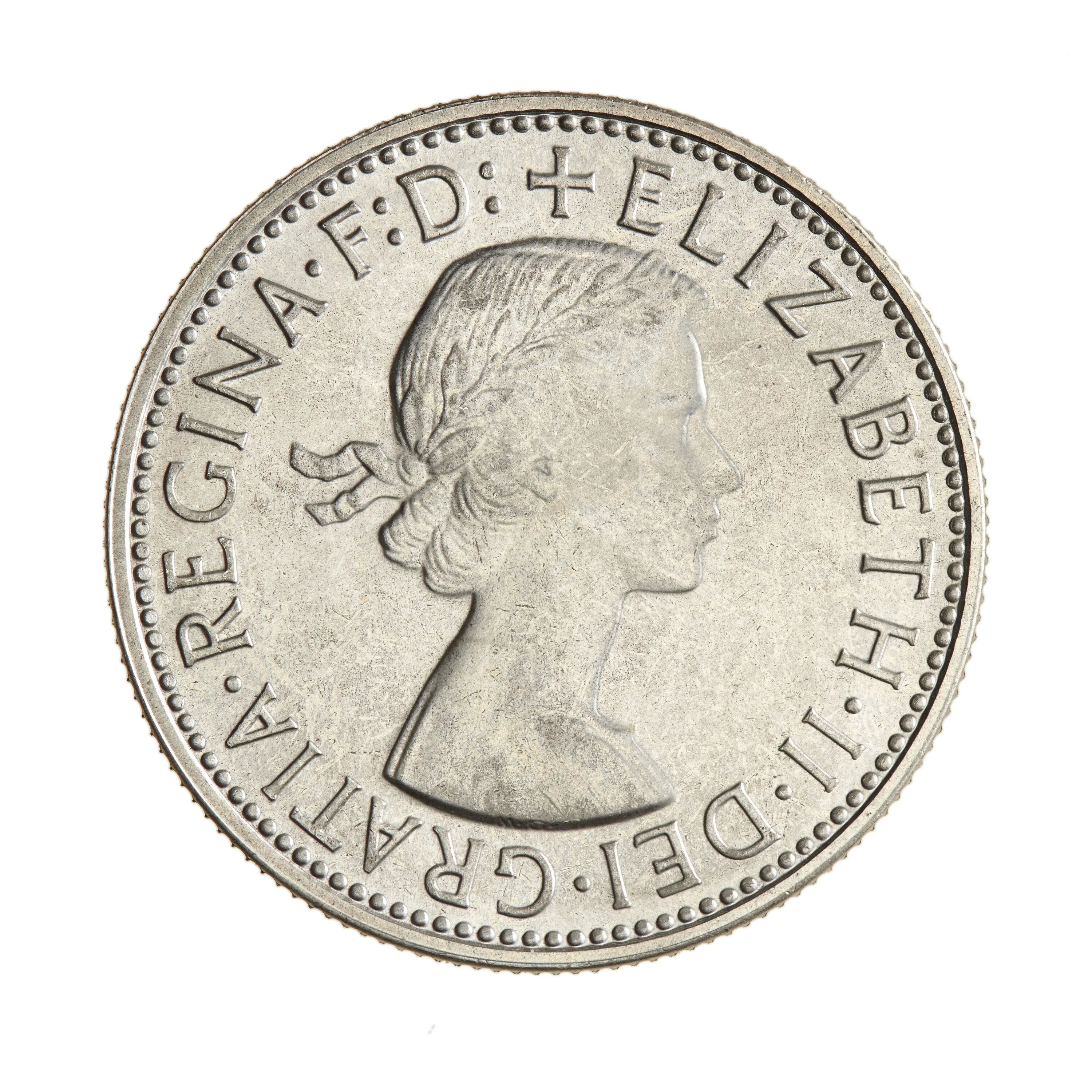
Obverse
Description:
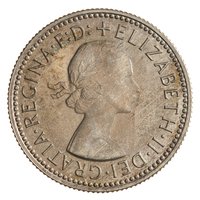
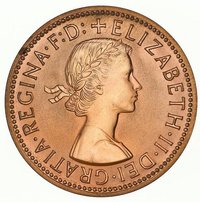
Young Elizabeth II in laurel wreath, facing right.
Inscription:
+ELIZABETH·II·DEI·GRATIA·REGINA·F:D:
Translation:
Elizabeth the Second, by the Grace of God, Queen, Defender of the Faith.
Script: Latin
Language: Latin
Designer: Mary Gillick
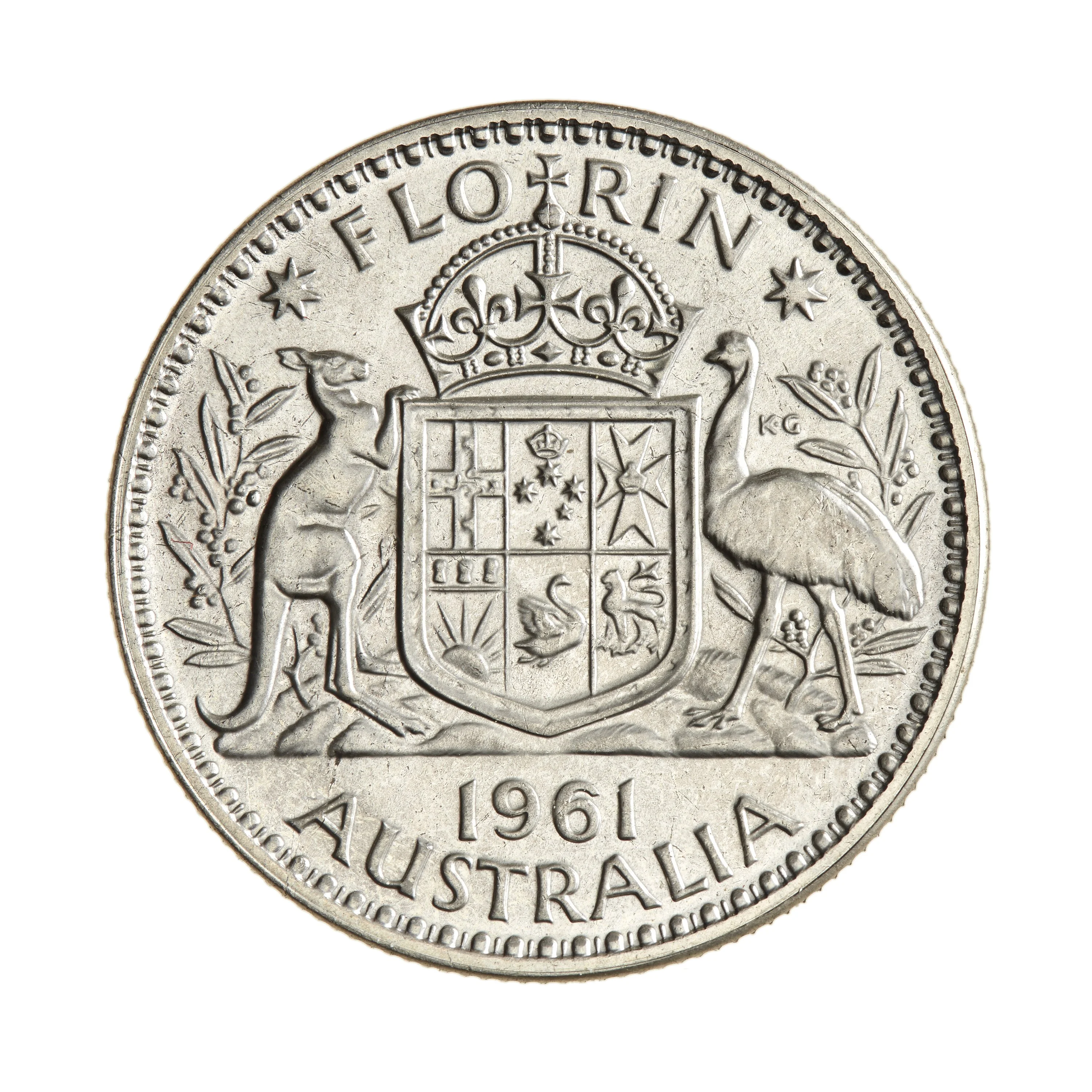
Reverse
Description:
Australian Coat of Arms
Inscription:
FLO RIN
K·G
1956
AUSTRALIA
K·G
1956
AUSTRALIA
Script: Latin
Designer: George Kruger Gray
Edge
Reeded
Mints
| Name | Mark |
|---|---|
| Royal Mint | — |
Mintings
| Year | Mint Mark | Mintage | Quality | Collection |
|---|---|---|---|---|
| 1956 | — | 8,090,000 | ||
| 1956 | — | 1,500 | Proof | |
| 1957 | — | 9,278,000 | ||
| 1957 | — | 1,256 | Proof | |
| 1958 | — | 1,506 | Proof | |
| 1958 | — | 8,972,000 | ||
| 1959 | — | 3,500,000 | ||
| 1959 | — | 1,506 | Proof | |
| 1960 | — | 15,760,000 | ||
| 1960 | — | 1,509 | Proof | |
| 1961 | — | 1,506 | Proof | |
| 1961 | — | 9,452,000 | ||
| 1962 | — | 13,748,000 | ||
| 1962 | — | 2,016 | Proof | |
| 1963 | — | 12,002,000 | ||
| 1963 | — | 5,042 | Proof |
Historical background
In 1956, Australia operated under a stable and tightly regulated currency system as part of the Bretton Woods international monetary order. The Australian pound (A£) was pegged to the British pound sterling (GBP) at parity, which in turn was pegged to the US dollar, effectively fixing the Australian currency to gold indirectly. This system provided predictability for trade and investment, which was crucial for a nation heavily reliant on agricultural and mineral exports. The Commonwealth Bank of Australia (the nation's central bank until 1960) managed the currency, enforcing strict exchange controls that limited the flow of capital in and out of the country to maintain the peg and protect foreign reserves.
The economy in 1956 was experiencing the tail end of a post-war boom, fuelled by high commodity prices, significant immigration, and substantial foreign investment, particularly from the United Kingdom and the United States. However, the fixed exchange rate sometimes created tension. A strong demand for Australian exports generated inflationary pressures domestically, but the peg prevented an appreciation of the currency that could have naturally cooled the economy. This period was characterised by a "stop-go" economic policy, where authorities used blunt tools like credit squeezes and import restrictions to manage the balance of payments and control inflation, rather than adjusting the exchange rate.
Looking ahead, the stability of 1956 was underlaid by growing pressures that would eventually lead to major change. The rigidity of the peg became increasingly problematic as Britain's own economic power waned and Australia's trade diversified. These strains would culminate in a decade of significant monetary reform: the decimalisation of the currency to the Australian dollar in 1966 and, ultimately, the float of the dollar in 1983. Thus, 1956 represents a point of apparent stability within a fixed system that was, in the longer term, destined for transformation.
The economy in 1956 was experiencing the tail end of a post-war boom, fuelled by high commodity prices, significant immigration, and substantial foreign investment, particularly from the United Kingdom and the United States. However, the fixed exchange rate sometimes created tension. A strong demand for Australian exports generated inflationary pressures domestically, but the peg prevented an appreciation of the currency that could have naturally cooled the economy. This period was characterised by a "stop-go" economic policy, where authorities used blunt tools like credit squeezes and import restrictions to manage the balance of payments and control inflation, rather than adjusting the exchange rate.
Looking ahead, the stability of 1956 was underlaid by growing pressures that would eventually lead to major change. The rigidity of the peg became increasingly problematic as Britain's own economic power waned and Australia's trade diversified. These strains would culminate in a decade of significant monetary reform: the decimalisation of the currency to the Australian dollar in 1966 and, ultimately, the float of the dollar in 1983. Thus, 1956 represents a point of apparent stability within a fixed system that was, in the longer term, destined for transformation.
🌱 Very Common