

1 paisa – Bengal Presidency
Add to wishlist
India
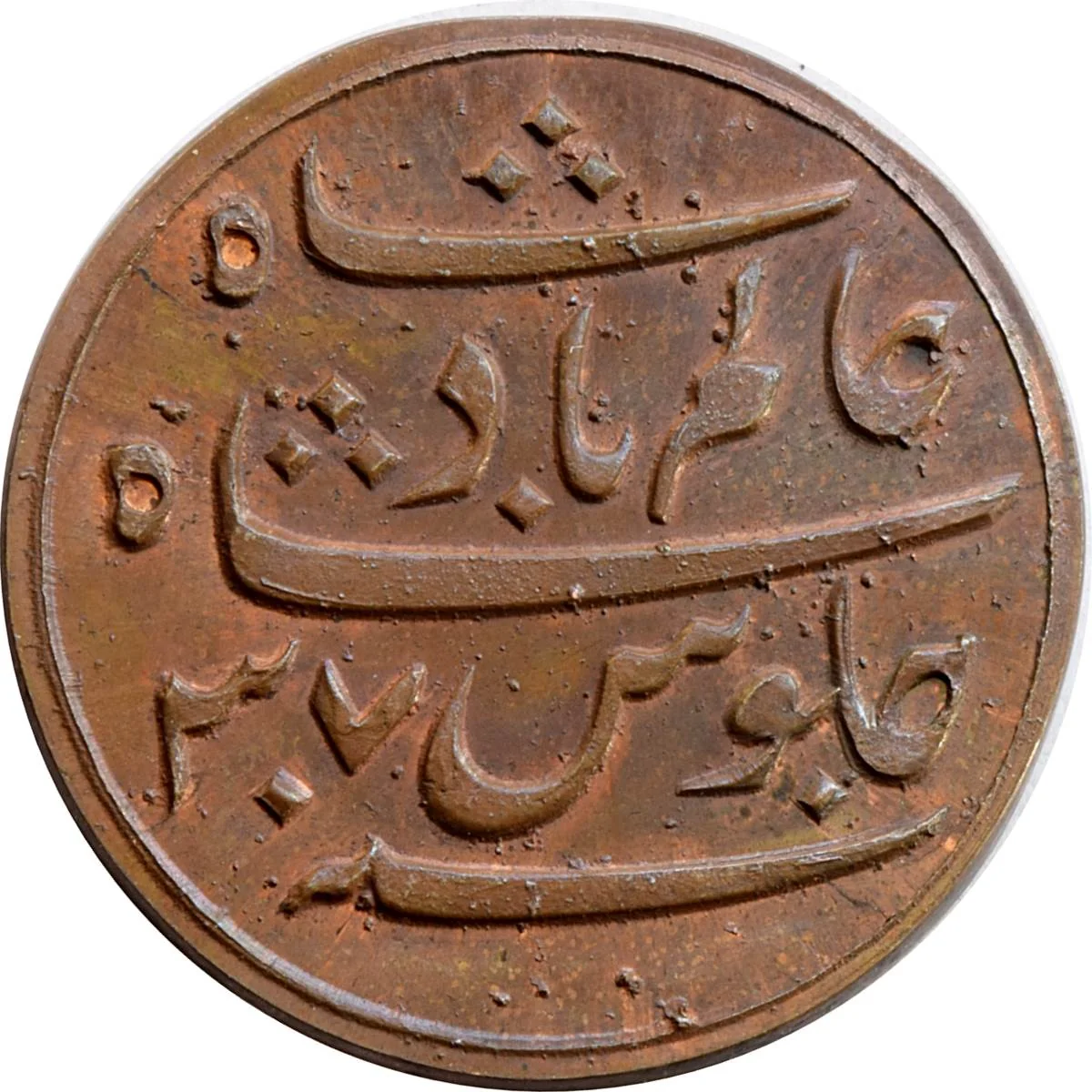
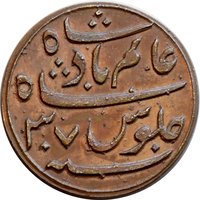
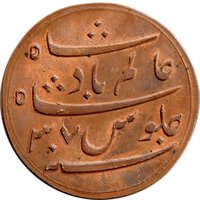
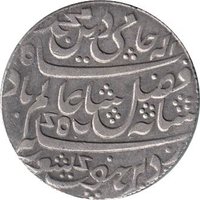
Obverse
Description:
Shah Alam, Year 37 of his reign.
Inscription:
شاه
عالم باد
شاه
جلوس ٣٧
سنة
عالم باد
شاه
جلوس ٣٧
سنة
Translation:
Shah
Alam Bad
Shah
Year 37 of the Reign
Alam Bad
Shah
Year 37 of the Reign
Language: Persian
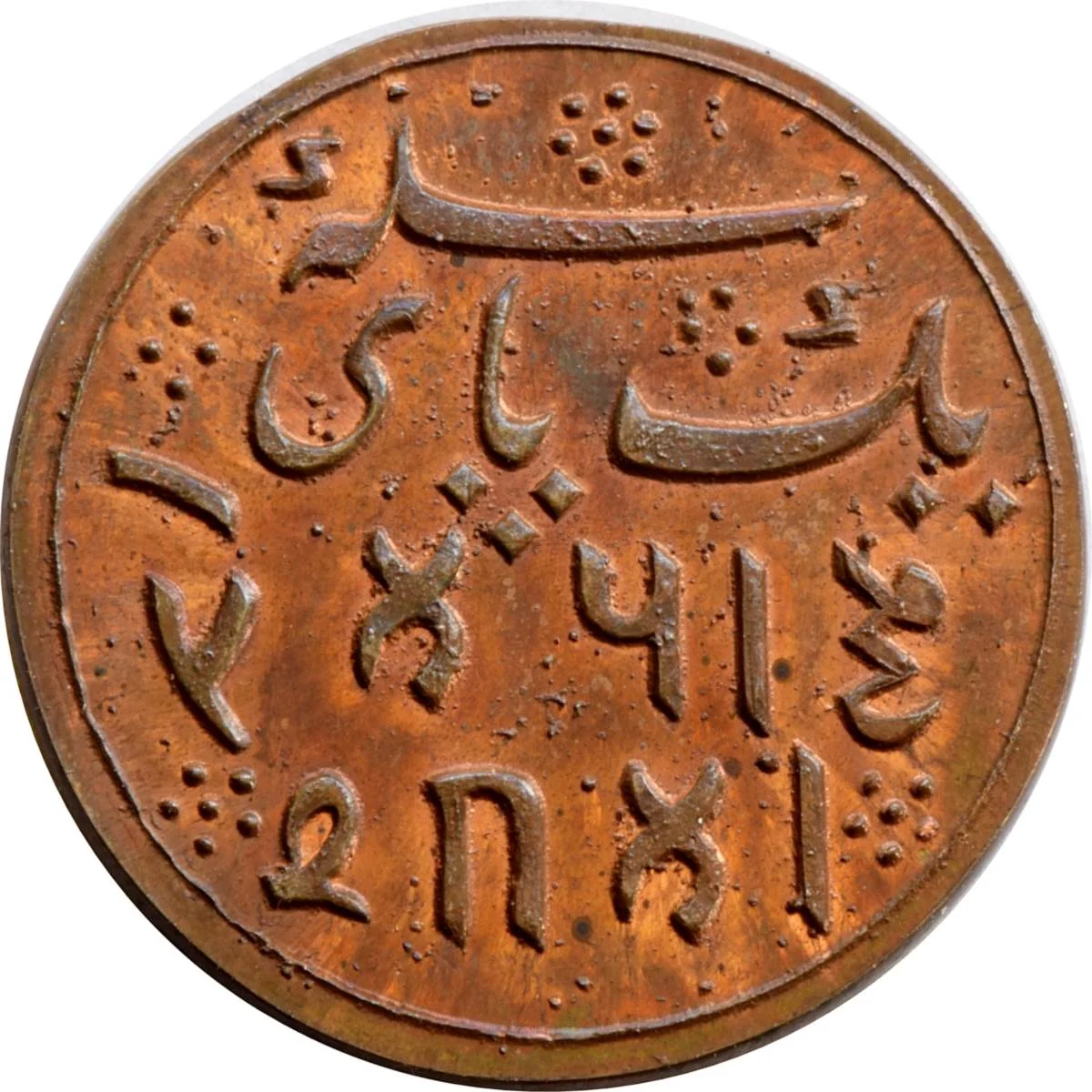
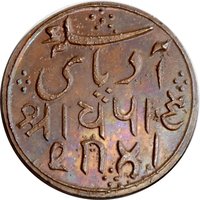
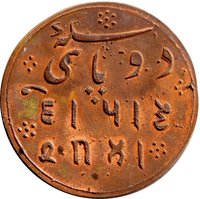
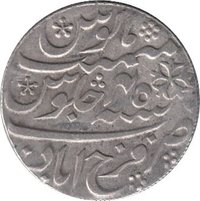
Reverse
Description:
Persian: Yek pai sikka
Devanagari: Ek pai sikka
Devanagari: Ek pai sikka
Edge
Plain
Mintings
| Year | Mint Mark | Mintage | Quality | Collection |
|---|---|---|---|---|
| 1809 | — | — | Proof | |
| 1809 | — | — |
Historical background
In 1809, the Bengal Presidency’s currency situation was defined by a prolonged crisis of silver scarcity and a disordered, multi-currency system. The primary monetary unit was the silver rupee, but its supply was chronically insufficient due to the East India Company’s relentless export of bullion to finance its trade deficits with China (for tea) and within India itself (for military and administrative costs). This drain created a severe shortage of circulating specie, forcing reliance on a chaotic mix of older, debased Mughal rupees, foreign coins, and a proliferating number of private and regional banknotes of uncertain value. The result was widespread commercial inconvenience, exchange rate volatility, and frequent counterfeiting.
The Company administration had attempted reform with the "Coinage Act of 1793," which established the Calcutta Mint and standardized the silver rupee. However, this failed to solve the core problem of scarcity. By 1809, the monetary landscape was effectively bifurcated: accounts were kept in the official "Company's Rupee" (sicca rupee), while actual transactions were conducted in a variety of lower-weight, discounted current rupees (sicca vs. current rupee disputes were common). Gold mohurs circulated but at a floating rate against silver, and copper pice served for small change, further complicating the system.
This unstable environment severely hampered both commerce and revenue collection, as land taxes were payable in specific rupees. The crisis pushed the Company toward a consequential, though not yet realized in 1809, solution: the formal development of paper currency. While private banks issued notes, the government’s own paper money experiments were in their infancy. Thus, 1809 represents a pivotal point of strain, compelling the authorities toward the more decisive actions that would culminate in the establishment of the semi-government Bank of Bengal and, decades later, a unified paper currency system for British India.
The Company administration had attempted reform with the "Coinage Act of 1793," which established the Calcutta Mint and standardized the silver rupee. However, this failed to solve the core problem of scarcity. By 1809, the monetary landscape was effectively bifurcated: accounts were kept in the official "Company's Rupee" (sicca rupee), while actual transactions were conducted in a variety of lower-weight, discounted current rupees (sicca vs. current rupee disputes were common). Gold mohurs circulated but at a floating rate against silver, and copper pice served for small change, further complicating the system.
This unstable environment severely hampered both commerce and revenue collection, as land taxes were payable in specific rupees. The crisis pushed the Company toward a consequential, though not yet realized in 1809, solution: the formal development of paper currency. While private banks issued notes, the government’s own paper money experiments were in their infancy. Thus, 1809 represents a pivotal point of strain, compelling the authorities toward the more decisive actions that would culminate in the establishment of the semi-government Bank of Bengal and, decades later, a unified paper currency system for British India.
💎 Extremely Rare