

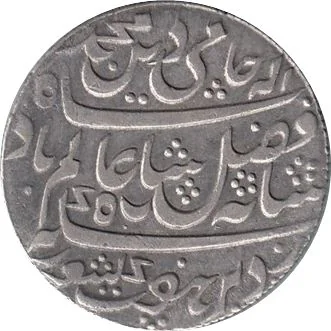
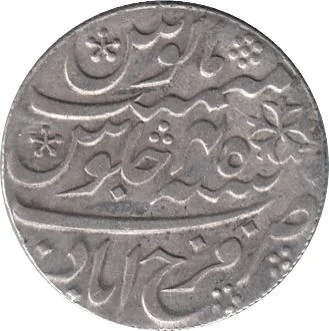
1 Rupee – Bengal Presidency
India

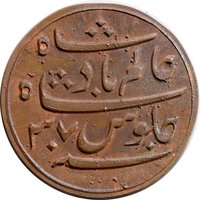
Obverse
Description:
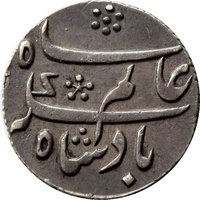
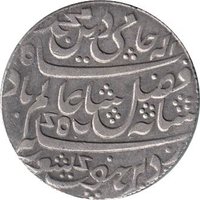
Sikka zad bar haft kishwar: Fazl Ilah, Hami ud-din, Muhammad Shah Alam Badshah.
Inscription:
شاه عالم بادشاه
حامي دين محمد
ساى فضل لله
سكة زد بر حفت كشور
حامي دين محمد
ساى فضل لله
سكة زد بر حفت كشور
Translation:
Shah Alam, Emperor
Protector of the religion of Muhammad
By the grace of God
Struck coin throughout the seven climes
Protector of the religion of Muhammad
By the grace of God
Struck coin throughout the seven climes
Language: Persian
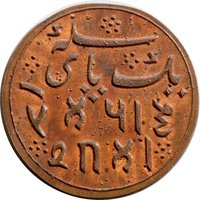
Reverse
Edge
Grained Right (Oblique milled) ////
Mintings
| Year | Mint Mark | Mintage | Quality | Collection |
|---|---|---|---|---|
| — | — | — | ||
| — | • | — |
Historical background
In 1806, the Bengal Presidency faced a severe and persistent currency crisis centred on a chronic shortage of silver specie (Rupees). The primary cause was a massive, sustained export of silver bullion from India to China to finance the East India Company's tea purchases, creating a drain that depleted the circulating medium. This was exacerbated by the Company's own high revenue demands, which were payable almost exclusively in silver coin, sucking more rupees into its treasuries and out of the general economy. The result was a crippling deflationary environment where the scarcity of rupees made it difficult for merchants to conduct trade, for peasants to pay rents, and for the economy to function smoothly.
The crisis was intensified by the chaotic state of the monetary system itself. Alongside the Company's official sicca rupee, a multitude of older, debased, and foreign coins circulated at varying discount rates, causing confusion and commercial friction. Furthermore, the Company's attempt to introduce a new "Furruckabad rupee" as a uniform standard in 1806 was poorly executed. Public distrust of the new coin's value and weight, coupled with the government's failure to adequately withdraw older coins, led to its immediate rejection and further destabilised the money market. This policy misstep highlighted the Company's struggle to impose monetary sovereignty.
Consequently, the year 1806 saw acute economic distress, with trade stagnating and credit markets seizing up. The scarcity drove up the value of the rupee relative to goods and the smaller copper coinage (pice), severely harming debtors and the rural poor. While the Company recognised the problem, its solutions were reactive and ineffective in the short term. The crisis underscored the vulnerabilities of an extractive colonial economy and set the stage for more comprehensive, though still problematic, monetary reforms in the following decades, culminating in the Uniform Coinage Act of 1835.
The crisis was intensified by the chaotic state of the monetary system itself. Alongside the Company's official sicca rupee, a multitude of older, debased, and foreign coins circulated at varying discount rates, causing confusion and commercial friction. Furthermore, the Company's attempt to introduce a new "Furruckabad rupee" as a uniform standard in 1806 was poorly executed. Public distrust of the new coin's value and weight, coupled with the government's failure to adequately withdraw older coins, led to its immediate rejection and further destabilised the money market. This policy misstep highlighted the Company's struggle to impose monetary sovereignty.
Consequently, the year 1806 saw acute economic distress, with trade stagnating and credit markets seizing up. The scarcity drove up the value of the rupee relative to goods and the smaller copper coinage (pice), severely harming debtors and the rural poor. While the Company recognised the problem, its solutions were reactive and ineffective in the short term. The crisis underscored the vulnerabilities of an extractive colonial economy and set the stage for more comprehensive, though still problematic, monetary reforms in the following decades, culminating in the Uniform Coinage Act of 1835.
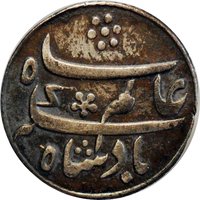
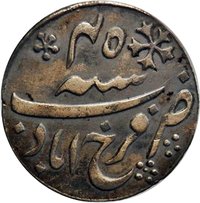
⭐ Somewhat Rare