

1 Cent – Netherlands
Netherlands
Context
Years: 1860–1877
Issuer: Netherlands 
Ruler: William III
Currency:
(1817—2001)
Demonetized: Yes
Total mintage: 52,504,000
Material
References
KM: #Click to copy to clipboard100
Numista: #8927
Value
Exchange value: 0.01 NLG
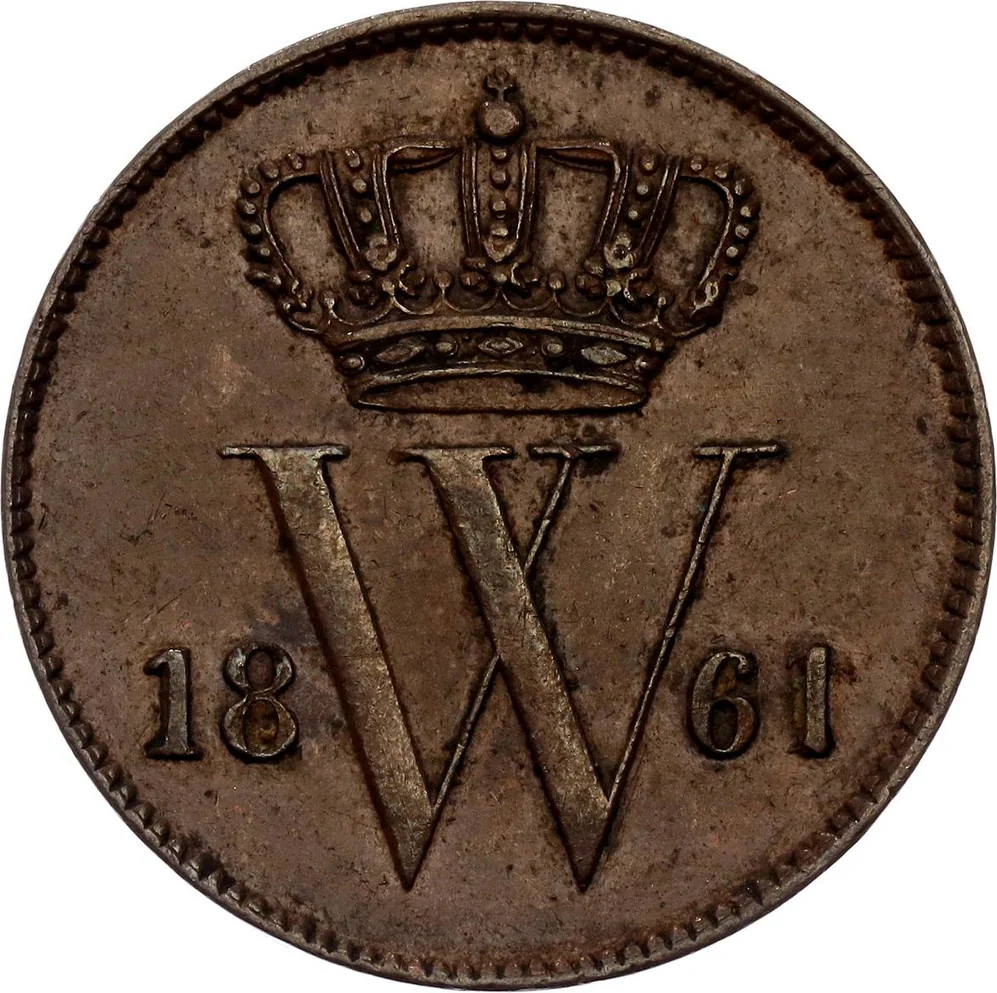
Obverse
Description:
W-crowned date
Inscription:
W
1863
1863
Script: Latin
Designer and engraver: David van der Kellen
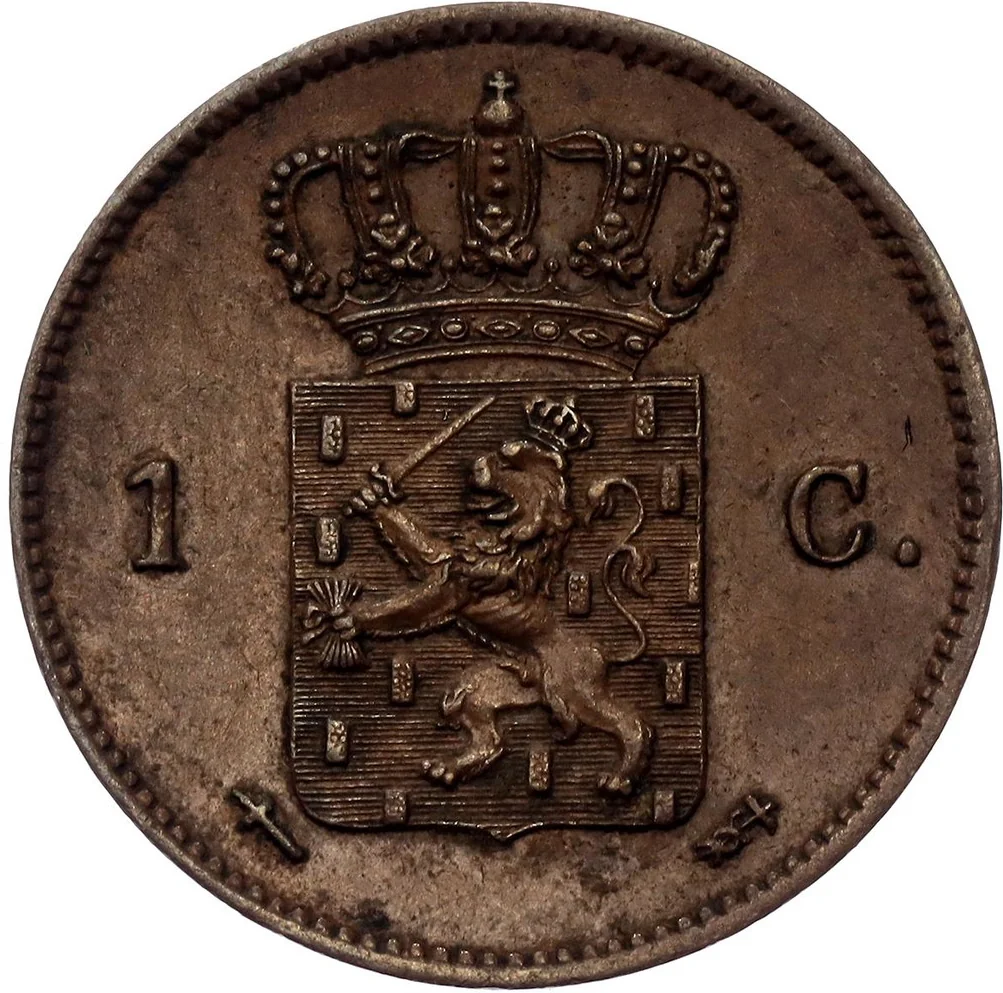
Reverse
Description:
Crowned arms split value
Inscription:
1 C.
Script: Latin
Designer and engraver: David van der Kellen
Edge
Plain
Mints
| Name | Mark |
|---|---|
| Royal Dutch Mint | — |
Mintings
| Year | Mint Mark | Mintage | Quality | Collection |
|---|---|---|---|---|
| 1860 | — | 2,032,000 | ||
| 1861 | — | 2,050,000 | ||
| 1862 | — | 2,026,000 | ||
| 1863 | — | 10,246,000 | ||
| 1864 | — | 2,026,000 | ||
| 1870 | — | 4,010,000 | ||
| 1873 | — | 3,026,000 | ||
| 1875 | — | 3,015,000 | ||
| 1876 | — | 13,047,000 | ||
| 1877 | — | 11,026,000 |
Historical background
In the mid-19th century, the Netherlands found itself in a complex and transitional monetary situation, caught between tradition and the demands of modern commerce. Officially, the country was on a silver standard, with the gulden (guilder) defined as a specific weight of fine silver. However, the circulation was a chaotic mix of domestic and foreign coins. Alongside Dutch silver guilders and copper cents, vast quantities of outmoded and worn coins from the pre-decimalization era (like stuivers and duiten) remained in use, alongside a significant influx of foreign gold and silver coins, particularly French francs, which were widely accepted due to their reliable silver content.
This disorder was problematic for trade and economic stability. The concurrent circulation of so many coin types, each with fluctuating values based on metal content and wear, created confusion and facilitated fraud. Furthermore, the discovery of large gold deposits in California and Australia in the 1840s and 1850s disrupted the global silver-to-gold ratio, putting pressure on the traditional silver standard. This period saw intense debate between "monometallists," who advocated for a single standard (either gold or silver), and "bimetallists," who argued for a fixed-rate system using both metals.
By 1860, the push for reform was gaining decisive momentum. The government, recognizing the inefficiency and embarrassment of the outdated system, was actively preparing for a sweeping modernization. This culminated just a few years later, in 1875, with the introduction of the new Muntwet (Coinage Act). This law successfully decimalized the currency fully, eliminated the old coinage, and, critically, moved the Netherlands from a silver to a gold standard, aligning the nation with major trading partners like Britain and setting the stage for its modern financial system. Thus, 1860 represents the final chapter of an archaic system, immediately preceding a decisive and orderly reform.
This disorder was problematic for trade and economic stability. The concurrent circulation of so many coin types, each with fluctuating values based on metal content and wear, created confusion and facilitated fraud. Furthermore, the discovery of large gold deposits in California and Australia in the 1840s and 1850s disrupted the global silver-to-gold ratio, putting pressure on the traditional silver standard. This period saw intense debate between "monometallists," who advocated for a single standard (either gold or silver), and "bimetallists," who argued for a fixed-rate system using both metals.
By 1860, the push for reform was gaining decisive momentum. The government, recognizing the inefficiency and embarrassment of the outdated system, was actively preparing for a sweeping modernization. This culminated just a few years later, in 1875, with the introduction of the new Muntwet (Coinage Act). This law successfully decimalized the currency fully, eliminated the old coinage, and, critically, moved the Netherlands from a silver to a gold standard, aligning the nation with major trading partners like Britain and setting the stage for its modern financial system. Thus, 1860 represents the final chapter of an archaic system, immediately preceding a decisive and orderly reform.
🌱 Common