

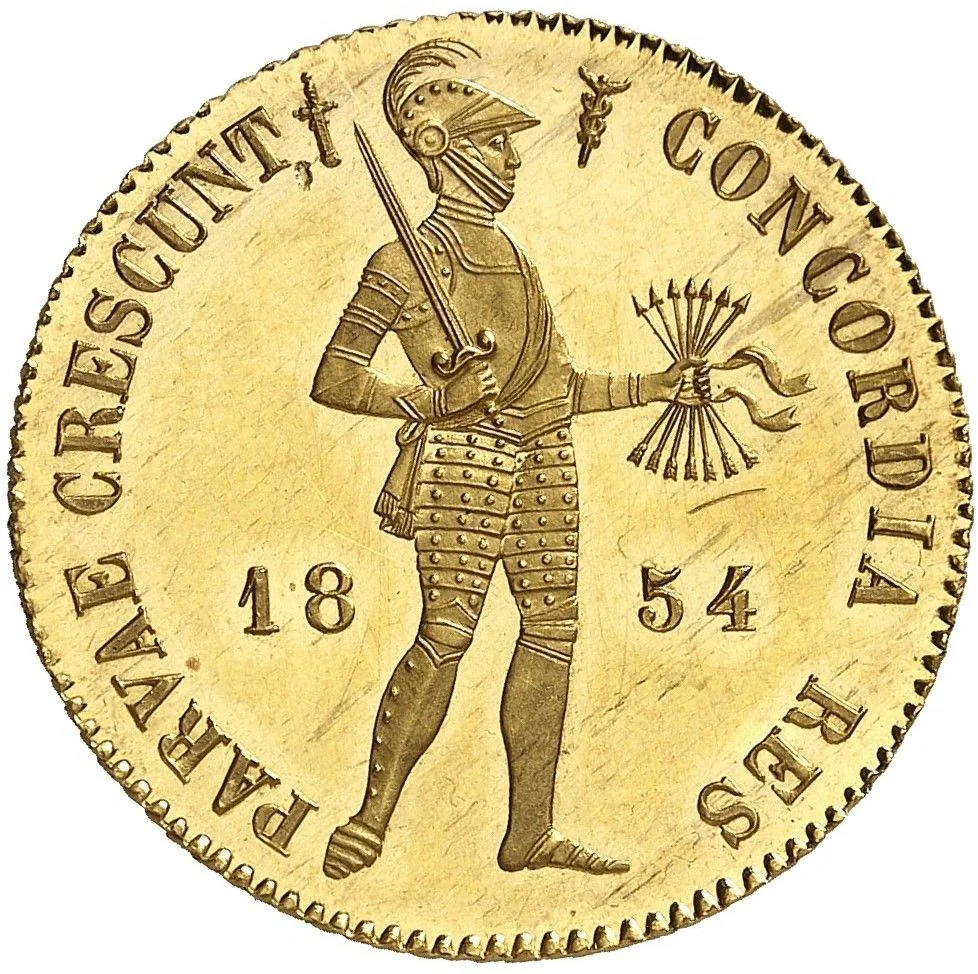
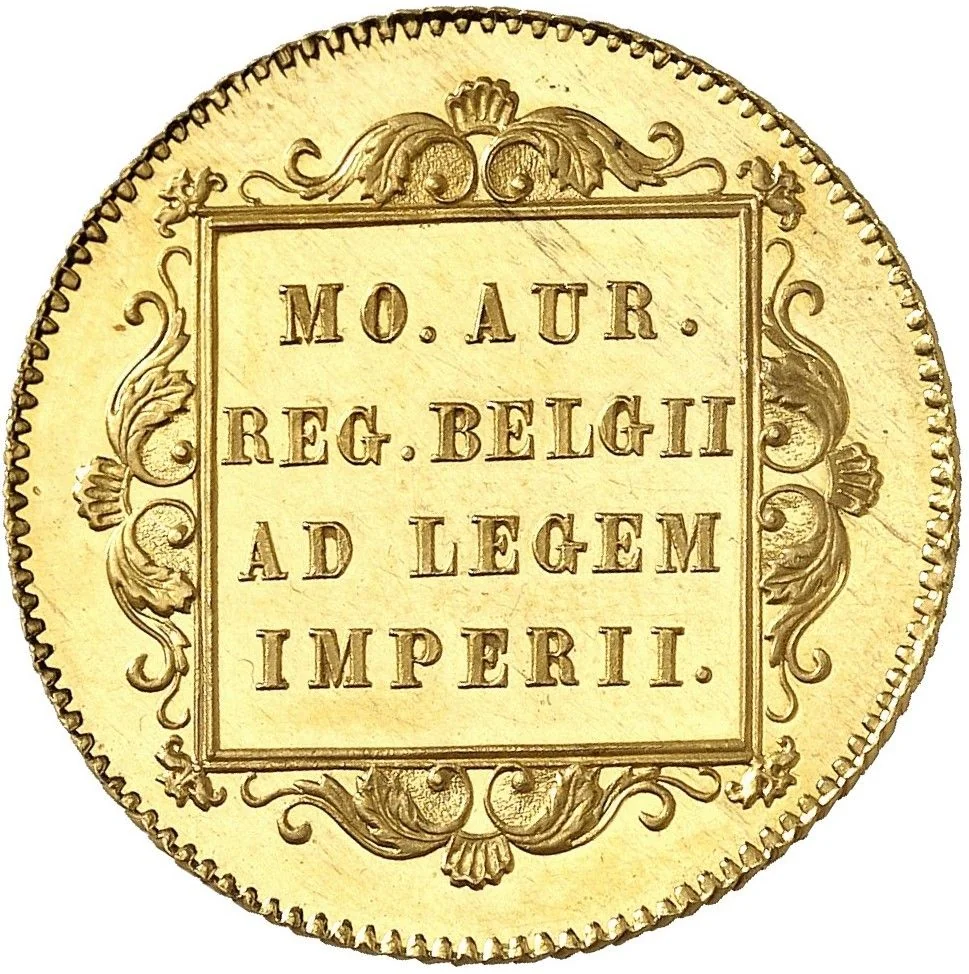
2 ducats – Netherlands
Add to wishlist
Netherlands
Context
Material
References
KM: #
Numista: #331887
Value
Exchange value: 34⁄3 NLG
Bullion value: $1060.56
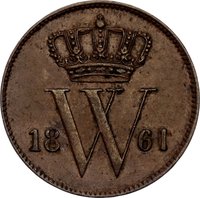
Obverse
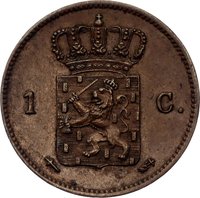
Reverse
Edge
Slanted reeding
Mints
| Name | Mark |
|---|---|
| Royal Dutch Mint | — |
Mintings
| Year | Mint Mark | Mintage | Quality | Collection |
|---|---|---|---|---|
| 1854 | — | — | ||
| 1867 | — | — | ||
| 1868 | — | — | Proof |
Historical background
In 1854, the Netherlands operated under a bimetallic monetary system, legally defined by the Mint Act of 1847. This system established fixed exchange rates between silver and gold, with the primary unit being the silver gulden (guilder). However, the Netherlands, like much of Europe, was grappling with the practical challenges of bimetallism. Global market fluctuations in the relative value of the two metals often caused one to disappear from circulation, as it would be more profitable to export or melt down. In practice, silver was the dominant metal for everyday coinage, while gold coins were minted for larger transactions and international trade.
The period was one of transition and uncertainty, influenced by broader European monetary trends. The discovery of vast gold reserves in California and Australia in the late 1840s and early 1850s was beginning to disrupt the global gold-to-silver ratio, putting the fixed mint parity under strain. This influx of gold threatened to devalue it relative to silver, potentially causing silver coins—the backbone of the domestic system—to be hoarded or exported. Consequently, Dutch monetary authorities were cautiously observing the moves of major economic powers, particularly France and Britain, as they navigated these shifts.
Therefore, the currency situation in 1854 was ostensibly stable under the law but fundamentally vulnerable to international market forces. The government and the Nederlandsche Bank were committed to maintaining the gulden's value and convertibility, but the system's inherent fragility was becoming apparent. This context set the stage for the Netherlands' eventual move towards a gold standard, a process that would solidify later in the century, as the country sought a more stable and internationally aligned monetary foundation amidst the declining relative value of silver.
The period was one of transition and uncertainty, influenced by broader European monetary trends. The discovery of vast gold reserves in California and Australia in the late 1840s and early 1850s was beginning to disrupt the global gold-to-silver ratio, putting the fixed mint parity under strain. This influx of gold threatened to devalue it relative to silver, potentially causing silver coins—the backbone of the domestic system—to be hoarded or exported. Consequently, Dutch monetary authorities were cautiously observing the moves of major economic powers, particularly France and Britain, as they navigated these shifts.
Therefore, the currency situation in 1854 was ostensibly stable under the law but fundamentally vulnerable to international market forces. The government and the Nederlandsche Bank were committed to maintaining the gulden's value and convertibility, but the system's inherent fragility was becoming apparent. This context set the stage for the Netherlands' eventual move towards a gold standard, a process that would solidify later in the century, as the country sought a more stable and internationally aligned monetary foundation amidst the declining relative value of silver.
✨ Legendary