

3 pence – Fiji
Add to wishlist
Fiji
Context
Material
Diameter: 21.9 mm
Weight: 6.16 g
Thickness: 2.4 mm
Shape: Dodecagonal
Magnetic: No
Technique: Milled
Alignment: Medal alignment
flip
References
KM: #
Numista: #11482
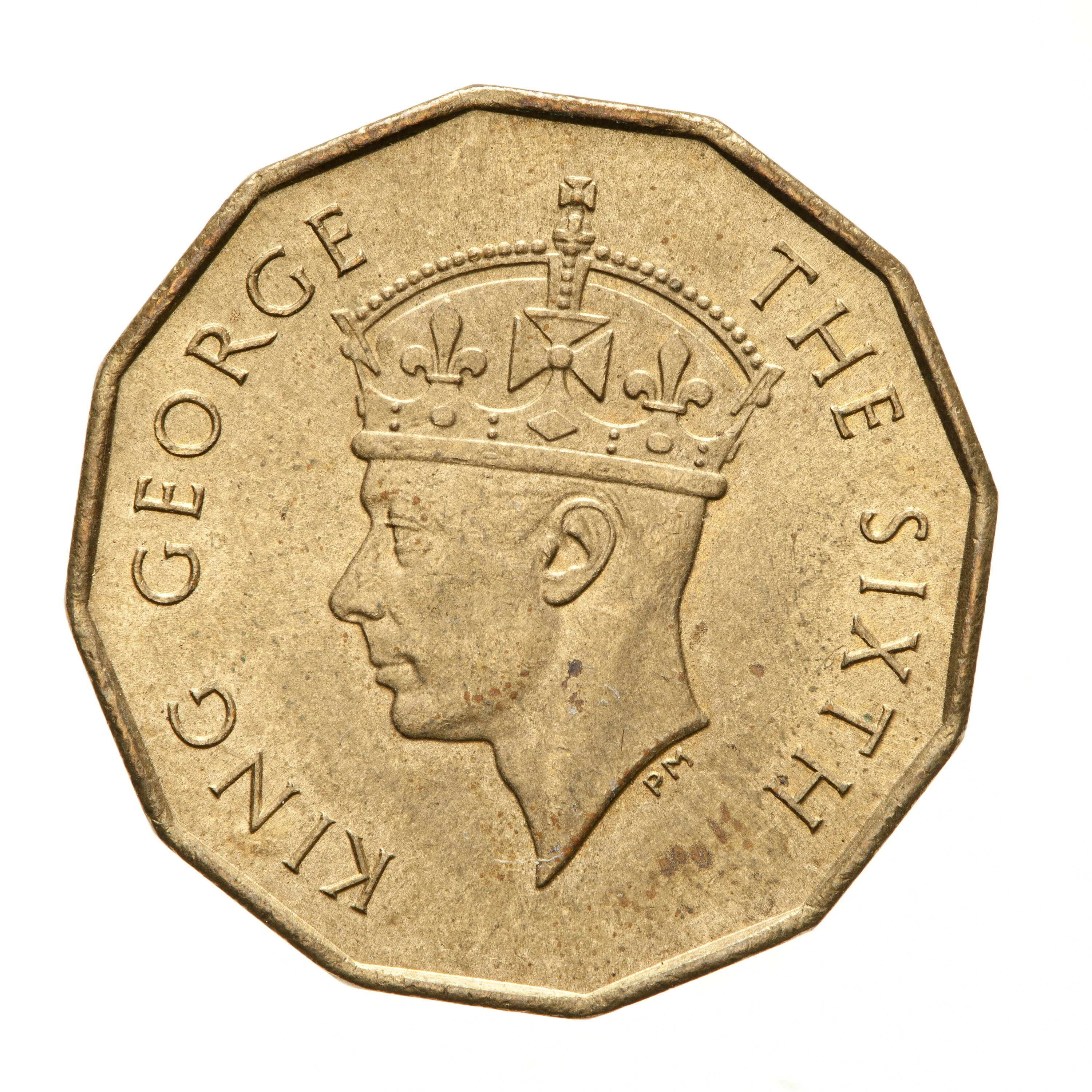
Obverse
Description:
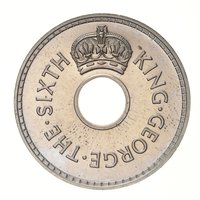
Crowned head left, legend lacks EMPEROR.
Inscription:
KING GEORGE THE SIXTH
Translation:
KING GEORGE THE SIXTH
Script: Latin
Language: English
Engraver: Percy Metcalfe
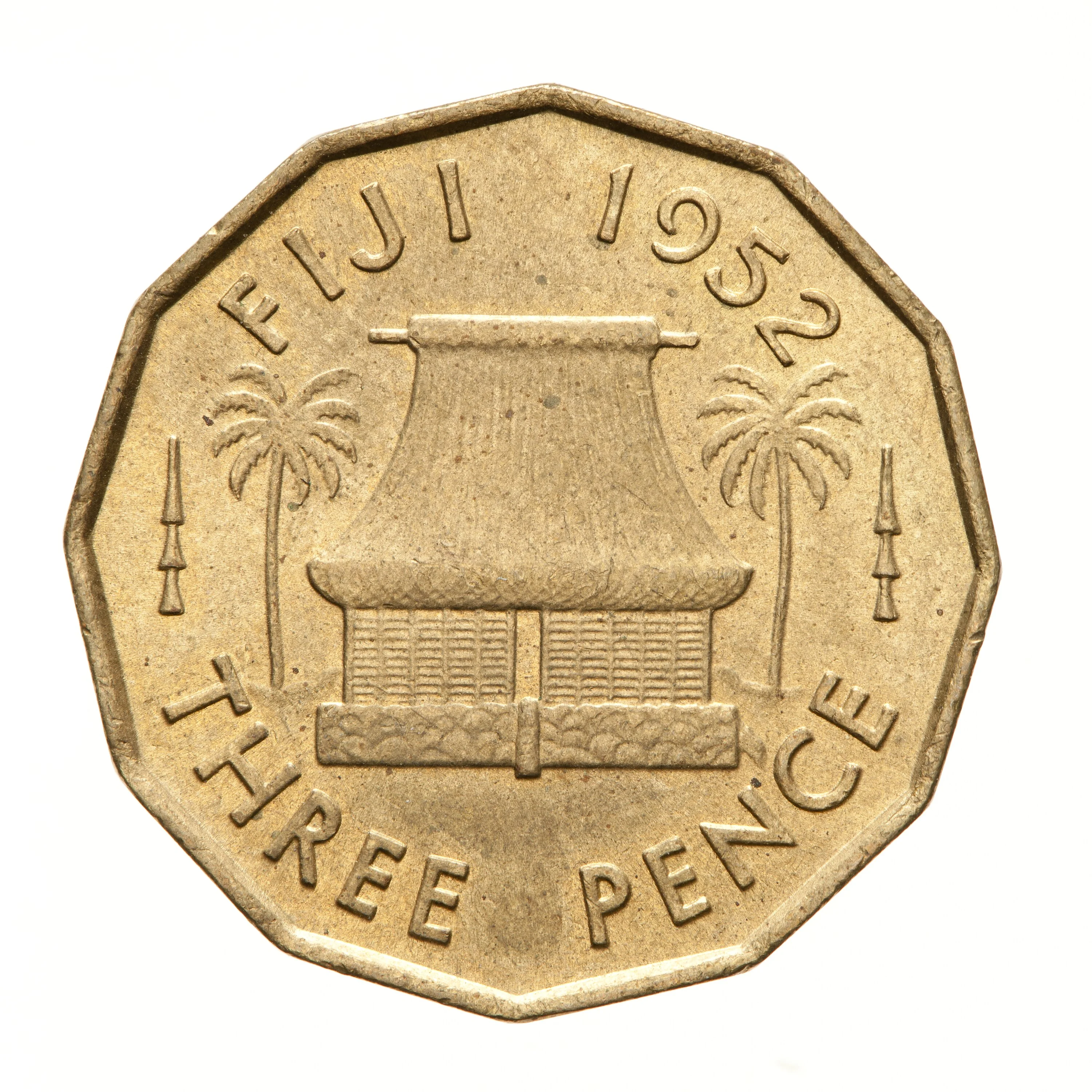
Reverse
Description:
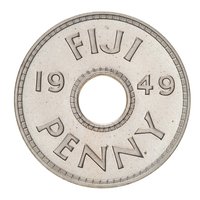
Native home. Date above, name below.
Inscription:
FIJI 1950
THREE PENCE
THREE PENCE
Script: Latin
Engraver: George James Berry
Edge
Plain
Mints
| Name | Mark |
|---|---|
| Royal Mint (Tower Hill) | — |
Mintings
| Year | Mint Mark | Mintage | Quality | Collection |
|---|---|---|---|---|
| 1950 | — | 450,000 | ||
| 1950 | — | — | Proof | |
| 1952 | — | — | Proof | |
| 1952 | — | 400,000 |
Historical background
In 1950, Fiji's currency system was firmly under colonial administration, operating as a sterling area currency board territory. The Fijian pound (£F) was the official currency, pegged at par with the British pound sterling (GBP). This meant the local currency was fully backed by sterling reserves held in London, ensuring strict convertibility. The physical currency in circulation consisted of banknotes and coins issued by the colonial government, featuring distinctly Fijian imagery like the Fijian coat of arms and local flora, but its value was entirely derivative of and dependent on the British economy.
The economy itself was heavily structured around sugar production, dominated by the Colonial Sugar Refining Company, and coconut products. This export-oriented model generated the sterling reserves that backed the currency. However, this system offered Fiji no independent monetary policy; interest rates and the money supply were effectively determined by the Bank of England's decisions in London. The currency board arrangement provided stability and low inflation, but it also meant Fiji could not devalue its currency to boost exports or create credit to stimulate domestic development during economic downturns.
Socially, the currency situation reflected the colony's segmented economy. While the pound was universal, economic participation varied greatly. Indigenous Fijians were largely involved in subsistence agriculture and a communal cash-crop system, while Indo-Fijians, brought as indentured labourers, were more central to the commercial sugar cane farming and urban trades. This period of monetary stability under the sterling peg would continue until 1969, when Fiji decimalised its currency, introducing the Fijian dollar and taking a first step toward a more independent monetary system in the lead-up to independence in 1970.
The economy itself was heavily structured around sugar production, dominated by the Colonial Sugar Refining Company, and coconut products. This export-oriented model generated the sterling reserves that backed the currency. However, this system offered Fiji no independent monetary policy; interest rates and the money supply were effectively determined by the Bank of England's decisions in London. The currency board arrangement provided stability and low inflation, but it also meant Fiji could not devalue its currency to boost exports or create credit to stimulate domestic development during economic downturns.
Socially, the currency situation reflected the colony's segmented economy. While the pound was universal, economic participation varied greatly. Indigenous Fijians were largely involved in subsistence agriculture and a communal cash-crop system, while Indo-Fijians, brought as indentured labourers, were more central to the commercial sugar cane farming and urban trades. This period of monetary stability under the sterling peg would continue until 1969, when Fiji decimalised its currency, introducing the Fijian dollar and taking a first step toward a more independent monetary system in the lead-up to independence in 1970.
🌱 Common