

Fiji
Context
Material
Diameter: 26 mm
Weight: 6.48 g
Thickness: 1.85 mm
Shape: Round with a round hole
Technique: Milled
Alignment: Medal alignment
flip
References
KM: #Click to copy to clipboard17
Numista: #12569
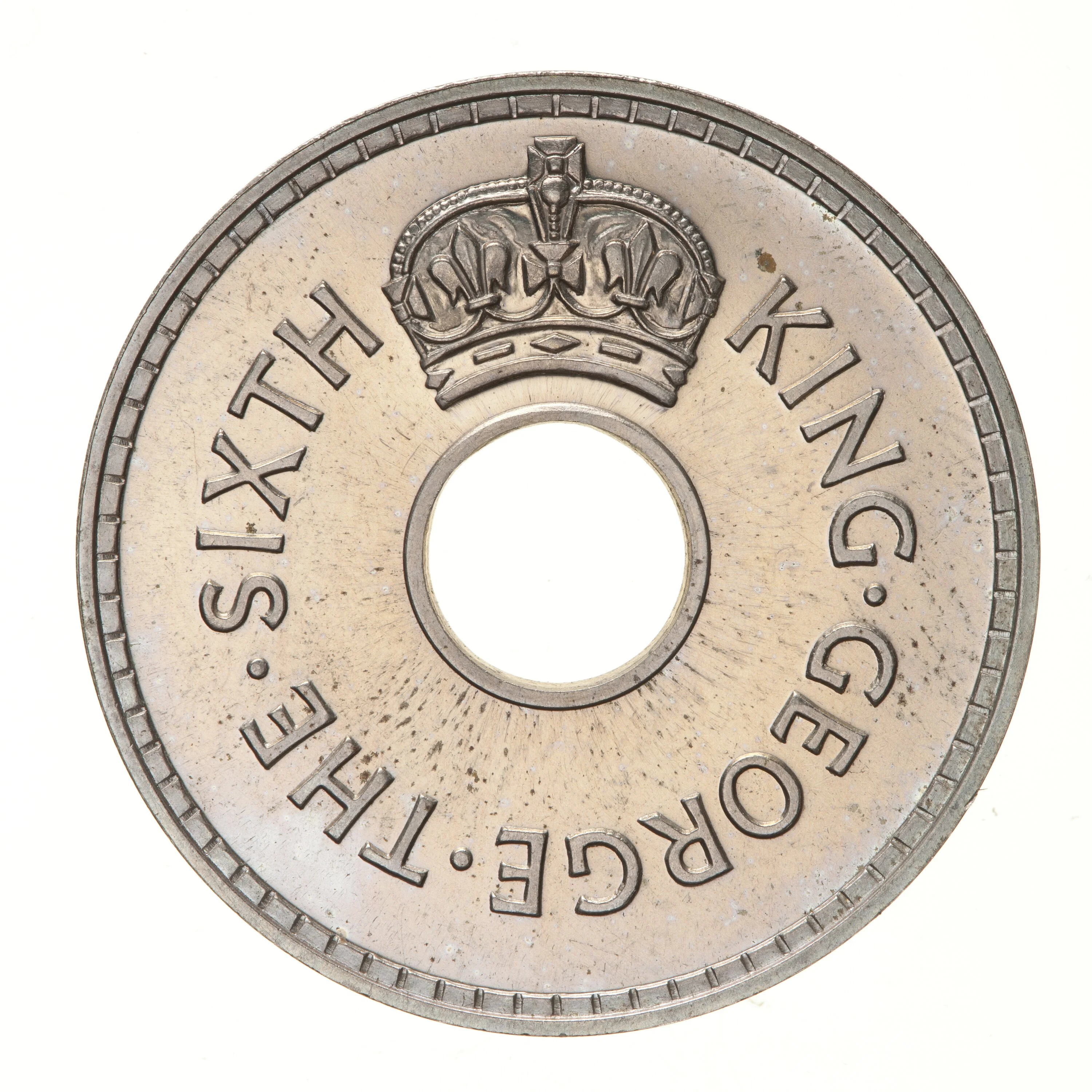
Obverse
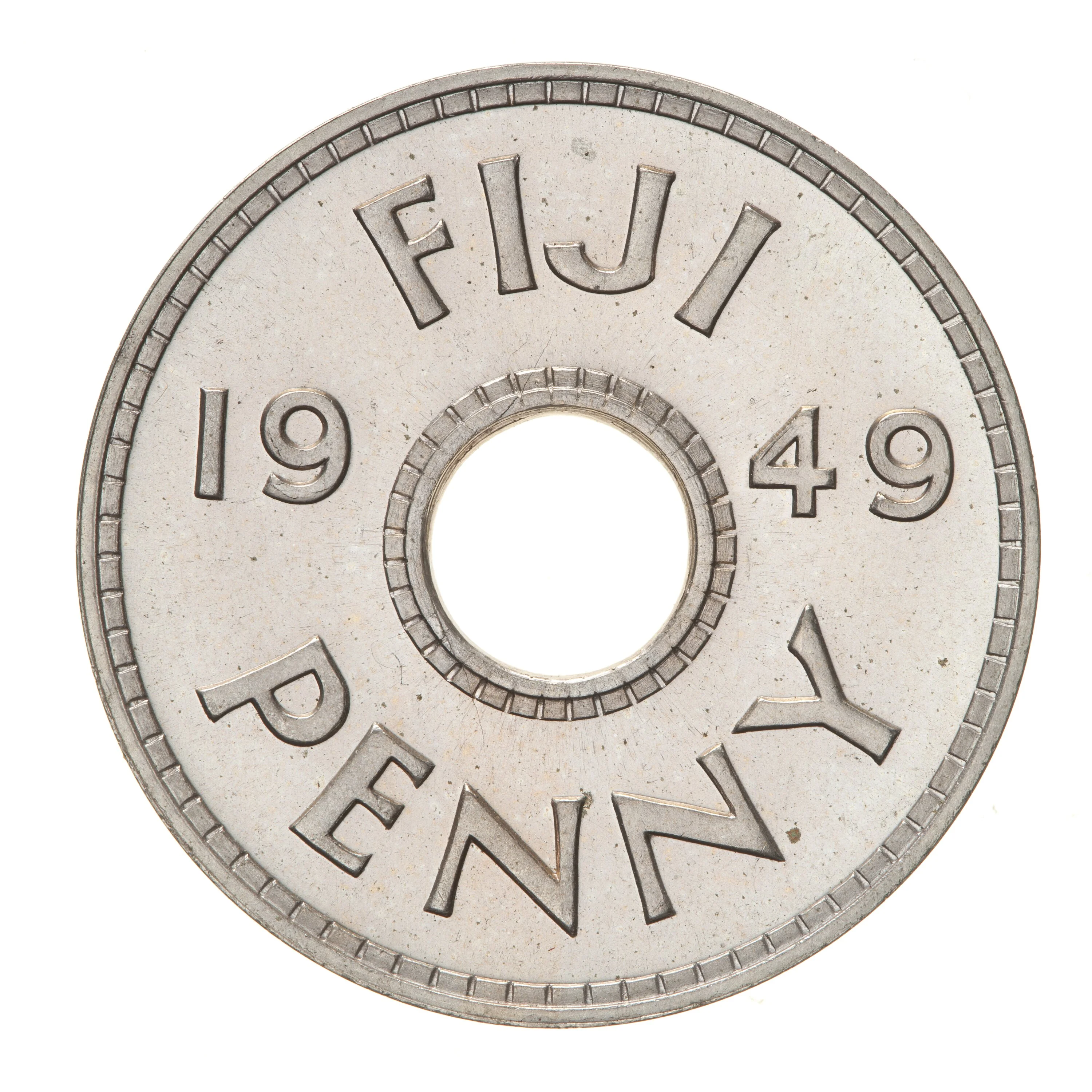
Reverse
Description:
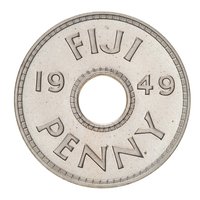
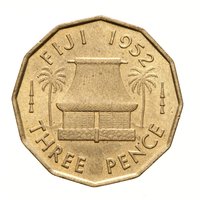
Date flanking center hole, denomination below.
Inscription:
FIJI
19 50
PENNY
19 50
PENNY
Script: Latin
Edge
Plain
Mints
| Name | Mark |
|---|---|
| Royal Mint (Tower Hill) | — |
Mintings
| Year | Mint Mark | Mintage | Quality | Collection |
|---|---|---|---|---|
| 1949 | — | — | Proof | |
| 1949 | — | 120,000 | ||
| 1950 | — | 58,000 | ||
| 1950 | — | — | Proof | |
| 1952 | — | — | Proof | |
| 1952 | — | 230,000 |
Historical background
In 1949, Fiji's currency situation was defined by its transition from the Fiji pound to the Fijian pound, a move that formalized a distinct colonial monetary system. Since 1873, Fiji had used sterling coinage and banknotes issued by Australian banks, but the establishment of the Fiji Currency Board in 1934 marked a shift toward a local currency fully backed by sterling reserves in London. By 1949, the Fijian pound (₤F) was at parity with the British pound sterling (£), and the colony operated under a strict currency board system, which ensured high monetary stability but limited independent monetary policy.
The post-World War II context was crucial. Fiji's economy, heavily reliant on sugar exports and a growing tourism sector, was integrated into the Sterling Area. This membership required Fiji to hold its foreign exchange reserves in sterling and impose exchange controls, channeling dollar earnings to the central pool in London. Consequently, in 1949, Fiji was directly impacted by the British government's dramatic decision to devalue sterling against the US dollar by 30.5%. The Fijian pound was devalued in lockstep, from US$4.03 to US$2.80, a move aimed at boosting the competitiveness of Sterling Area exports but also increasing the cost of vital imports from the dollar zone.
This devaluation had mixed effects locally. It provided a windfall for Fiji's sugar industry, increasing the pound-value of export earnings and stimulating economic activity. However, it also reflected Fiji's lack of monetary sovereignty, as the decision was made in London for imperial economic strategy. The 1949 devaluation underscored the colony's dependent financial position, a system that remained largely unchanged until the establishment of the Central Monetary Authority in 1973, a precursor to the modern Reserve Bank of Fiji.
The post-World War II context was crucial. Fiji's economy, heavily reliant on sugar exports and a growing tourism sector, was integrated into the Sterling Area. This membership required Fiji to hold its foreign exchange reserves in sterling and impose exchange controls, channeling dollar earnings to the central pool in London. Consequently, in 1949, Fiji was directly impacted by the British government's dramatic decision to devalue sterling against the US dollar by 30.5%. The Fijian pound was devalued in lockstep, from US$4.03 to US$2.80, a move aimed at boosting the competitiveness of Sterling Area exports but also increasing the cost of vital imports from the dollar zone.
This devaluation had mixed effects locally. It provided a windfall for Fiji's sugar industry, increasing the pound-value of export earnings and stimulating economic activity. However, it also reflected Fiji's lack of monetary sovereignty, as the decision was made in London for imperial economic strategy. The 1949 devaluation underscored the colony's dependent financial position, a system that remained largely unchanged until the establishment of the Central Monetary Authority in 1973, a precursor to the modern Reserve Bank of Fiji.
🌱 Fairly Common