

2 skilling – Denmark
Add to wishlist
Denmark
Context
Material
References
KM: #
Numista: #89153
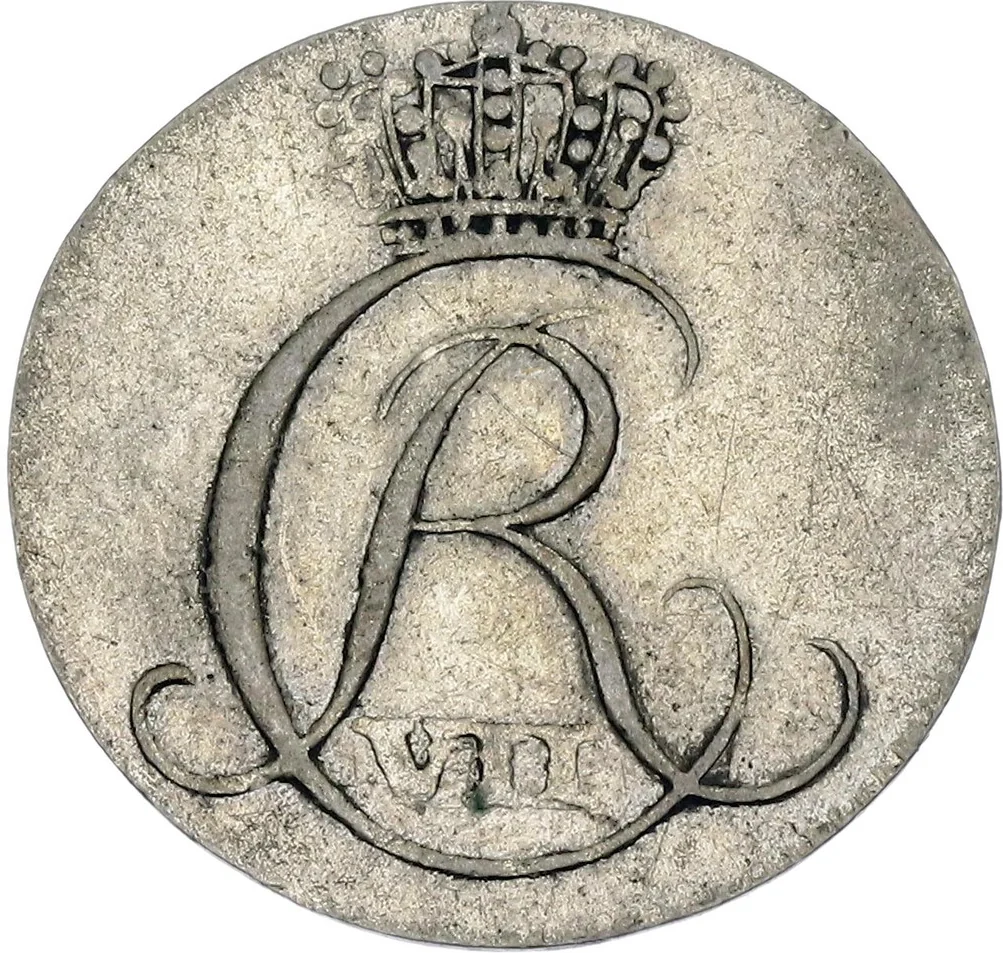
Obverse
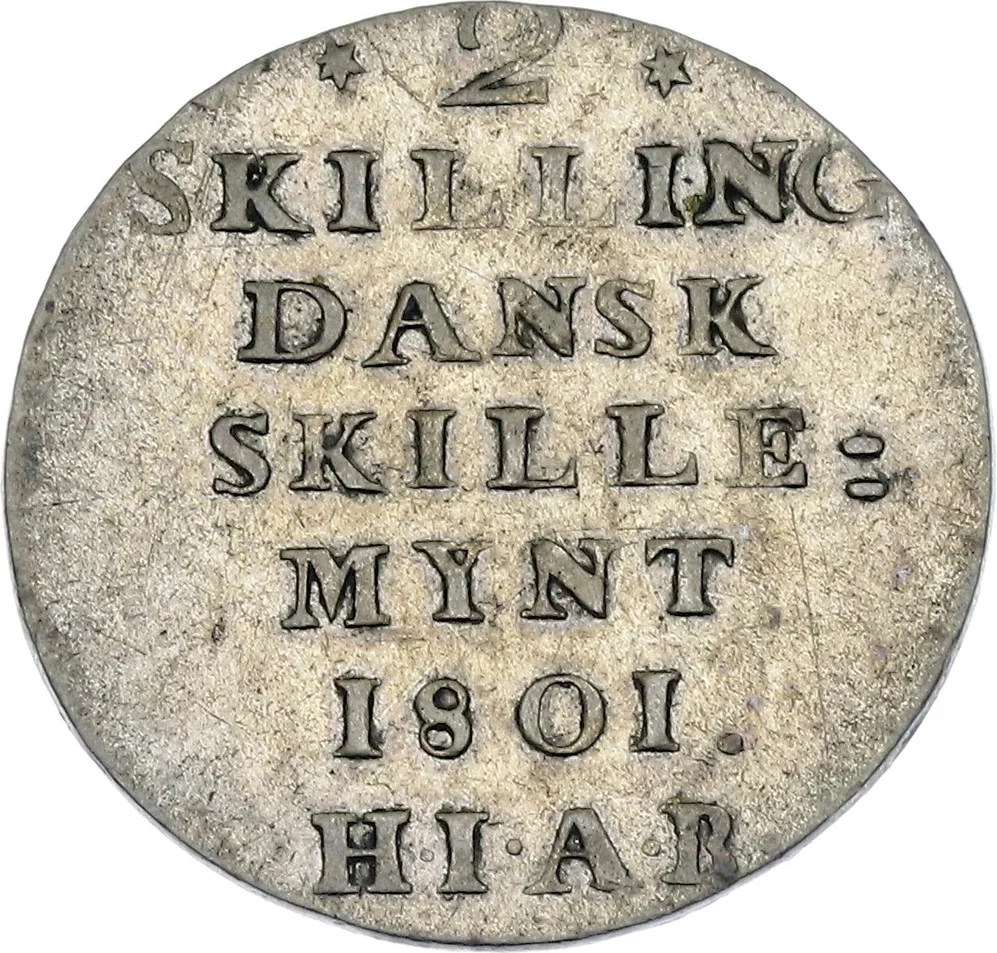
Reverse
Description:
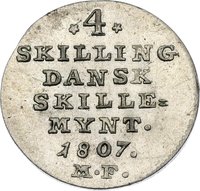
Value, date on five lines.
Mintmark below.
Mintmark below.
Inscription:
* 2 *
SKILLING
DANSK
SKILLE-
MYNT.
1801.
H·I·A·B
SKILLING
DANSK
SKILLE-
MYNT.
1801.
H·I·A·B
Script: Latin
Edge
Plain
Mints
| Name | Mark |
|---|---|
| Altona, Schleswig-Holstein | — |
| Royal Danish Mint | HIAB |
Mintings
| Year | Mint Mark | Mintage | Quality | Collection |
|---|---|---|---|---|
| 1801 | — | — | ||
| 1801 | HIAB | — | ||
| 1805 | — | — |
Historical background
In 1801, Denmark found itself in a precarious monetary situation, caught between the lingering effects of earlier wars and the escalating pressures of the Napoleonic Wars. The state finances had been severely strained by its involvement in the League of Armed Neutrality, which aimed to protect neutral shipping but brought it into direct conflict with Britain. This culminated in the Battle of Copenhagen in April 1801, a costly naval defeat that further drained the treasury and disrupted trade, a vital source of government revenue. The war effort forced the state to rely heavily on borrowing and the issuance of paper money, setting the stage for inflationary pressures.
The Danish currency system at the time was officially based on the silver rigsdaler, but in practice, a complex and unstable dual system existed. Alongside silver coins, the government and the state-owned Kurantbanken circulated paper notes known as kurantsedler. These were not freely convertible to silver, and their value fluctuated based on public confidence and fiscal demands. To finance the war, the government authorized increased note issuance, a move that began to erode the value of the paper currency relative to silver. This created a widening gap between the "kurant" money used in daily commerce and the more trusted "specie" silver rigsdaler.
Consequently, by the end of 1801, Denmark was grappling with the early stages of a currency crisis. The overabundance of paper money, combined with the economic disruption of war, led to a noticeable depreciation of the kurant notes. Merchants and the public grew wary, often demanding payment in silver or applying unfavorable exchange rates for paper. This instability sowed economic uncertainty, burdened trade, and placed significant strain on both the state and ordinary citizens, foreshadowing the more severe monetary collapse that would follow in the coming years of the conflict.
The Danish currency system at the time was officially based on the silver rigsdaler, but in practice, a complex and unstable dual system existed. Alongside silver coins, the government and the state-owned Kurantbanken circulated paper notes known as kurantsedler. These were not freely convertible to silver, and their value fluctuated based on public confidence and fiscal demands. To finance the war, the government authorized increased note issuance, a move that began to erode the value of the paper currency relative to silver. This created a widening gap between the "kurant" money used in daily commerce and the more trusted "specie" silver rigsdaler.
Consequently, by the end of 1801, Denmark was grappling with the early stages of a currency crisis. The overabundance of paper money, combined with the economic disruption of war, led to a noticeable depreciation of the kurant notes. Merchants and the public grew wary, often demanding payment in silver or applying unfavorable exchange rates for paper. This instability sowed economic uncertainty, burdened trade, and placed significant strain on both the state and ordinary citizens, foreshadowing the more severe monetary collapse that would follow in the coming years of the conflict.
⭐ Somewhat Rare