

4 skilling – Denmark
Add to wishlist
Denmark
Context
Material
References
KM: #
Numista: #54934
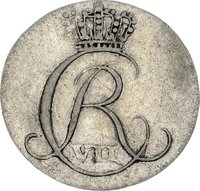
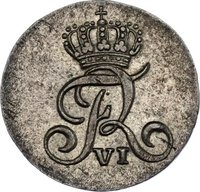
Obverse
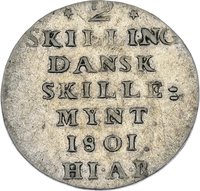
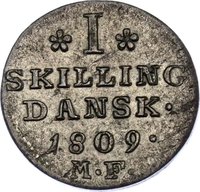
Reverse
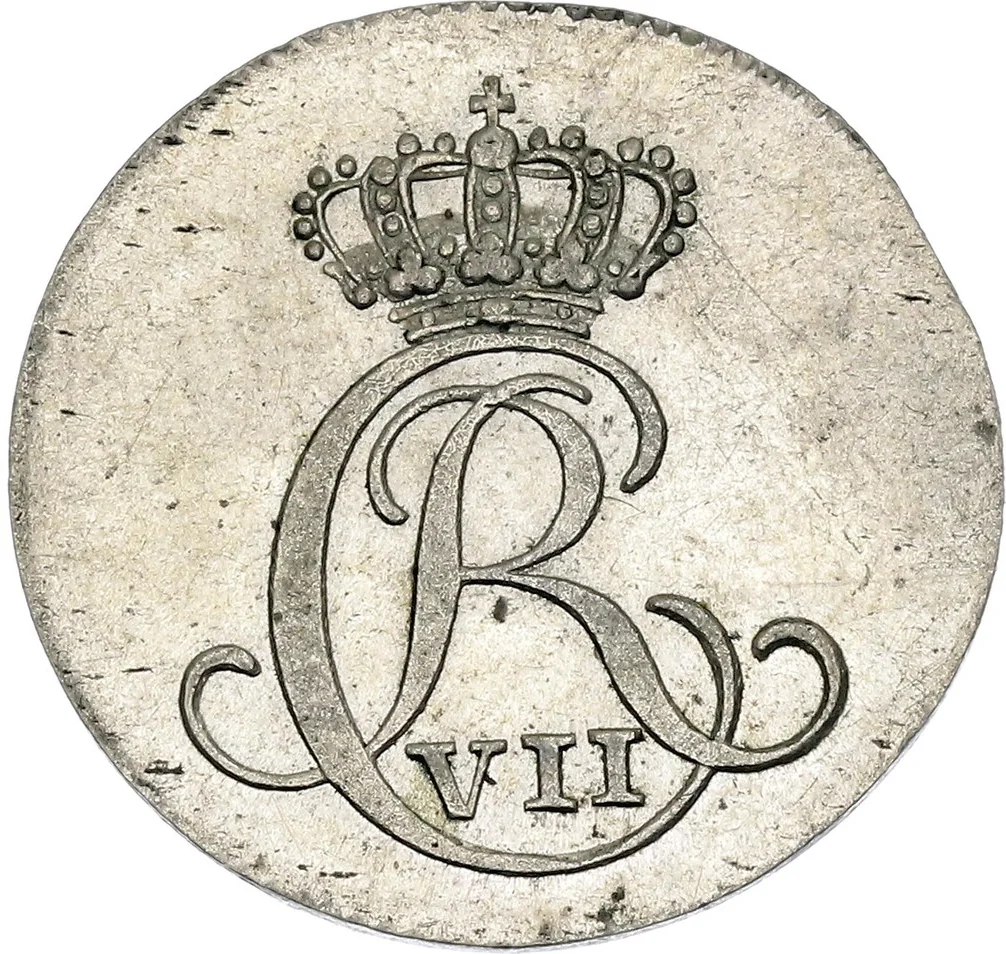
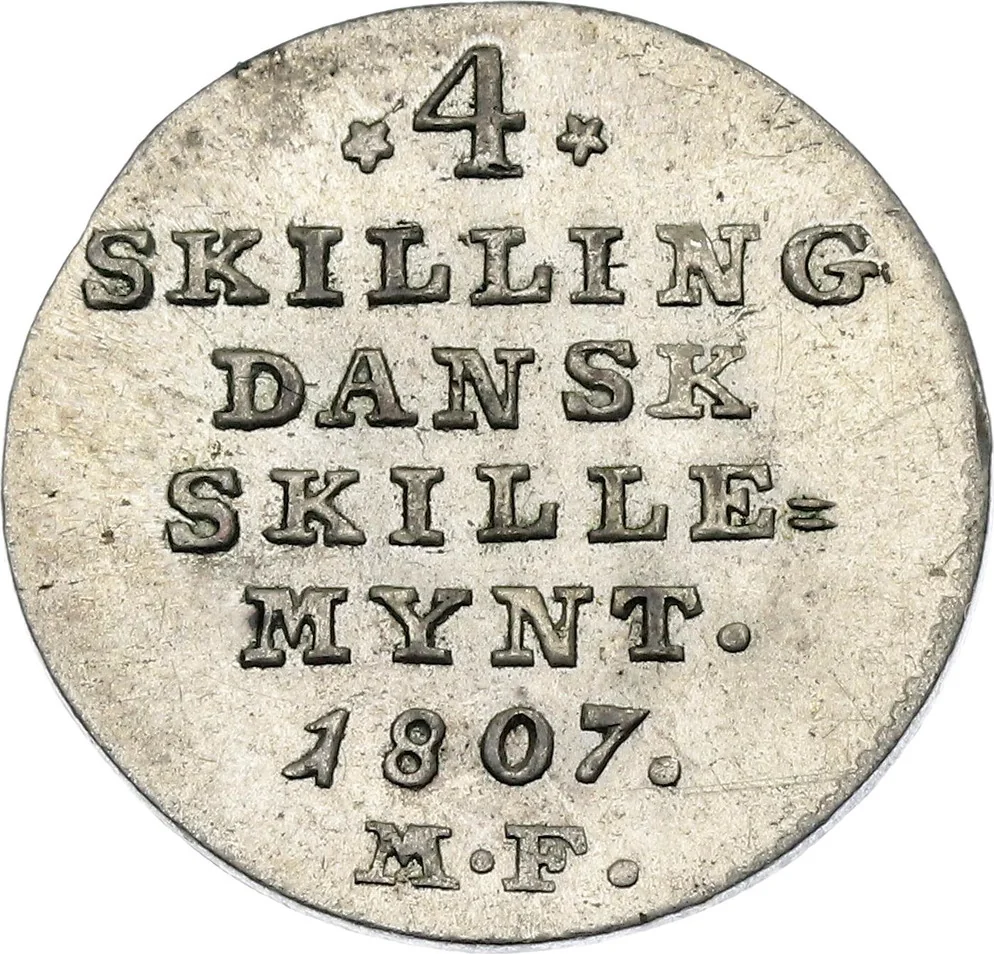
Description:
Value, date on five lines.
Mintmark below.
Mintmark below.
Inscription:
*4*
SKILLING
DANSK
SKILLE=
MYNT.
1807.
M.F.
SKILLING
DANSK
SKILLE=
MYNT.
1807.
M.F.
Script: Latin
Edge
Mints
| Name | Mark |
|---|---|
| Altona, Schleswig-Holstein | — |
Mintings
| Year | Mint Mark | Mintage | Quality | Collection |
|---|---|---|---|---|
| 1807 | — | — |
Historical background
In 1807, Denmark found itself in a precarious monetary situation, deeply entangled in the geopolitical turmoil of the Napoleonic Wars. The nation had pursued a policy of armed neutrality to protect its lucrative maritime trade, but this stance collapsed following the British pre-emptive attack on Copenhagen in September 1807. The British bombardment and seizure of the Danish fleet shattered the economy, crippled trade, and pushed Denmark into a formal alliance with Napoleonic France. This political shift resulted in a devastating British naval blockade, which severed Denmark from its vital overseas markets and imports, creating severe economic isolation and scarcity of goods.
The immediate financial consequence was a crisis of confidence and a severe shortage of specie (gold and silver coin). To finance the ongoing war and cover massive state expenditures, the Danish government, led by Finance Minister Ernst Heinrich von Schimmelmann, resorted to the extensive issuance of inconvertible paper money. The central bank, the Rigsbank, had already suspended the convertibility of its banknotes into silver in 1813. This led to a proliferation of different circulating mediums—including older Rigsdaler notes, state treasury notes (kasseseđler), and a complex system of credit instruments—which rapidly depreciated in value against silver.
Thus, by the end of 1807 and in the years immediately following, Denmark was on a path toward significant currency devaluation and monetary chaos. The economy operated on a fragile paper standard, with the public losing trust in the ever-expanding money supply. This inflationary environment eroded savings and disrupted commerce, laying the groundwork for the comprehensive—and harsh—currency reform of 1813, which introduced the Rigsbankdaler and attempted to stabilize the national finances at a great cost to holders of the old paper money.
The immediate financial consequence was a crisis of confidence and a severe shortage of specie (gold and silver coin). To finance the ongoing war and cover massive state expenditures, the Danish government, led by Finance Minister Ernst Heinrich von Schimmelmann, resorted to the extensive issuance of inconvertible paper money. The central bank, the Rigsbank, had already suspended the convertibility of its banknotes into silver in 1813. This led to a proliferation of different circulating mediums—including older Rigsdaler notes, state treasury notes (kasseseđler), and a complex system of credit instruments—which rapidly depreciated in value against silver.
Thus, by the end of 1807 and in the years immediately following, Denmark was on a path toward significant currency devaluation and monetary chaos. The economy operated on a fragile paper standard, with the public losing trust in the ever-expanding money supply. This inflationary environment eroded savings and disrupted commerce, laying the groundwork for the comprehensive—and harsh—currency reform of 1813, which introduced the Rigsbankdaler and attempted to stabilize the national finances at a great cost to holders of the old paper money.
⭐ Somewhat Rare