

½ anna – Bombay Presidency
Add to wishlist
India
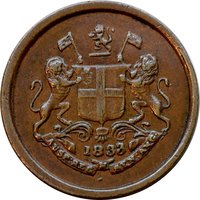
Obverse
Description:
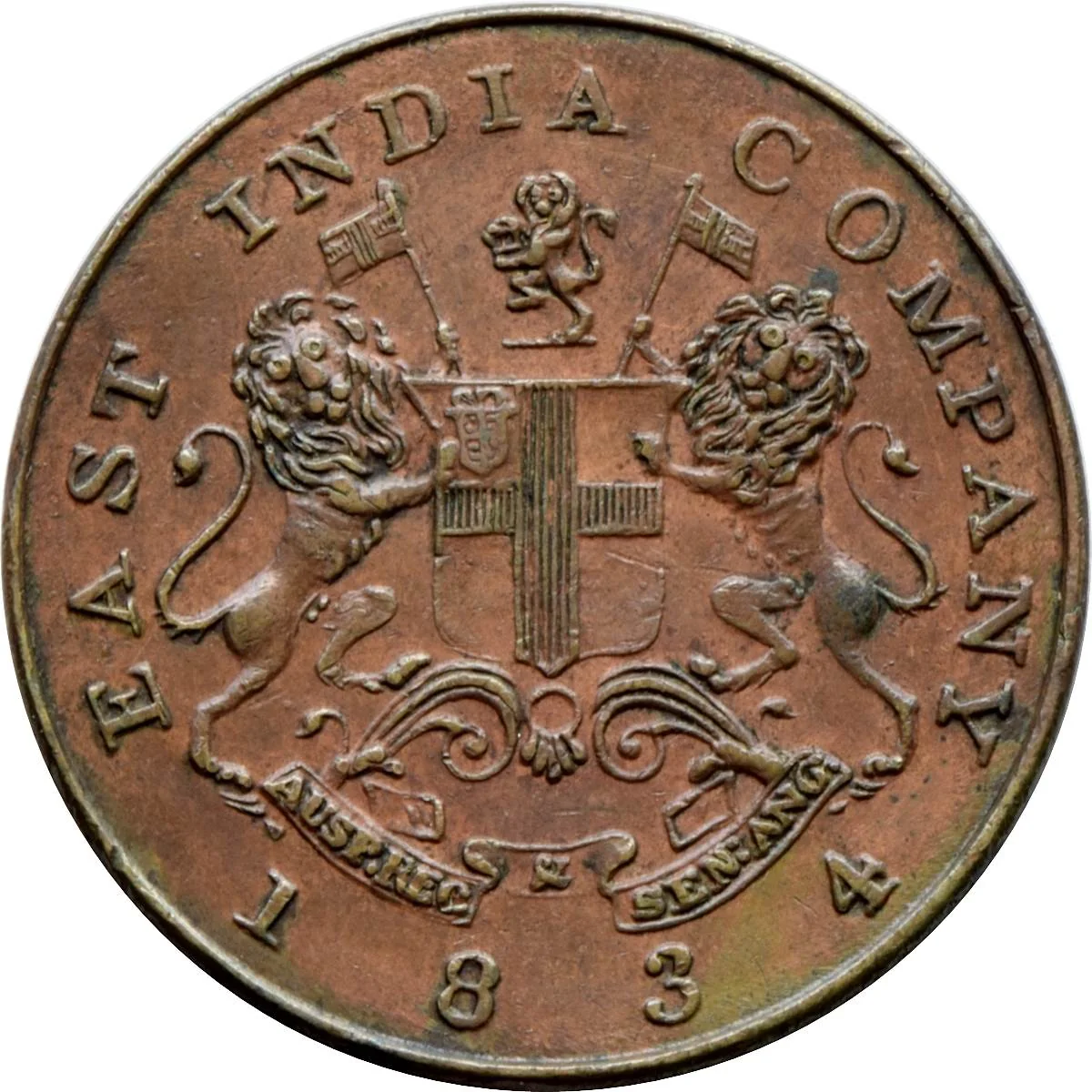
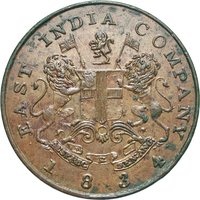
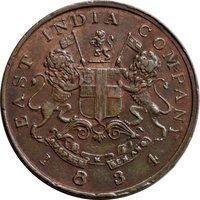
East India Company coat of arms, encircled by "EAST INDIA COMPANY" and the ribbon inscription "Auspicio Regis Et Senatus Anglia," with date below, within a plain raised rim.
Inscription:
EAST INDIA COMPANY
1834
AUSP:REG & SEN:ANG:
1834
AUSP:REG & SEN:ANG:
Translation:
Under the Auspices of the King and Parliament of England
Script: Latin
Language: Latin
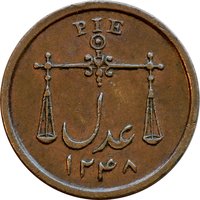
Reverse
Description:
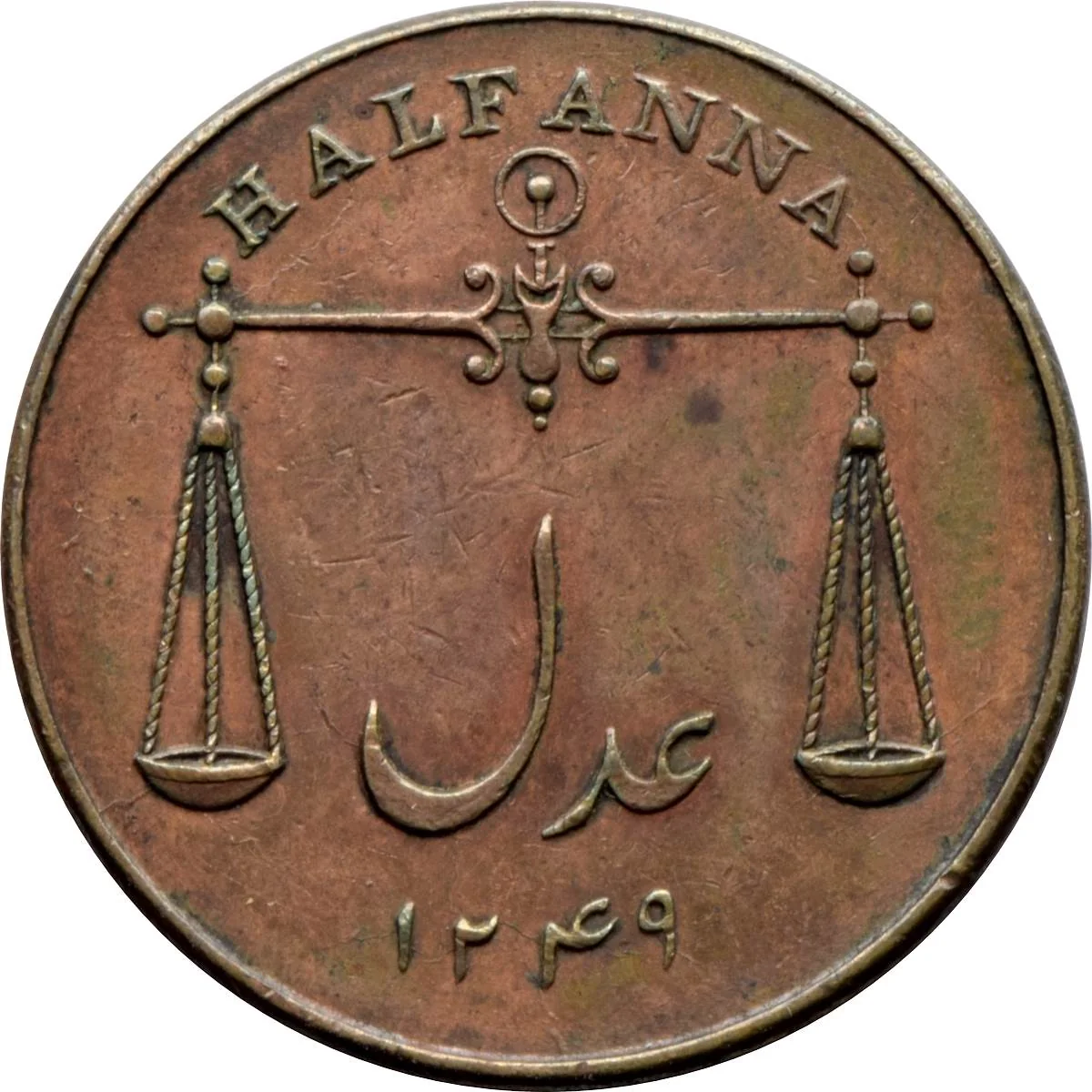
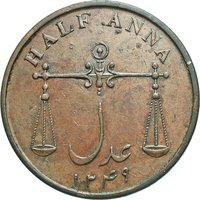
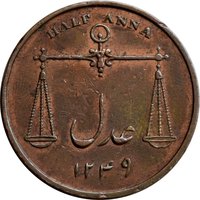
Scales above Persian legend: "Adil," date AH 1249 below.
Inscription:
HALF ANNA
عدل
١٢۴۹
عدل
١٢۴۹
Translation:
HALF ANNA
Justice
1249
Justice
1249
Scripts: Latin, Persian (nastaliq)
Language: Arabic
Edge
Plain
Mintings
| Year | Mint Mark | Mintage | Quality | Collection |
|---|---|---|---|---|
| 1834 | — | — |
Historical background
In 1834, the Bombay Presidency was navigating a complex and often chaotic currency landscape, a legacy of its diverse trade networks and recent political changes. The region operated on a bimetallic system, but it was one plagued by inconsistency. Both the silver rupee (heavily influenced by the Mughal-era sicca rupee and the newer Company rupee) and gold mohurs circulated, but their values and acceptance fluctuated across districts. Furthermore, a vast array of local and foreign coins, including Portuguese xeraphims, Arab riyals, and coins from other Indian princely states, remained in use, creating a bewildering system of exchange for commerce and taxation.
This monetary confusion was exacerbated by the Presidency's chronic shortage of standardized specie. The Bombay Mint, though operational, struggled to produce enough uniform coinage to meet economic demands, leading to widespread use of often-debased or counterfeit coins. The problem was particularly acute for small-denomination copper coins, essential for everyday transactions by the majority of the population. Their scarcity and irregular value caused significant hardship and inefficiency in local bazaars and rural areas.
Recognizing that this monetary anarchy stifled trade and administrative efficiency, the East India Company authorities were actively moving towards reform. The period around 1834 was one of transition, setting the stage for more decisive action. The drive was toward uniformity and central control, aligning Bombay's currency with the broader imperial vision following the Charter Act of 1833. This culminated in the Coinage Act of 1835, which, shortly after this date, introduced a unified all-India silver rupee bearing the image of the reigning monarch, finally imposing a single, standard currency system across British India, including the Bombay Presidency.
This monetary confusion was exacerbated by the Presidency's chronic shortage of standardized specie. The Bombay Mint, though operational, struggled to produce enough uniform coinage to meet economic demands, leading to widespread use of often-debased or counterfeit coins. The problem was particularly acute for small-denomination copper coins, essential for everyday transactions by the majority of the population. Their scarcity and irregular value caused significant hardship and inefficiency in local bazaars and rural areas.
Recognizing that this monetary anarchy stifled trade and administrative efficiency, the East India Company authorities were actively moving towards reform. The period around 1834 was one of transition, setting the stage for more decisive action. The drive was toward uniformity and central control, aligning Bombay's currency with the broader imperial vision following the Charter Act of 1833. This culminated in the Coinage Act of 1835, which, shortly after this date, introduced a unified all-India silver rupee bearing the image of the reigning monarch, finally imposing a single, standard currency system across British India, including the Bombay Presidency.
💎 Very Rare