

1 Pie – Bombay Presidency
India

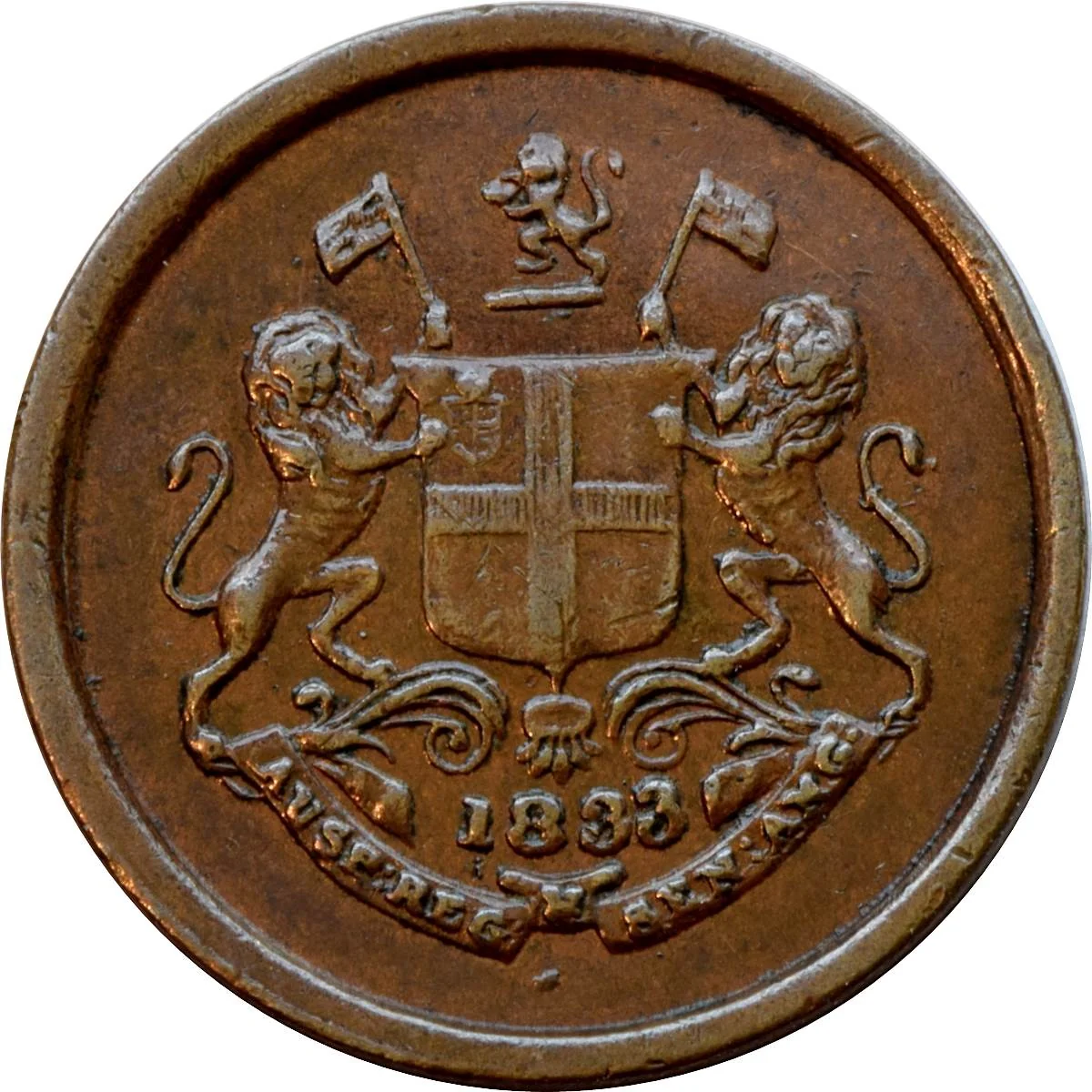
Obverse
Description:
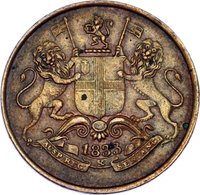
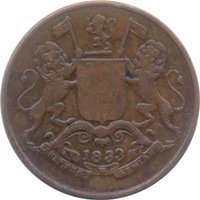
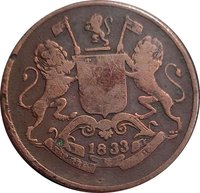
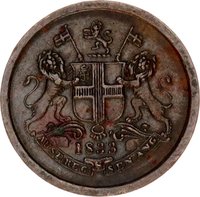
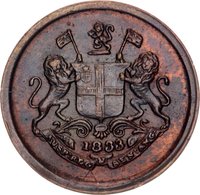
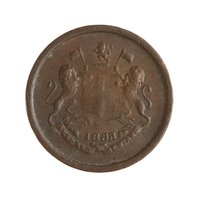
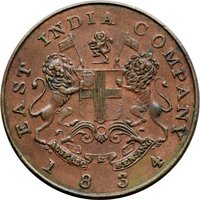
East India Company coat of arms. The ribbon reads "Auspicio Regis Et Senatus Anglia," with the date below and value (Pie) above, all within a plain raised rim.
Inscription:
1833
AUSP:REG & SEN:ANG
AUSP:REG & SEN:ANG
Translation:
Under the Auspices of the King and Senate of England
Language: Latin
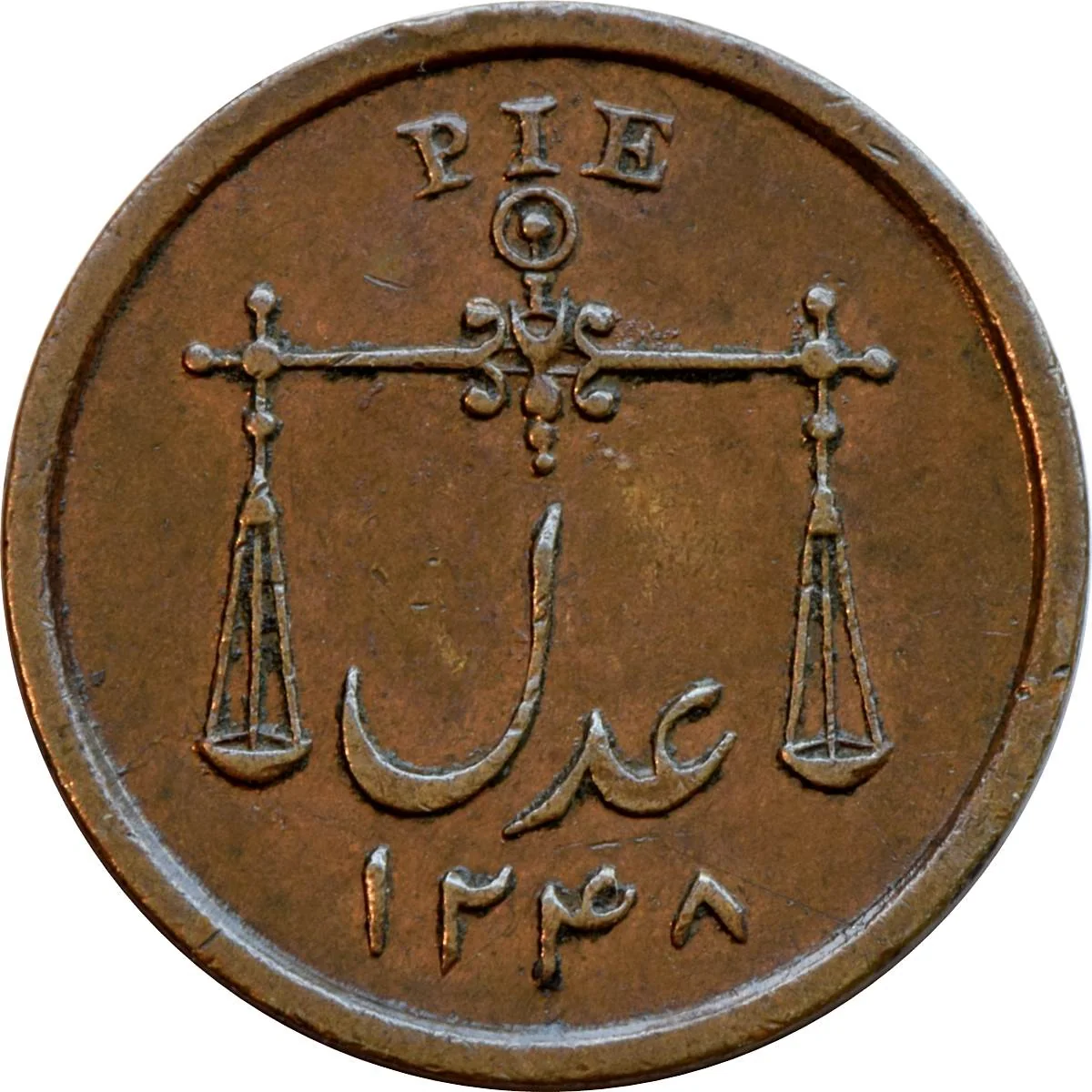
Reverse
Edge
Plain
Mintings
| Year | Mint Mark | Mintage | Quality | Collection |
|---|---|---|---|---|
| 1833 | — | — |
Historical background
In 1833, the Bombay Presidency's currency system was a complex and problematic mosaic, reflecting its history as a trading hub. The dominant official currency was the silver rupee, primarily the "Bombay rupee," but the region was flooded with a bewildering variety of coins. These included older Mughal rupees, coins of various Indian princely states, and a plethora of foreign currencies, most notably the Spanish silver dollar (the "piece of eight") and the Maria Theresa thaler from Austria, which were widely used in the Arabian Sea trade. The British East India Company's attempts to standardise currency were ongoing but incomplete, leading to confusion, frequent forgery, and complicated exchange calculations that hampered commerce.
This monetary chaos was exacerbated by the Presidency's severe shortage of small-denomination copper coins for everyday transactions. This vacuum was filled by a vast and unreliable array of private tokens, lead dubbas, and cut pieces of silver, leading to widespread fraud and public inconvenience. Furthermore, the legal relationship between silver and gold was not firmly fixed, causing exchange rate fluctuations. The Presidency's financial stability was also under strain from the recent Anglo-Maratha Wars, which had burdened the Company with debt and increased the pressure to extract revenue and rationalise the fiscal system.
The year 1833 itself was a pivotal moment, as it followed the Charter Act of 1833, which renewed the Company's charter but stripped its commercial monopolies. This act intensified the need for a uniform and reliable currency to facilitate the expected expansion of "free trade." Consequently, the Bombay government was actively working towards reform, which would culminate just two years later in the Coinage Act of 1835. This act finally established a unified "Company Rupee" for all of British India, creating a standard currency that would eventually resolve much of the instability that characterised the Bombay monetary scene in 1833.
This monetary chaos was exacerbated by the Presidency's severe shortage of small-denomination copper coins for everyday transactions. This vacuum was filled by a vast and unreliable array of private tokens, lead dubbas, and cut pieces of silver, leading to widespread fraud and public inconvenience. Furthermore, the legal relationship between silver and gold was not firmly fixed, causing exchange rate fluctuations. The Presidency's financial stability was also under strain from the recent Anglo-Maratha Wars, which had burdened the Company with debt and increased the pressure to extract revenue and rationalise the fiscal system.
The year 1833 itself was a pivotal moment, as it followed the Charter Act of 1833, which renewed the Company's charter but stripped its commercial monopolies. This act intensified the need for a uniform and reliable currency to facilitate the expected expansion of "free trade." Consequently, the Bombay government was actively working towards reform, which would culminate just two years later in the Coinage Act of 1835. This act finally established a unified "Company Rupee" for all of British India, creating a standard currency that would eventually resolve much of the instability that characterised the Bombay monetary scene in 1833.
💎 Extremely Rare