

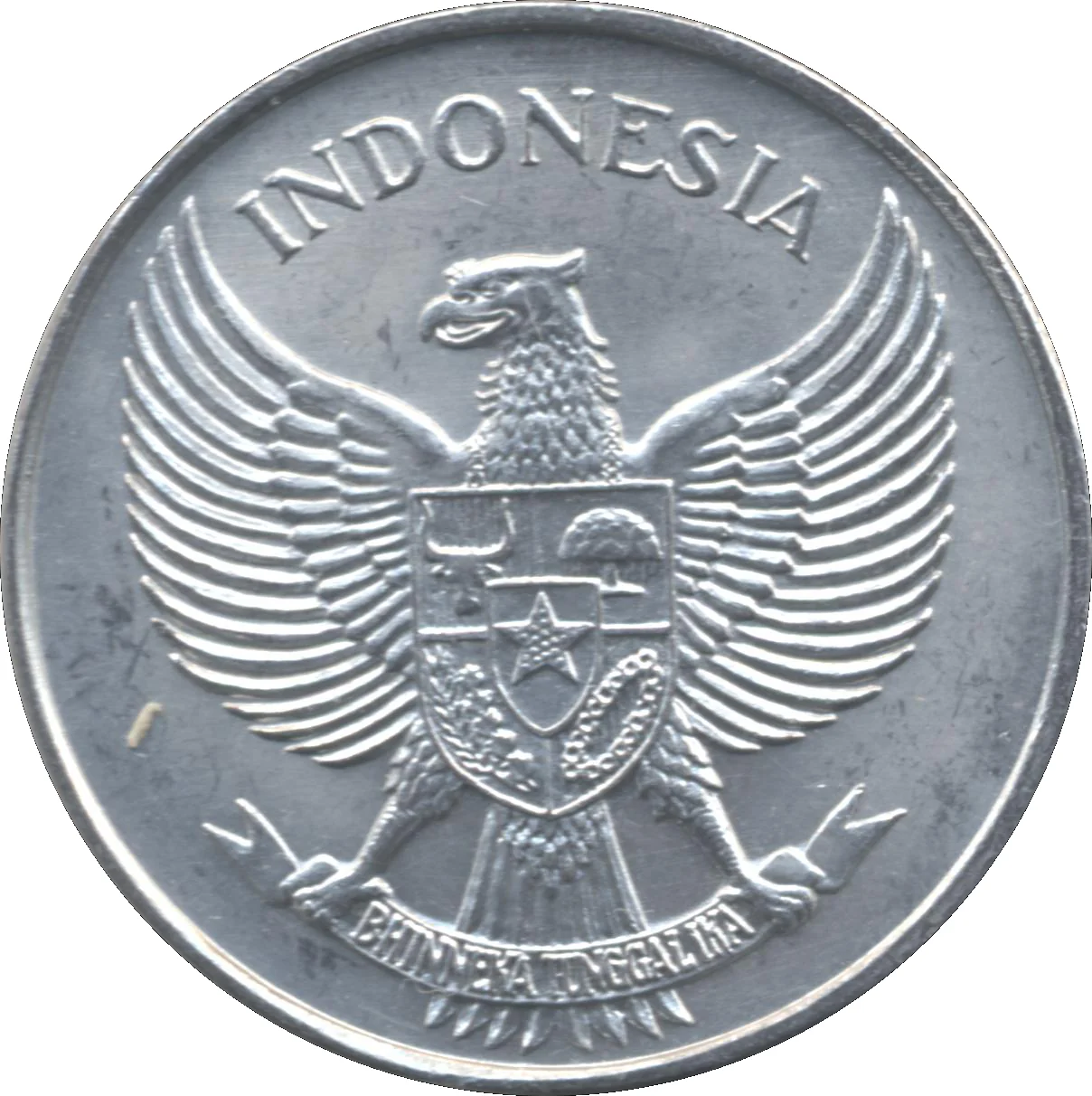

Obverse
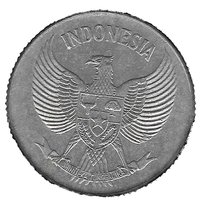
Description:
The Garuda Pancasila, Indonesia's national emblem.
Inscription:
INDONESIA
BHINNEKA TUNGGAL IKA
BHINNEKA TUNGGAL IKA
Translation:
UNITY IN DIVERSITY
Script: Latin
Languages: Indonesian, Javanese
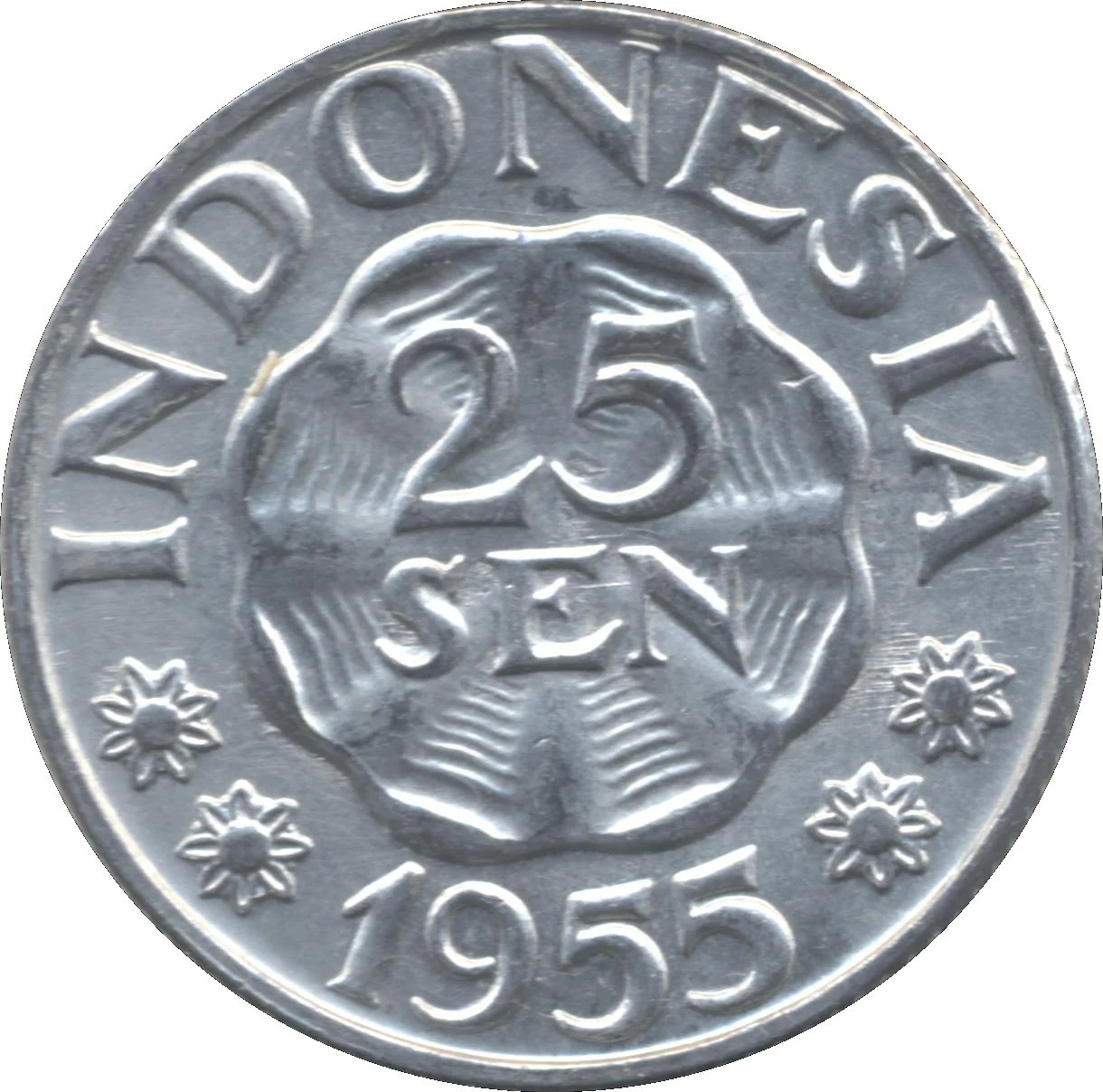
Reverse
Description:
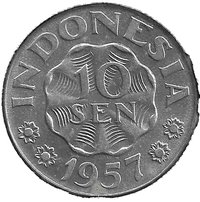
Scalloped edge with lettering top and bottom.
Inscription:
INDONESIA
25
SEN
1955
25
SEN
1955
Script: Latin
Edge
Milled
Mints
| Name | Mark |
|---|---|
| Münze Österreich | — |
| PN Artha Yasa | — |
Mintings
| Year | Mint Mark | Mintage | Quality | Collection |
|---|---|---|---|---|
| 1955 | — | 25,767,000 | ||
| 1957 | — | 99,752,926 |
Historical background
In 1955, Indonesia's currency situation was characterized by the persistent challenges of economic instability and inflation, inherited from the post-independence period. The nation operated with the Indonesian rupiah, which had replaced the Indonesian Dutch East Indies guilder in 1949. However, the government, led by President Sukarno, struggled with low foreign exchange reserves, a budget deficit financed by central bank credit, and a reliance on primary commodity exports whose prices were volatile. This created a climate of monetary uncertainty, where the official exchange rate often diverged significantly from black-market rates.
The economic policies of the time prioritized national development and political consolidation, with less emphasis on orthodox fiscal discipline. Significant government expenditure was directed toward infrastructure projects and preparing for the landmark 1955 general election, the first in the nation's history. This spending, without adequate revenue, fueled inflationary pressures. Furthermore, the financial system was still underdeveloped, and confidence in the rupiah was undermined by memories of hyperinflation during the struggle for independence in the late 1940s.
Consequently, 1955 stands as a year within a broader era of economic difficulty that would intensify in the latter half of the decade. While not experiencing a acute crisis that particular year, the underlying structural weaknesses—chronic inflation, a fragile balance of payments, and an overvalued official exchange rate—remained unresolved. These issues would later prompt more drastic measures, including the currency reform of 1959 that devalued the rupiah and sought to restrict the use of foreign currency, setting the stage for further economic challenges in the 1960s.
The economic policies of the time prioritized national development and political consolidation, with less emphasis on orthodox fiscal discipline. Significant government expenditure was directed toward infrastructure projects and preparing for the landmark 1955 general election, the first in the nation's history. This spending, without adequate revenue, fueled inflationary pressures. Furthermore, the financial system was still underdeveloped, and confidence in the rupiah was undermined by memories of hyperinflation during the struggle for independence in the late 1940s.
Consequently, 1955 stands as a year within a broader era of economic difficulty that would intensify in the latter half of the decade. While not experiencing a acute crisis that particular year, the underlying structural weaknesses—chronic inflation, a fragile balance of payments, and an overvalued official exchange rate—remained unresolved. These issues would later prompt more drastic measures, including the currency reform of 1959 that devalued the rupiah and sought to restrict the use of foreign currency, setting the stage for further economic challenges in the 1960s.
🌱 Very Common