


Obverse
Description:
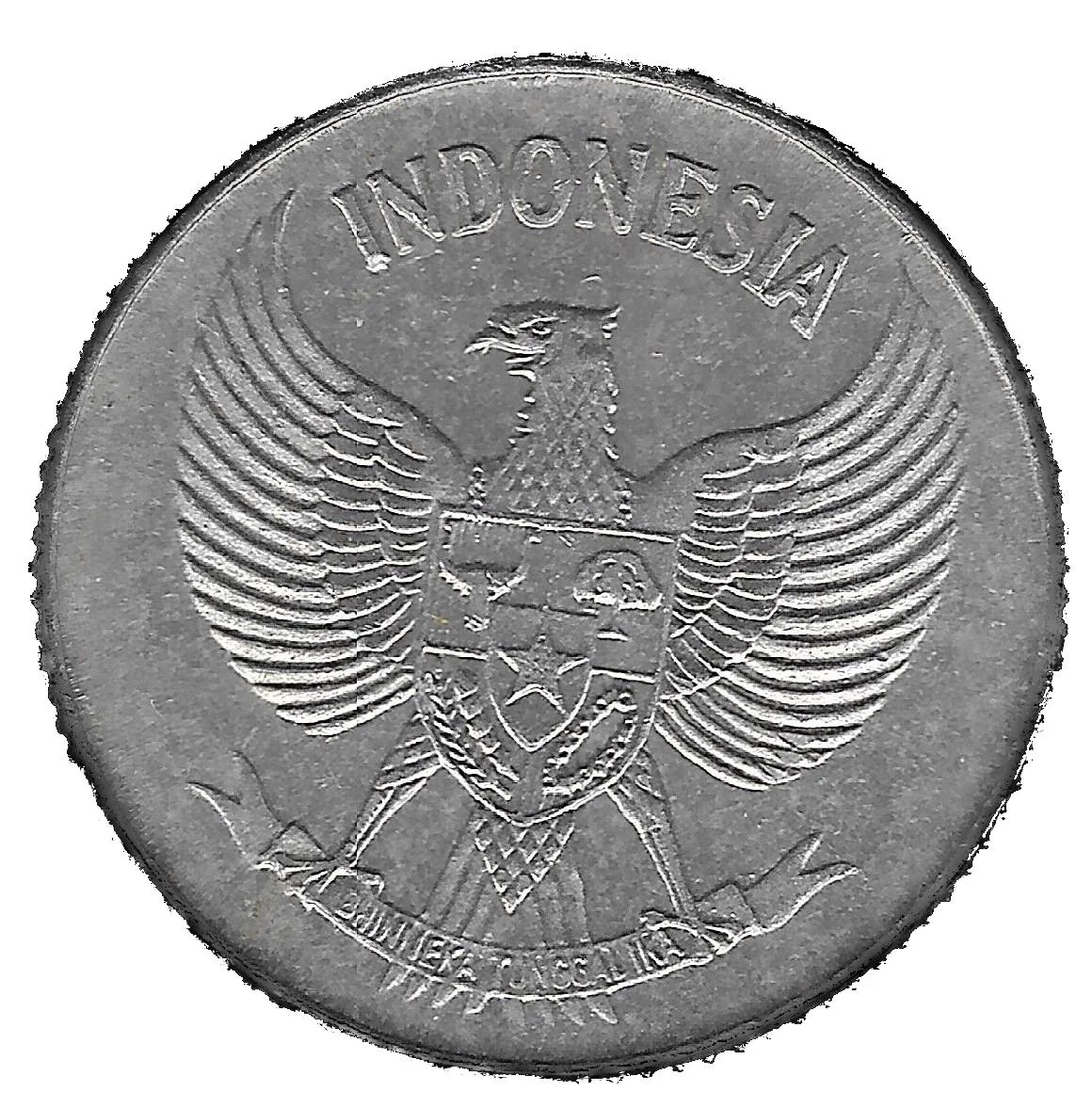
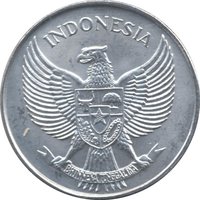
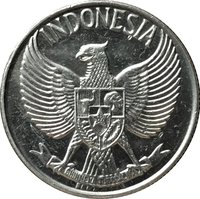
The Garuda Pancasila, Indonesia's national emblem.
Inscription:
INDONESIA
BHINNEKA TUNGGAL IKA
BHINNEKA TUNGGAL IKA
Translation:
Indonesia
Unity in Diversity
Unity in Diversity
Script: Latin
Languages: Indonesian, Javanese
Reverse
Description:
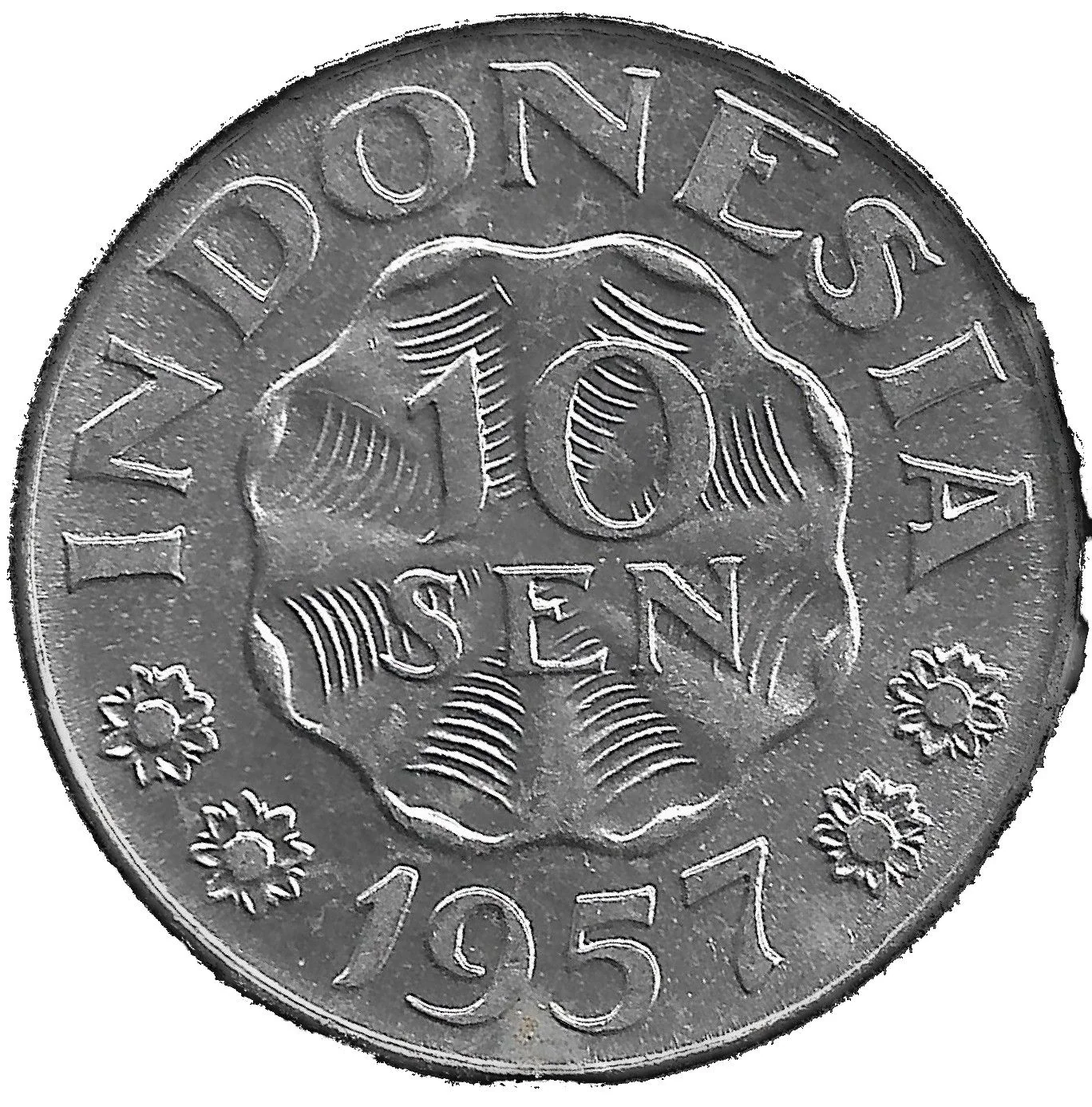
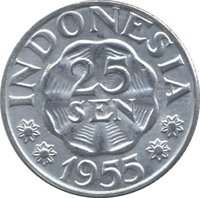
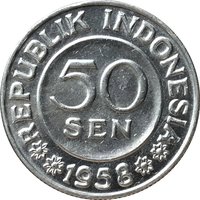
Scalloped edge with lettering top and bottom.
Inscription:
INDONESIA
10
SEN
1957
10
SEN
1957
Script: Latin
Edge
Reeded
Mintings
| Year | Mint Mark | Mintage | Quality | Collection |
|---|---|---|---|---|
| 1957 | — | 50,224,000 |
Historical background
In 1957, Indonesia's currency situation was characterized by severe instability and fragmentation, a direct consequence of the nation's political and economic turmoil following independence. The central currency, the Indonesian rupiah, was struggling to establish itself as a unified and trusted medium of exchange. Regional rebellions, most notably the PRRI/Permesta movement in Sumatra and Sulawesi, led to the issuance of unauthorized local currencies or "emergency money" in rebel-held areas, effectively fragmenting the national monetary system. This undermined the authority of the central bank, Bank Indonesia, and created multiple zones of circulation with varying values.
Economically, the period was marked by high inflation, a large budget deficit, and a critical shortage of foreign exchange. The government's finances were strained by military expenditures to quell regional dissent and the escalating campaign to nationalize Dutch-owned enterprises following the West New Guinea dispute. Revenue from key exports like rubber and tin was volatile, while import needs remained high. This led to a proliferation of complex exchange rate regulations and licensing systems, fostering a thriving black market where the rupiah traded at a significant discount compared to official rates.
President Sukarno's move towards "Guided Democracy" and a more socialist-oriented economy in the late 1950s further complicated monetary policy. The nationalization of Dutch banks and other foreign assets in 1957-58, while politically popular, disrupted established financial networks and capital flows. Consequently, 1957 stands as a pivotal year where currency disorder reflected the deeper challenges of forging a unified national economy amidst political rebellion, economic nationalism, and the transition away from colonial economic structures.
Economically, the period was marked by high inflation, a large budget deficit, and a critical shortage of foreign exchange. The government's finances were strained by military expenditures to quell regional dissent and the escalating campaign to nationalize Dutch-owned enterprises following the West New Guinea dispute. Revenue from key exports like rubber and tin was volatile, while import needs remained high. This led to a proliferation of complex exchange rate regulations and licensing systems, fostering a thriving black market where the rupiah traded at a significant discount compared to official rates.
President Sukarno's move towards "Guided Democracy" and a more socialist-oriented economy in the late 1950s further complicated monetary policy. The nationalization of Dutch banks and other foreign assets in 1957-58, while politically popular, disrupted established financial networks and capital flows. Consequently, 1957 stands as a pivotal year where currency disorder reflected the deeper challenges of forging a unified national economy amidst political rebellion, economic nationalism, and the transition away from colonial economic structures.
🌱 Common