

50 Cents – Newfoundland
Canada
Context
Years: 1911–1919
Country: Canada 
Issuer: Newfoundland
Ruler: George V
Currency:
(1865—1949)
Total mintage: 1,176,651
Material
References
KM: #Click to copy to clipboard12
Numista: #8799
Value
Exchange value: 0.50 NFD
Bullion value: $30.20
Obverse
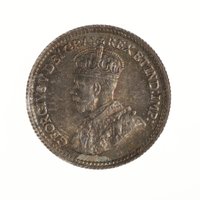
Description:
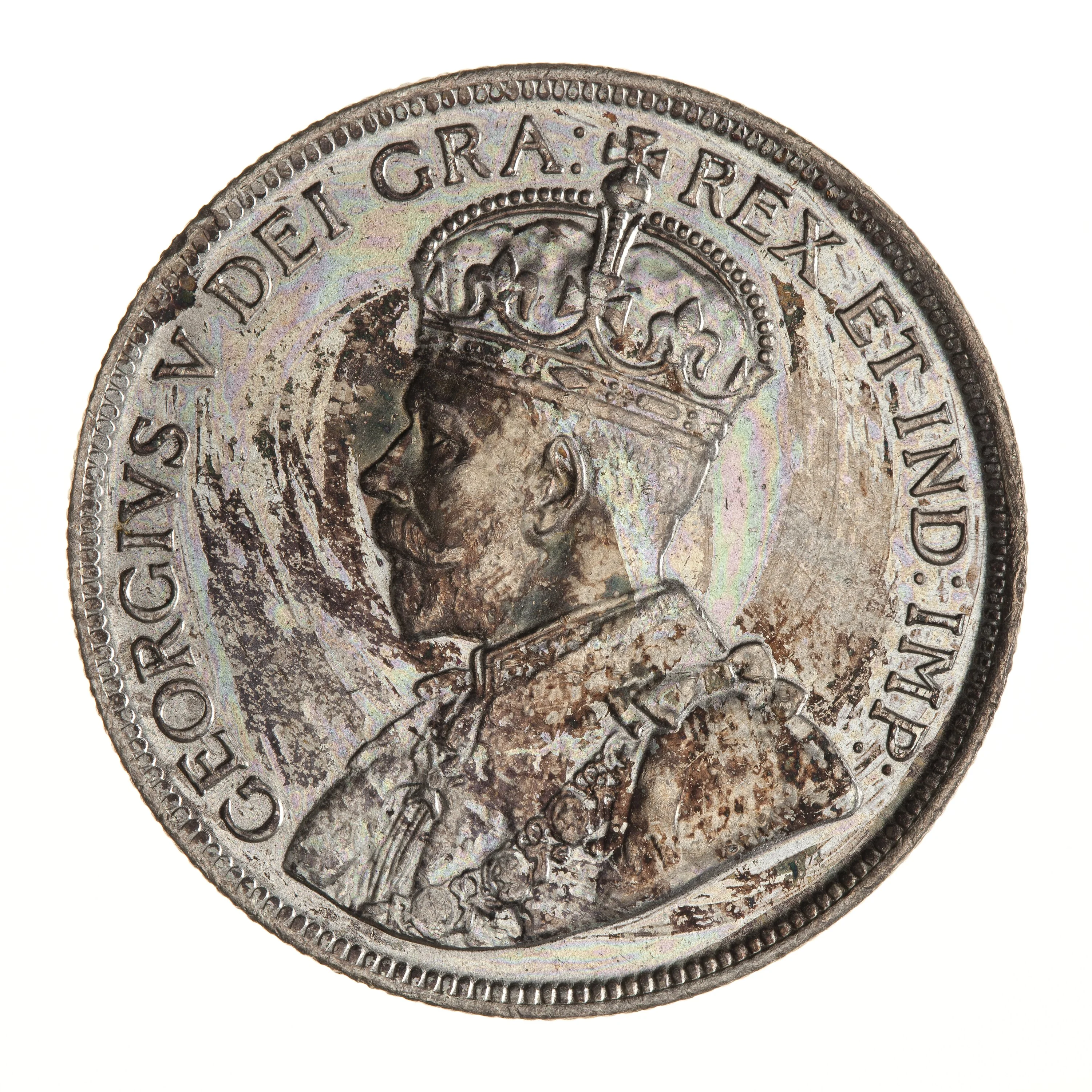
Crowned George V in left profile.
Inscription:
GEORGIVS V DEI GRA: REX ET IND:IMP
Translation:
George V by the Grace of God: King and Emperor of India
Script: Latin
Language: Latin
Engraver: Edgar Bertram MacKennal
Reverse
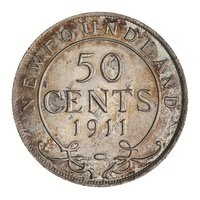
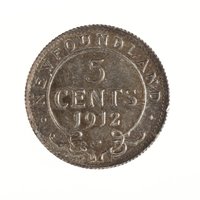
Description:
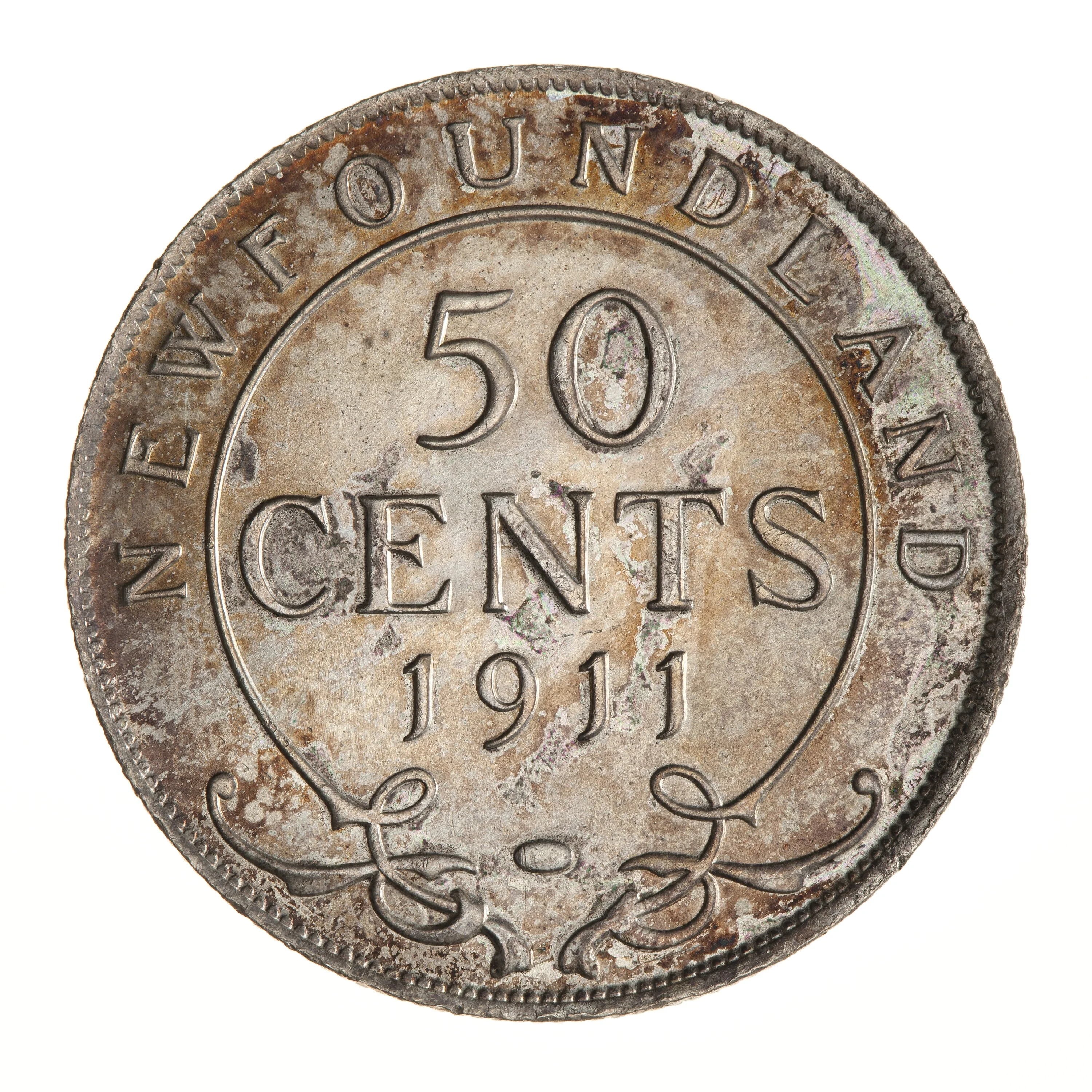
Face value and issue year centered within a decorative circle.
Inscription:
NEWFOUNDLAND
50
CENTS
1919
C
50
CENTS
1919
C
Script: Latin
Engraver: William Henry James Blakemore
Edge
Reeded
Mints
| Name | Mark |
|---|---|
| Royal Mint (Tower Hill) | — |
| Royal Canadian Mint of Ottawa | C |
Mintings
Historical background
In 1911, Newfoundland’s currency situation was a complex and practical reflection of its economic ties and colonial status. As a self-governing British Dominion, Newfoundland did not issue its own distinct paper currency. Instead, the official circulating medium was the Newfoundland dollar, pegged at par with the Canadian dollar, but its physical representation was almost entirely in the form of notes issued by the island’s commercial banks—notably the Union Bank of Newfoundland, the Commercial Bank of Newfoundland, and the Bank of Nova Scotia. These private banknotes, along with British gold sovereigns and Canadian coins, formed the daily cash in hand for Newfoundlanders.
This system, however, was underpinned by vulnerability. The two local banks operated without a central bank or government issuer, meaning the money supply and its stability depended heavily on private institutions and their reserves. Furthermore, the economy itself was narrowly based on the volatile salt-cod fishery, leading to seasonal liquidity crunches and a reliance on international credit, particularly from London and Canada. The government’s own finances were often precarious, funding itself through borrowing and custom duties, with its limited coinage and small-denomination treasury notes playing a minor role in circulation.
Consequently, the currency scene was one of functional hybridity masking underlying fragility. Newfoundlanders used a mix of local private banknotes, British and Canadian coin, and trade tokens from merchants, all accepted on the understanding of a fixed parity with the Canadian dollar. This arrangement facilitated trade with Canada, the island’s largest partner, but it also tied Newfoundland’s monetary stability to external confidence and the health of its banks. Within two decades, this fragility would be catastrophically exposed with the collapse of the local banks and the Dominion itself during the Great Depression, leading to a commission of government and the adoption of the Canadian dollar outright in 1935.
This system, however, was underpinned by vulnerability. The two local banks operated without a central bank or government issuer, meaning the money supply and its stability depended heavily on private institutions and their reserves. Furthermore, the economy itself was narrowly based on the volatile salt-cod fishery, leading to seasonal liquidity crunches and a reliance on international credit, particularly from London and Canada. The government’s own finances were often precarious, funding itself through borrowing and custom duties, with its limited coinage and small-denomination treasury notes playing a minor role in circulation.
Consequently, the currency scene was one of functional hybridity masking underlying fragility. Newfoundlanders used a mix of local private banknotes, British and Canadian coin, and trade tokens from merchants, all accepted on the understanding of a fixed parity with the Canadian dollar. This arrangement facilitated trade with Canada, the island’s largest partner, but it also tied Newfoundland’s monetary stability to external confidence and the health of its banks. Within two decades, this fragility would be catastrophically exposed with the collapse of the local banks and the Dominion itself during the Great Depression, leading to a commission of government and the adoption of the Canadian dollar outright in 1935.
🌱 Common