

1 Cent – Newfoundland
Canada
Context
Years: 1904–1909
Country: Canada 
Issuer: Newfoundland
Ruler: Edward VII
Currency:
(1865—1949)
Total mintage: 500,000
Material
References
KM: #Click to copy to clipboard9
Numista: #22534
Value
Exchange value: 0.01 NFD
Obverse
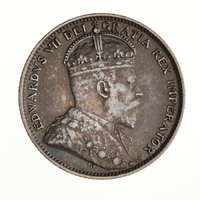
Description:
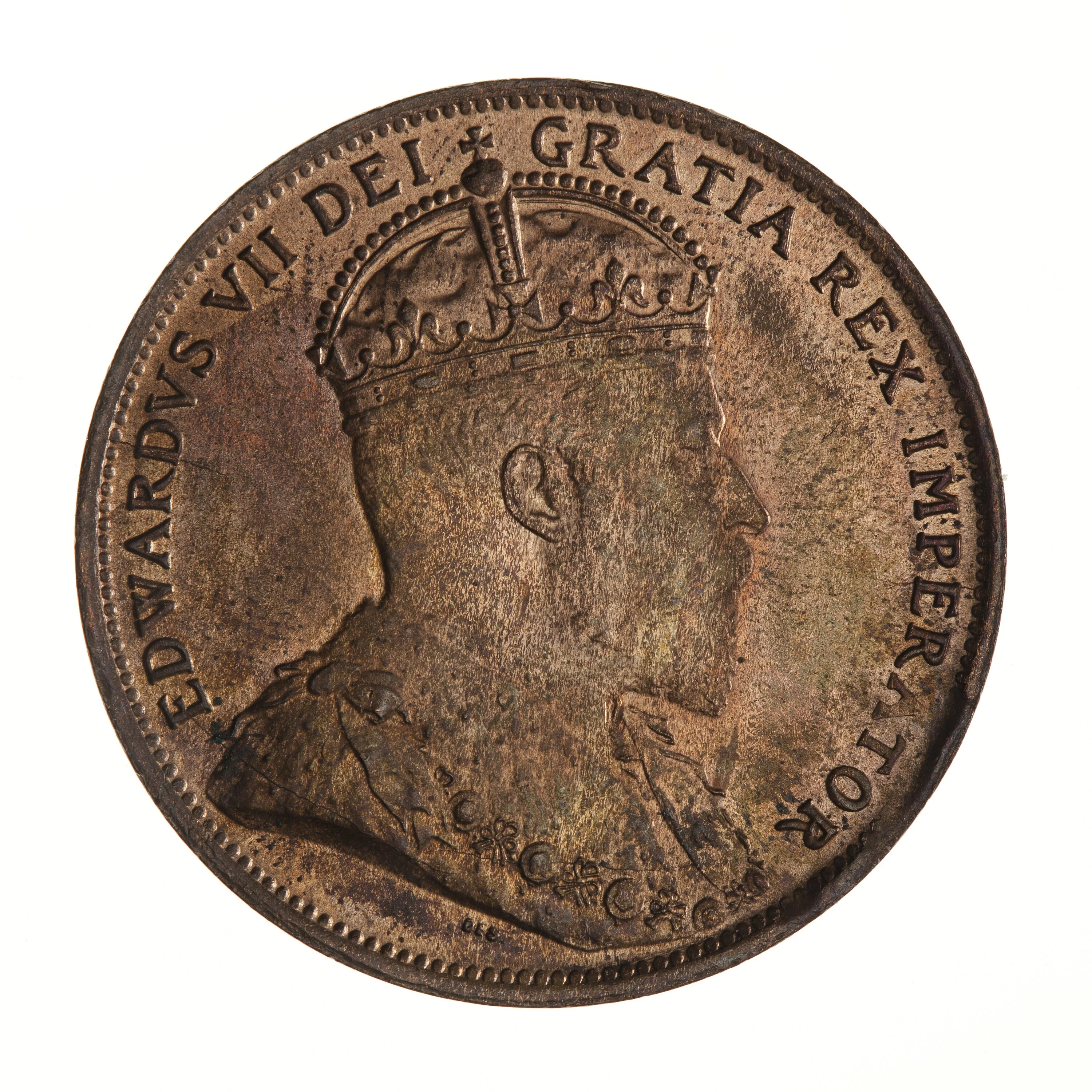
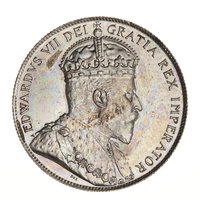
Crowned King Edward VII in right profile.
Inscription:
EDWARDVS VII DEI GRATIA REX IMPERATOR
Translation:
Edward VII by the Grace of God King Emperor
Script: Latin
Language: Latin
Engraver: George William de Saulles
Reverse
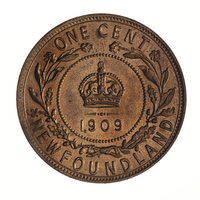
Description:
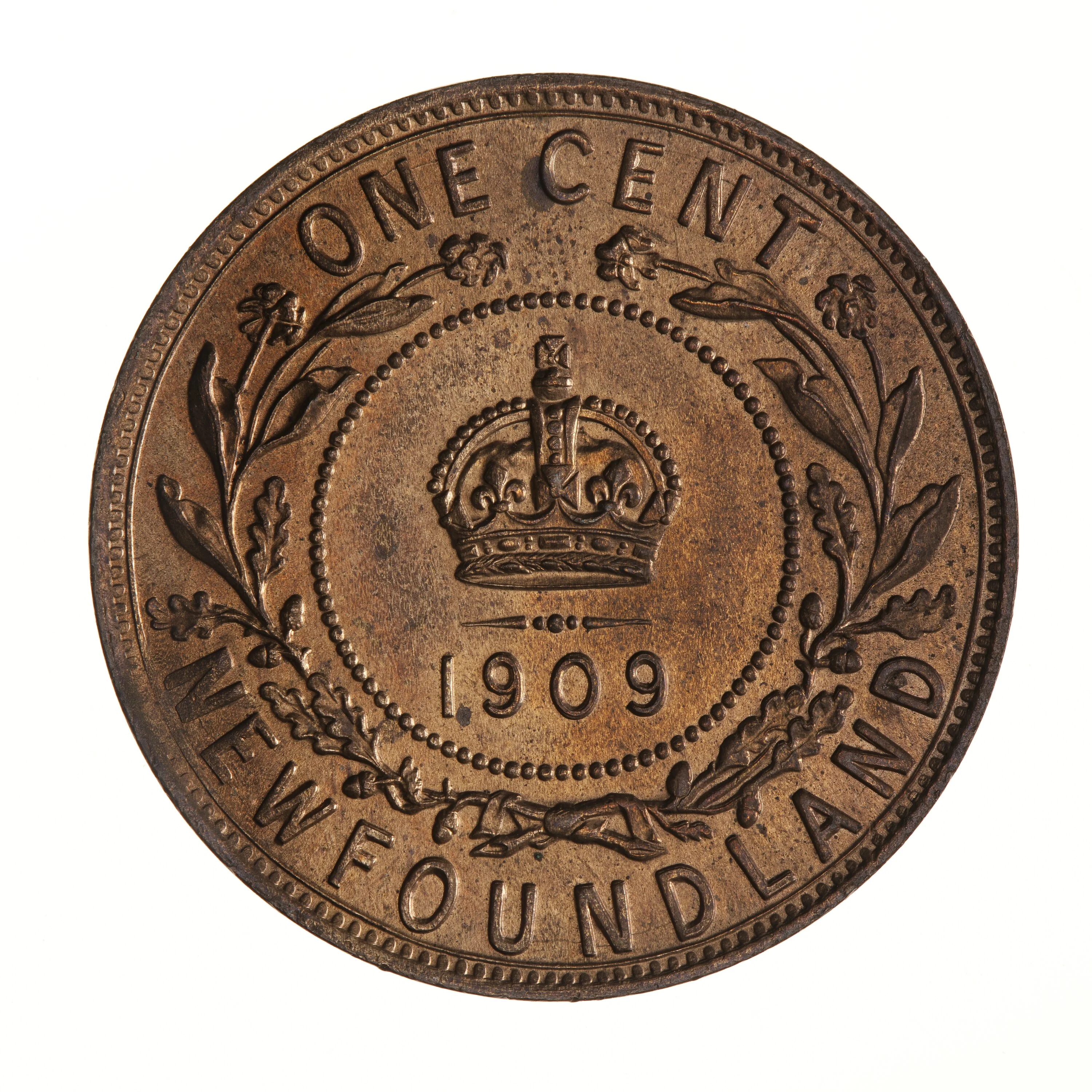
A garland of the island's emblematic purple pitcher plants and oak leaves encircles the Royal Crown and the year of issue.
Inscription:
ONE CENT
1904
H
NEWFOUNDLAND
1904
H
NEWFOUNDLAND
Script: Latin
Engraver: William Henry James Blakemore
Edge
Plain
Mints
| Name | Mark |
|---|---|
| Royal Mint (Tower Hill) | — |
| Heaton and Sons / The Mint Birmingham | H |
Mintings
Historical background
In 1904, Newfoundland operated as a self-governing British Dominion with a complex and often problematic currency situation. The official currency was the Newfoundland dollar, pegged at par with the Canadian dollar and the U.S. dollar under the gold standard. However, the colony’s chronic fiscal instability and lack of a central bank meant that its paper notes, issued by commercial banks and the government itself, often traded at a discount, especially outside St. John's. This created a climate of uncertainty for merchants and the fishing economy, as the value of money could fluctuate based on public confidence and the government's precarious financial health.
The system was a mixture of foreign and domestic specie. Alongside Newfoundland's own coins and notes, British sovereigns and half-sovereigns were legal tender, and Canadian and American coins circulated freely, reflecting the island's strong trade links with North America and the United Kingdom. This practical reliance on foreign coinage, particularly for higher-value transactions, underscored a lack of faith in the local paper currency. The government, burdened by debt from railway construction and facing annual deficits, frequently resorted to issuing short-term treasury notes to meet its obligations, further saturating the market with paper of questionable value.
Ultimately, the currency situation of 1904 was a symptom of Newfoundland's deeper economic and political struggles. The fragmented system, with its discounted notes and reliance on foreign coin, hampered internal trade and investment. This financial fragility would contribute to the broader crisis that, decades later, led Newfoundland to forfeit its Dominion status. The currency would only be fully stabilized when Newfoundland adopted the Canadian dollar in 1895, following the Canadian Banking Acts, but even then, old habits and notes persisted, leaving the monetary landscape somewhat tangled as the 20th century began.
The system was a mixture of foreign and domestic specie. Alongside Newfoundland's own coins and notes, British sovereigns and half-sovereigns were legal tender, and Canadian and American coins circulated freely, reflecting the island's strong trade links with North America and the United Kingdom. This practical reliance on foreign coinage, particularly for higher-value transactions, underscored a lack of faith in the local paper currency. The government, burdened by debt from railway construction and facing annual deficits, frequently resorted to issuing short-term treasury notes to meet its obligations, further saturating the market with paper of questionable value.
Ultimately, the currency situation of 1904 was a symptom of Newfoundland's deeper economic and political struggles. The fragmented system, with its discounted notes and reliance on foreign coin, hampered internal trade and investment. This financial fragility would contribute to the broader crisis that, decades later, led Newfoundland to forfeit its Dominion status. The currency would only be fully stabilized when Newfoundland adopted the Canadian dollar in 1895, following the Canadian Banking Acts, but even then, old habits and notes persisted, leaving the monetary landscape somewhat tangled as the 20th century began.
🌱 Fairly Common