

5 Cents – Newfoundland
Canada
Context
Years: 1912–1929
Country: Canada 
Issuer: Newfoundland
Ruler: George V
Currency:
(1865—1949)
Total mintage: 1,001,163
Material
References
KM: #Click to copy to clipboard13
Numista: #16037
Value
Exchange value: 0.05 NFD
Bullion value: $3.00
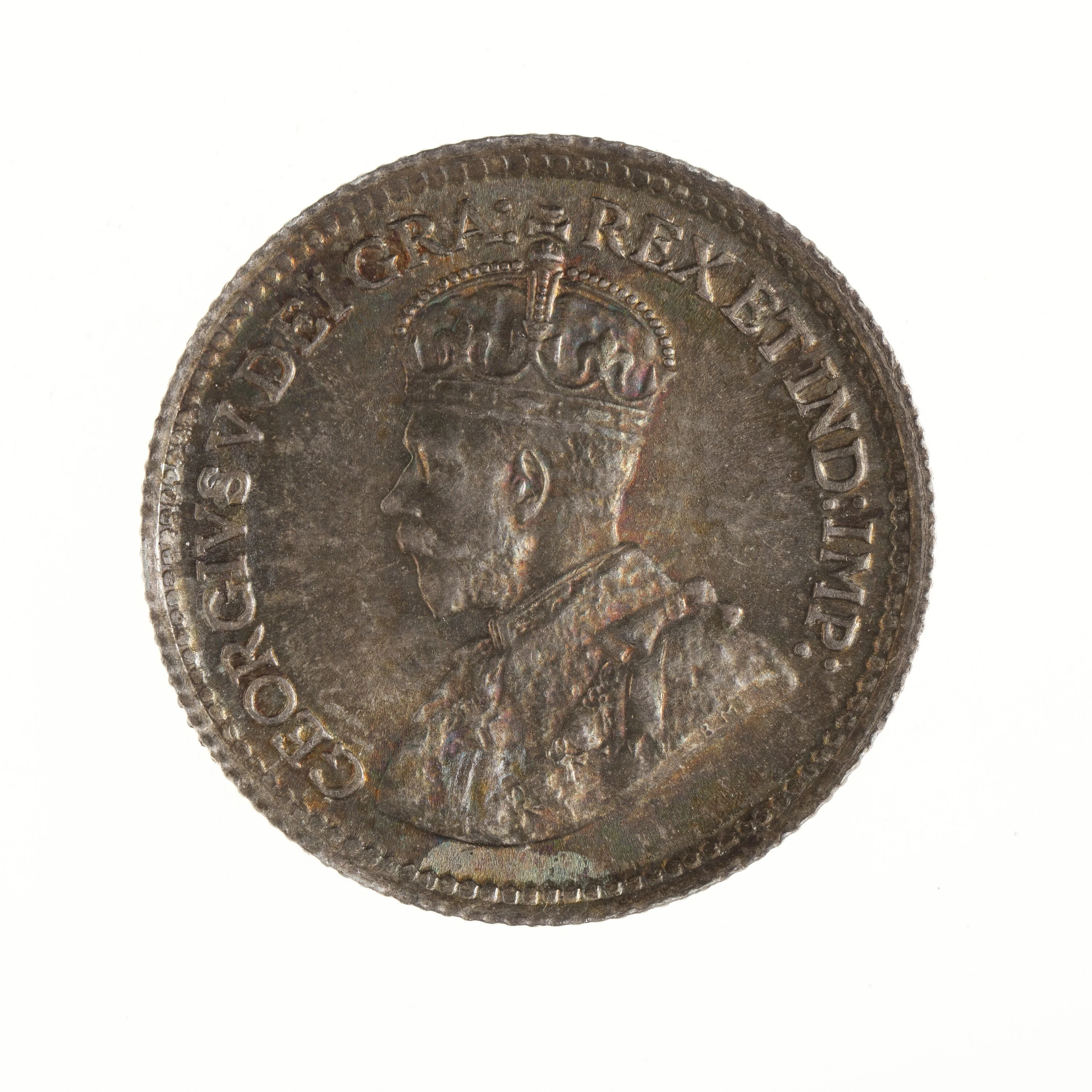
Obverse
Description:
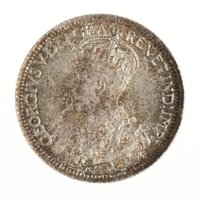
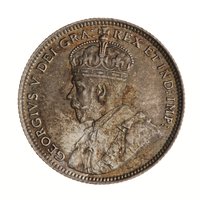
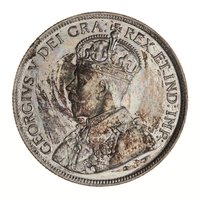
Crowned George V, facing left.
Inscription:
GEORGIVS V DEI GRA: REX ET IND: IMP:
Translation:
George V by the Grace of God: King and Emperor of India.
Script: Latin
Language: Latin
Engraver: Edgar Bertram MacKennal
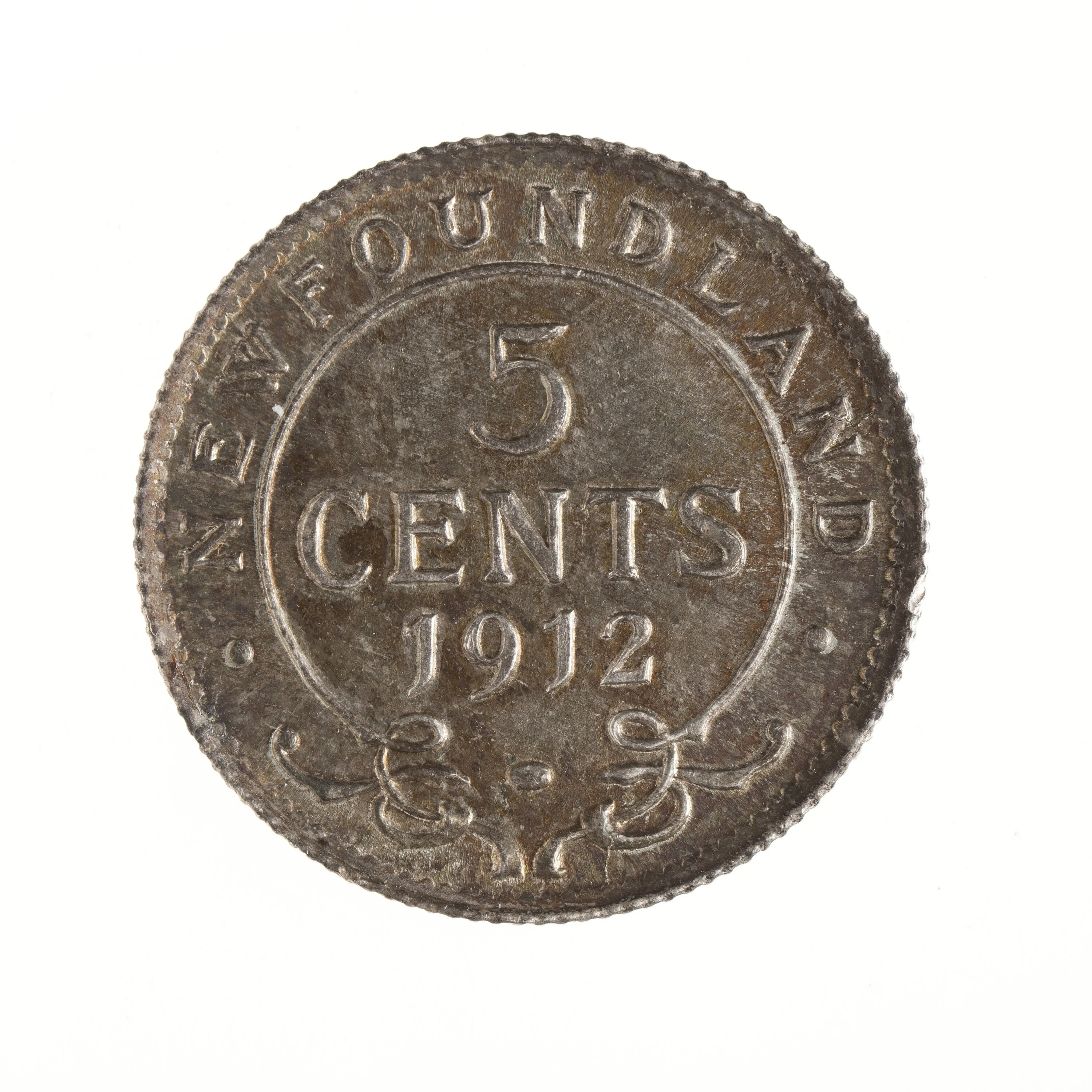
Reverse
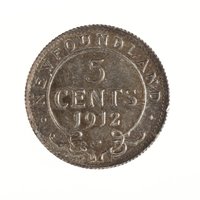
Description:
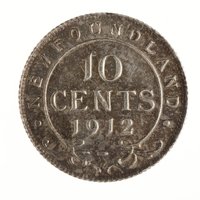
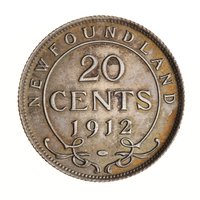
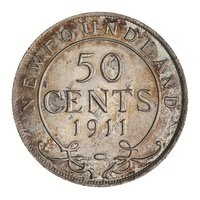
Face value and issue year centered within a decorative circle.
Inscription:
NEWFOUNDLAND
5
CENTS
1917
5
CENTS
1917
Script: Latin
Engraver: George William de Saulles
Edge
Reeded
Mints
| Name | Mark |
|---|---|
| Royal Mint (Tower Hill) | — |
| Royal Canadian Mint of Ottawa | C |
Mintings
Historical background
In 1912, Newfoundland’s currency situation was a complex and practical reflection of its economic ties and colonial status. As a self-governing British Dominion, the island did not issue its own distinct paper money for general circulation. Instead, the official currency was the Newfoundland dollar, pegged at par with the Canadian dollar, but its physical presence was dominated by Canadian banknotes and coins. These circulated freely and were often preferred in daily transactions, alongside British sovereigns and sterling. The limited notes issued by Newfoundland's own Treasury and two private banks were supplemented by this foreign currency, creating a de facto mixed monetary system.
This reliance on Canadian currency was driven by deep economic interdependence. Newfoundland's key export industries—the saltfish trade and the emerging mining sector—were heavily financed by Canadian banks, particularly the Bank of Montreal and the Commercial Bank of Newfoundland. Furthermore, a significant portion of consumer goods were imported from Canada, making Canadian currency a convenient medium of exchange. The situation underscored a growing economic orbit around Canada, even as political independence was maintained.
The arrangement, while functional, highlighted underlying fiscal vulnerabilities. The government’s own financial position was increasingly precarious, reliant on customs duties and facing growing debt from railway development. The lack of a unified, sovereign currency system mirrored a broader financial fragility. Within two decades, this would culminate in economic collapse and the suspension of self-government in 1934, after which the Canadian dollar became the official currency, a formalization of the monetary reality that was already firmly in place in 1912.
This reliance on Canadian currency was driven by deep economic interdependence. Newfoundland's key export industries—the saltfish trade and the emerging mining sector—were heavily financed by Canadian banks, particularly the Bank of Montreal and the Commercial Bank of Newfoundland. Furthermore, a significant portion of consumer goods were imported from Canada, making Canadian currency a convenient medium of exchange. The situation underscored a growing economic orbit around Canada, even as political independence was maintained.
The arrangement, while functional, highlighted underlying fiscal vulnerabilities. The government’s own financial position was increasingly precarious, reliant on customs duties and facing growing debt from railway development. The lack of a unified, sovereign currency system mirrored a broader financial fragility. Within two decades, this would culminate in economic collapse and the suspension of self-government in 1934, after which the Canadian dollar became the official currency, a formalization of the monetary reality that was already firmly in place in 1912.
🌱 Common