

25 Centavos – Guatemala
Guatemala
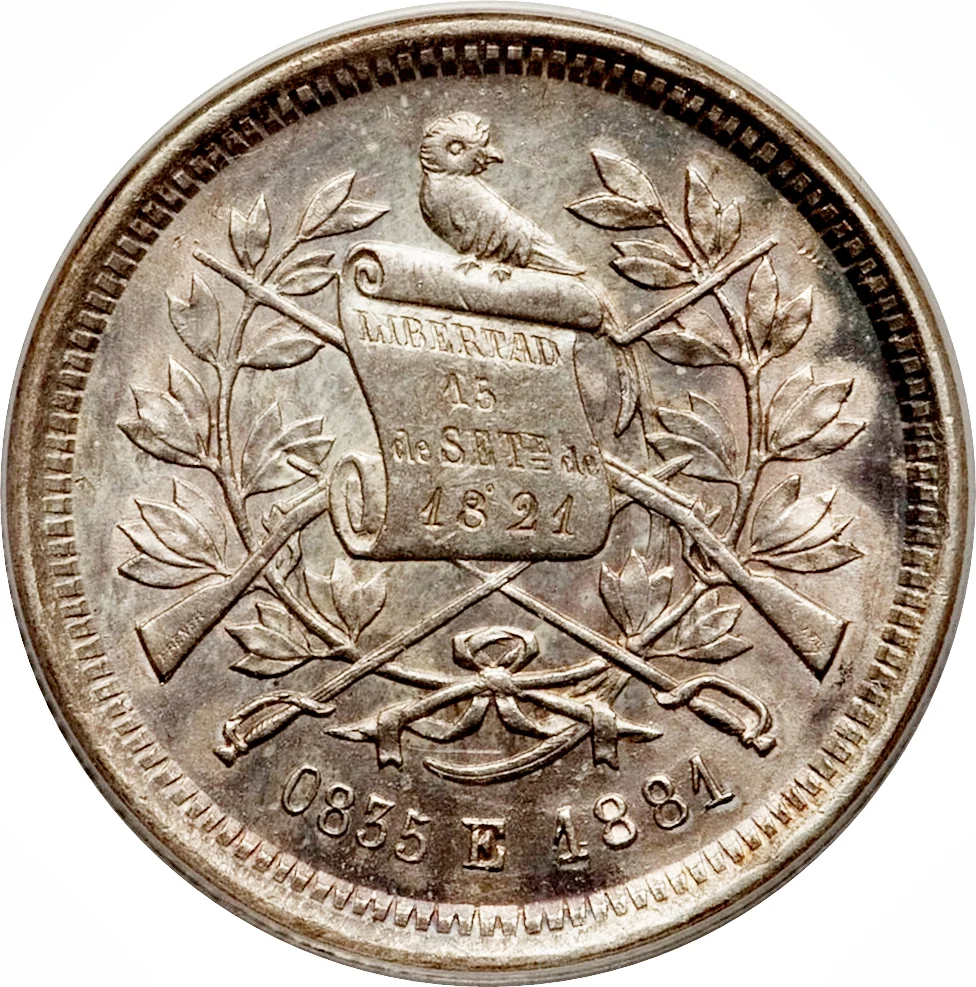
Obverse
Description:
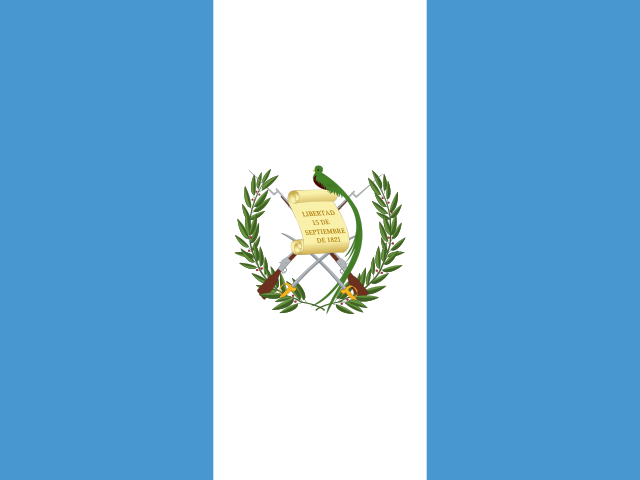
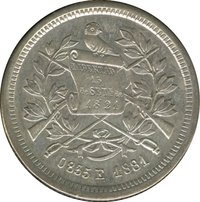
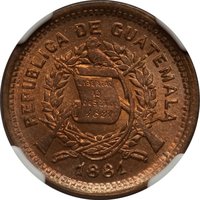
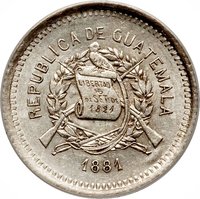
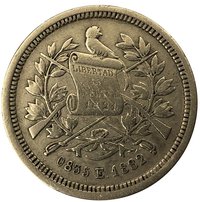
Coat of arms with fineness, initial, and date below.
Inscription:
LIBERTAD
15
de SETE de
1821
0835 E 1881
15
de SETE de
1821
0835 E 1881
Translation:
LIBERTY
15
of SEPTEMBER of
1821
0835 AND 1881
15
of SEPTEMBER of
1821
0835 AND 1881
Script: Latin
Language: Spanish
Engraver: Johann-Baptist Frener
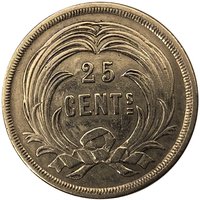
Reverse
Description:
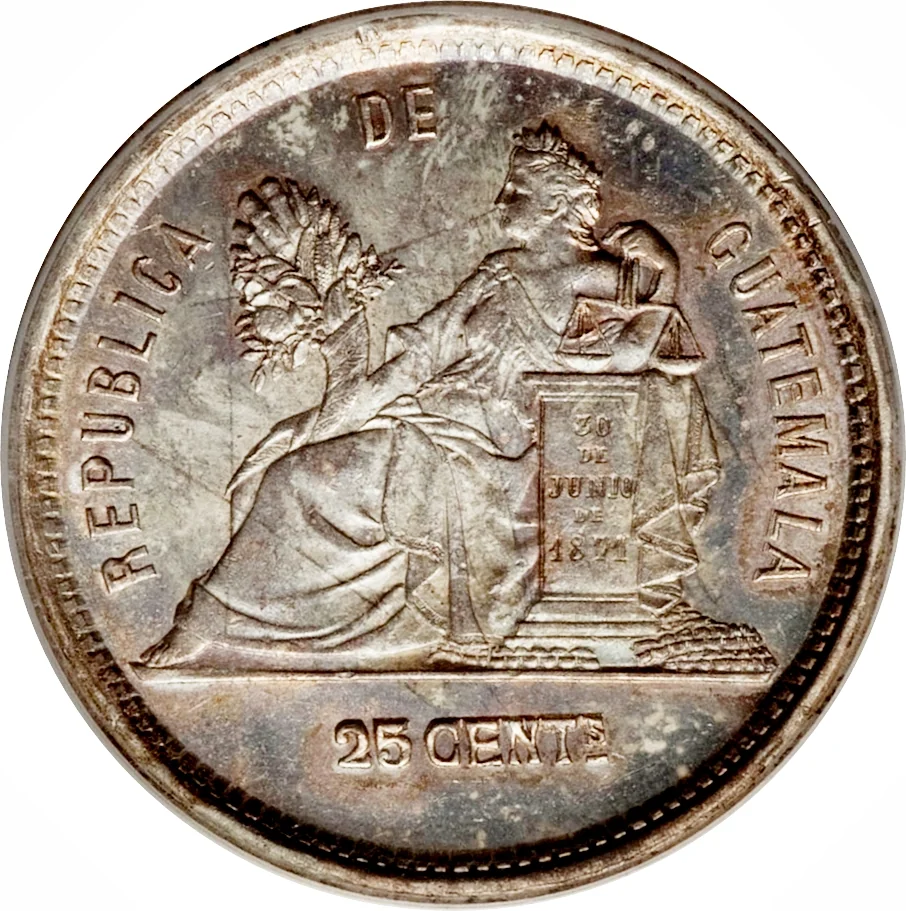
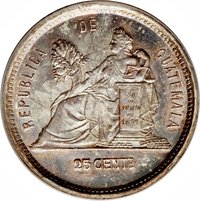
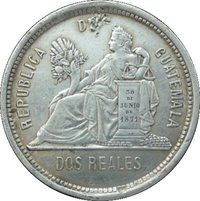
Seated Justice holds scales and a cornucopia, her arm resting on a constitution. Legend encircles; value below.
Inscription:
REPUBLICA DE GUATEMALA
30
DE
JUNIO
DE
1871
25 CENTs
30
DE
JUNIO
DE
1871
25 CENTs
Translation:
REPUBLIC OF GUATEMALA
30
OF
JUNE
OF
1871
25 CENTS
30
OF
JUNE
OF
1871
25 CENTS
Script: Latin
Language: Spanish
Engraver: Johann-Baptist Frener
Edge
Reeded
Categories
| Symbol> Allegory |
| Symbols> Coat of Arms |
Mints
| Name | Mark |
|---|---|
| Casa de Moneda de Guatemala | — |
Mintings
| Year | Mint Mark | Mintage | Quality | Collection |
|---|---|---|---|---|
| 1881 | — | 5,044,000 | ||
| 1882 | — | 177,620 | ||
| 1885 | — | — | ||
| 1888 | — | — | ||
| 1889 | — | — | ||
| 1890 | — | — | ||
| 1891 | — | — |
Historical background
In 1881, Guatemala’s currency system was in a state of transition and disarray, caught between the colonial legacy of the Spanish monetary system and the practical realities of a newly independent republic. The official currency was the Guatemalan Peso, theoretically on a silver standard, but the nation suffered from a chronic shortage of minted coinage. This scarcity was exacerbated by the global decline in the value of silver, which led to the hoarding and export of full-weight silver coins, leaving primarily worn and clipped coins in domestic circulation. Consequently, a wide variety of foreign coins, including Peruvian, Bolivian, and old Spanish colonial pieces, circulated alongside the official currency, all accepted at fluctuating and often arbitrary values.
The situation was further complicated by the issuance of paper money. To finance infrastructure projects, particularly the construction of railways, the government of President Justo Rufino Barrios had authorized the issuance of billetes de moneda (paper notes) through the Banco de Guatemala. However, this paper currency was not fully convertible to silver and suffered from significant public distrust. It often traded at a steep discount to the theoretical value of the silver peso, leading to a dual-system where transactions in coin and paper had different values, creating confusion and hindering commerce.
This monetary instability reflected the broader economic challenges of the era. Guatemala’s economy was heavily dependent on coffee exports, and the government sought a stable, unified currency to facilitate trade and foreign investment. The difficulties of 1881 set the stage for more comprehensive reforms later in the decade, culminating in the creation of a new national currency, the Quetzal, in 1925, which finally established monetary stability by pegging the currency to the US dollar and moving away from the problematic silver standard.
The situation was further complicated by the issuance of paper money. To finance infrastructure projects, particularly the construction of railways, the government of President Justo Rufino Barrios had authorized the issuance of billetes de moneda (paper notes) through the Banco de Guatemala. However, this paper currency was not fully convertible to silver and suffered from significant public distrust. It often traded at a steep discount to the theoretical value of the silver peso, leading to a dual-system where transactions in coin and paper had different values, creating confusion and hindering commerce.
This monetary instability reflected the broader economic challenges of the era. Guatemala’s economy was heavily dependent on coffee exports, and the government sought a stable, unified currency to facilitate trade and foreign investment. The difficulties of 1881 set the stage for more comprehensive reforms later in the decade, culminating in the creation of a new national currency, the Quetzal, in 1925, which finally established monetary stability by pegging the currency to the US dollar and moving away from the problematic silver standard.
Series: 1881 Guatemala circulation coins
🌟 Limited