

25 Centavos – Guatemala
Guatemala
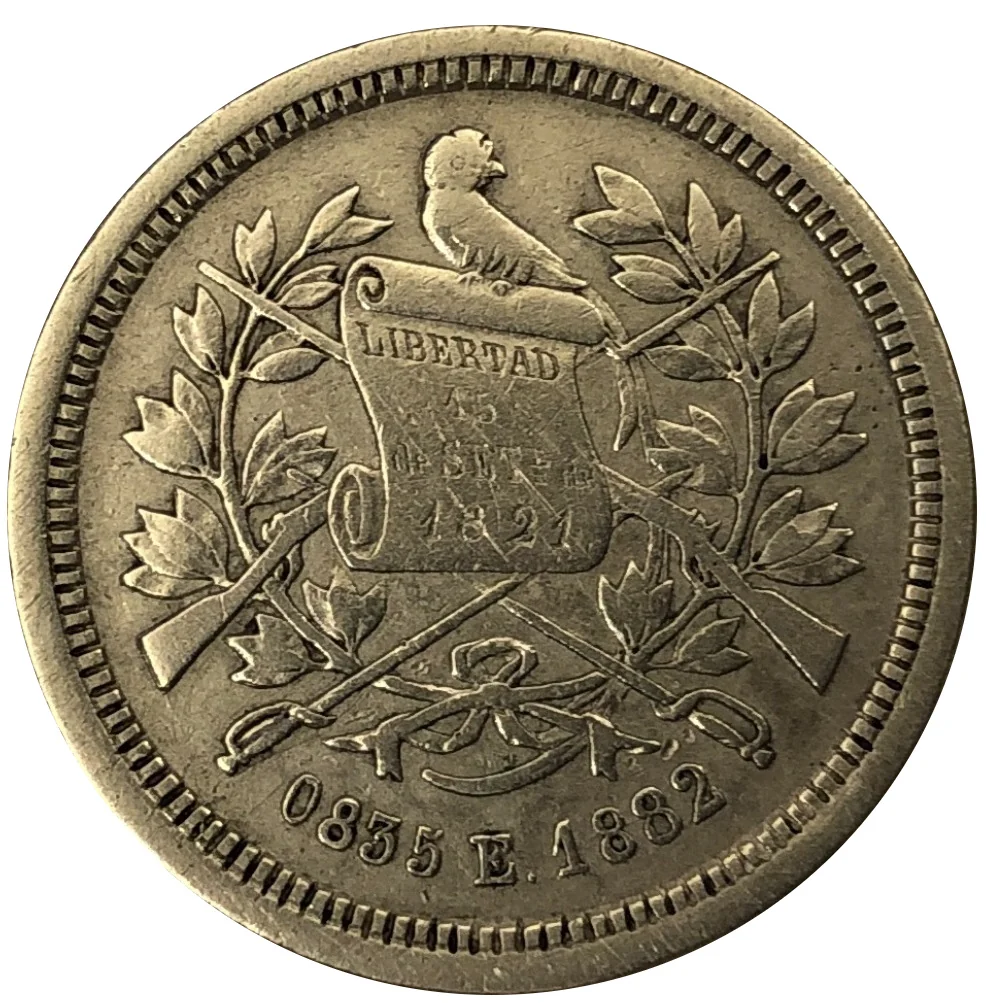
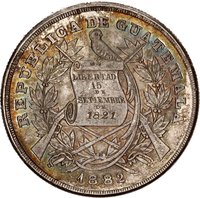
Obverse
Description:
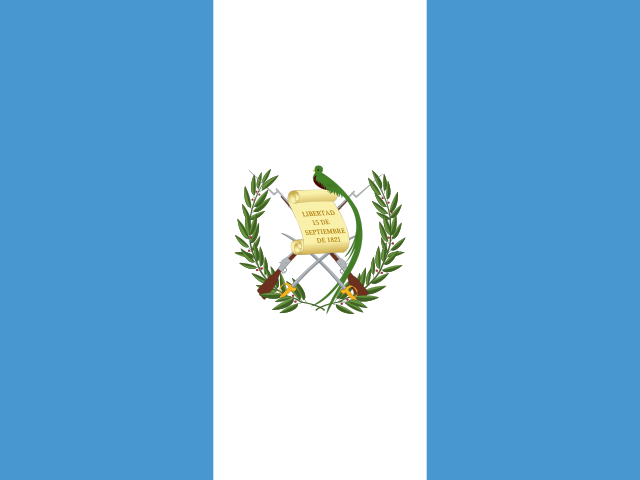
Coat of arms with date below.
Inscription:
LIBERTAD
15
DE
SETIEMBRE
DE
1821
1882
15
DE
SETIEMBRE
DE
1821
1882
Translation:
LIBERTY
15
OF
SEPTEMBER
OF
1821
1882
15
OF
SEPTEMBER
OF
1821
1882
Script: Latin
Language: Spanish
Engraver: Johann-Baptist Frener
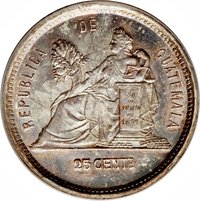
Reverse
Description:
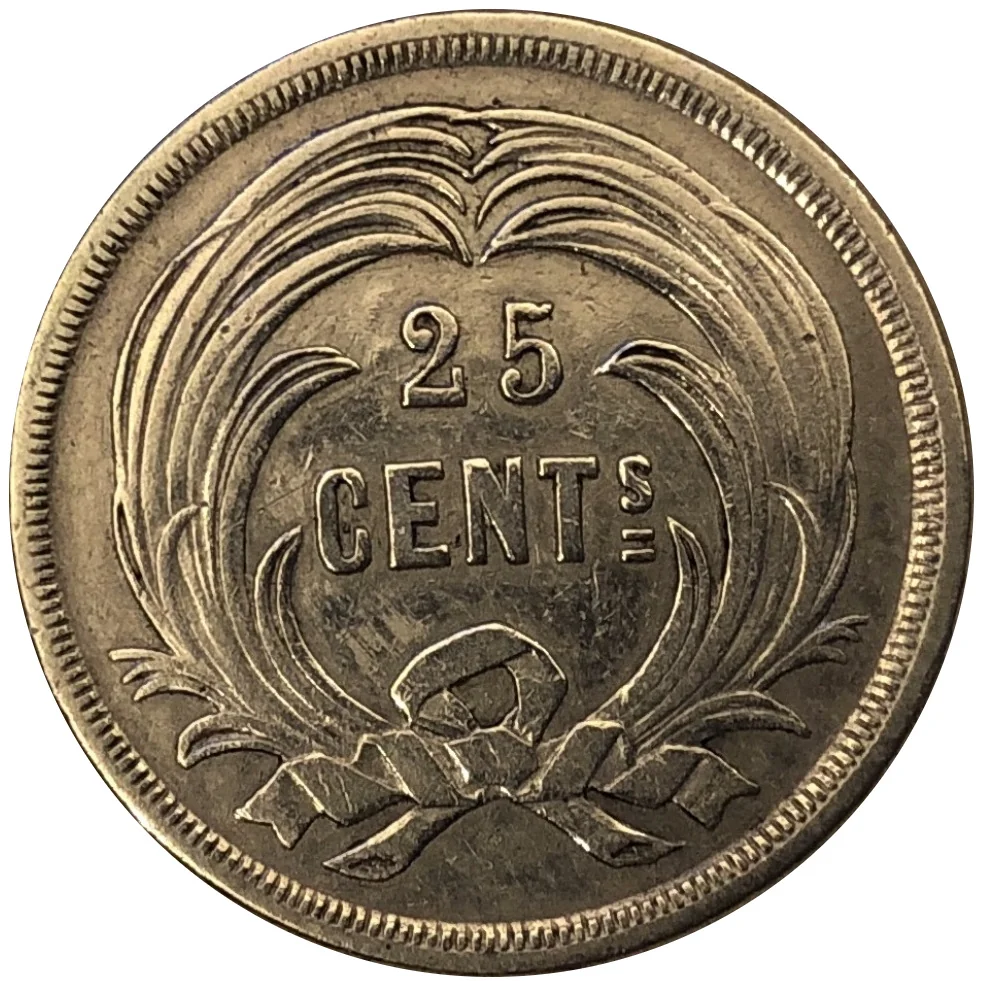
Treasure in the wreath.
Inscription:
25
CENTs.
CENTs.
Script: Latin
Engraver: Johann-Baptist Frener
Edge
Categories
| Symbols> Coat of Arms |
| Symbol> Wreath |
Mints
| Name | Mark |
|---|---|
| Casa de Moneda de Guatemala | — |
Mintings
| Year | Mint Mark | Mintage | Quality | Collection |
|---|---|---|---|---|
| 1882 | — | 17,664 |
Historical background
In 1882, Guatemala's currency situation was characterized by a period of significant transition and monetary confusion. Following independence from Spain, the country, like many in Central America, grappled with a chaotic mix of coins. Spanish colonial reales, Peruvian and Bolivian pesos, and even French francs circulated alongside locally minted coins. The official unit was the peso, divided into 8 reales, but the actual value and silver content of coins in circulation varied widely, leading to complex calculations in commerce and undermining both domestic trade and foreign investment.
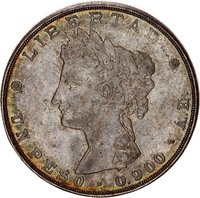
This instability prompted a major reform. Under the government of President Justo Rufino Barrios, a key figure in the Liberal Revolution that modernized the state, Guatemala took decisive steps toward a standardized decimal system. In 1881, the government had passed a monetary law decreeing that the peso would now be divided into 100 centavos, aligning with international decimal conventions. By 1882, the nation was in the early stages of implementing this reform, introducing new silver one-peso coins (weighing 25 grams, .900 fine) and subsidiary silver and copper coins. This move was part of a broader liberal agenda to create a stronger, more centralized state and attract foreign capital for infrastructure and coffee export expansion.
However, the transition was not instantaneous. In 1882, the older non-decimal coins remained in widespread use alongside the new decimal issues, creating a temporary dual system. The reform also firmly placed Guatemala on a silver standard, a decision that would later pose economic challenges. In the coming decades, as the global price of silver plummeted relative to gold, the value of Guatemala's silver-based currency would depreciate, affecting its international exchange rates and purchasing power. Thus, 1882 stands as a pivotal year where Guatemala actively sought monetary order, setting a course that would define its financial system for years to come.
This instability prompted a major reform. Under the government of President Justo Rufino Barrios, a key figure in the Liberal Revolution that modernized the state, Guatemala took decisive steps toward a standardized decimal system. In 1881, the government had passed a monetary law decreeing that the peso would now be divided into 100 centavos, aligning with international decimal conventions. By 1882, the nation was in the early stages of implementing this reform, introducing new silver one-peso coins (weighing 25 grams, .900 fine) and subsidiary silver and copper coins. This move was part of a broader liberal agenda to create a stronger, more centralized state and attract foreign capital for infrastructure and coffee export expansion.
However, the transition was not instantaneous. In 1882, the older non-decimal coins remained in widespread use alongside the new decimal issues, creating a temporary dual system. The reform also firmly placed Guatemala on a silver standard, a decision that would later pose economic challenges. In the coming decades, as the global price of silver plummeted relative to gold, the value of Guatemala's silver-based currency would depreciate, affecting its international exchange rates and purchasing power. Thus, 1882 stands as a pivotal year where Guatemala actively sought monetary order, setting a course that would define its financial system for years to come.
✨ Legendary