

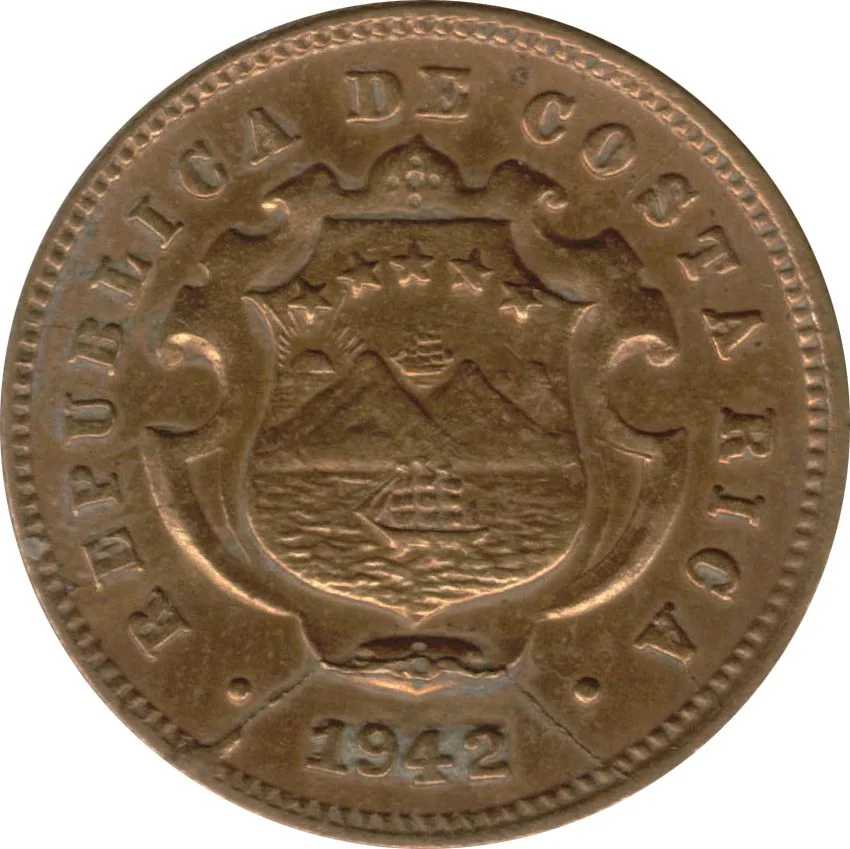
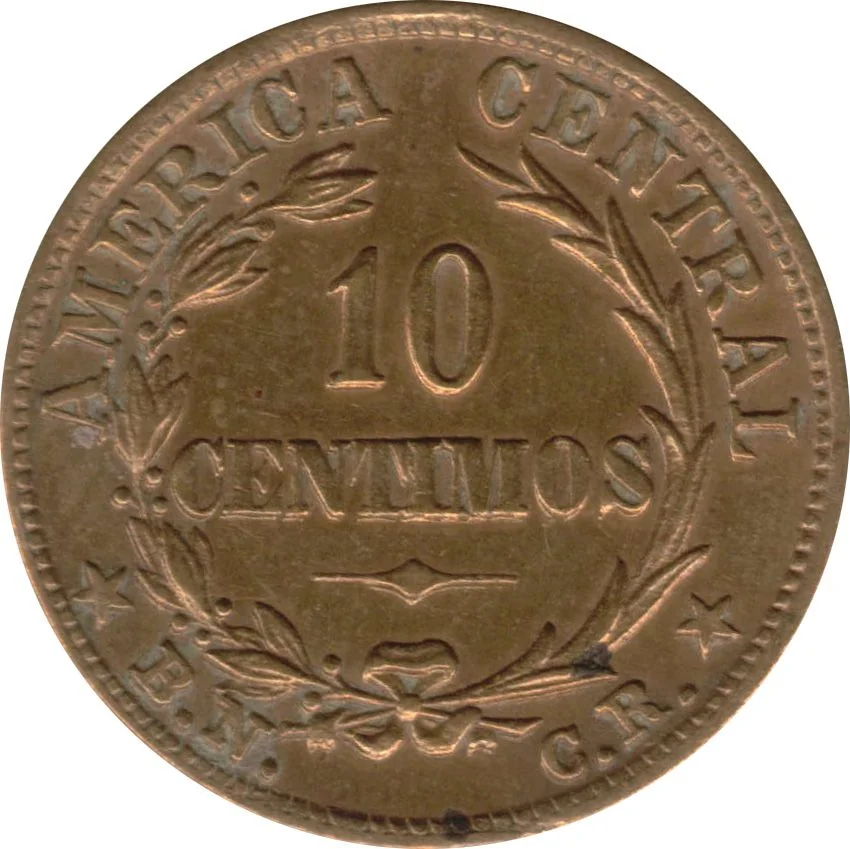
10 centimos – Costa Rica
Add to wishlist
Costa Rica
Context
Years: 1942–1947
Issuer: Costa Rica
Issuing organization: Banco National de Costa Rica
Period:
(1848—1948)
Currency:
(since 1896)
Demonetized: Yes
Total mintage: 3,500,000
References
KM: #
Numista: #8744
Value
Exchange value: 0.10 CRC
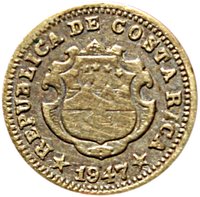
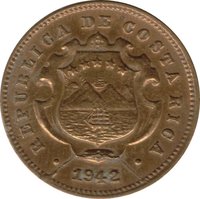
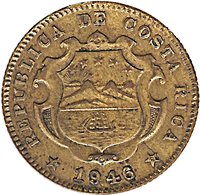
Obverse
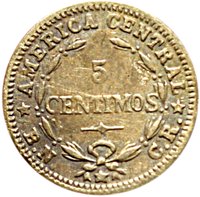
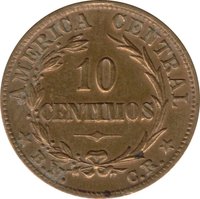
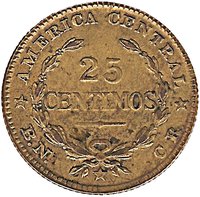
Reverse
Edge
Reeded
Categories
| Symbols> Coat of Arms |
| Symbol> Wreath |
Mints
| Name | Mark |
|---|---|
| Casa Nacional de Moneda de Costa Rica | — |
Mintings
| Year | Mint Mark | Mintage | Quality | Collection |
|---|---|---|---|---|
| 1942 | BNCR | 1,000,000 | ||
| 1943 | BNCR | 500,000 | ||
| 1946 | BNCR | 500,000 | ||
| 1947 | BNCR | 1,500,000 |
Historical background
In 1942, Costa Rica's currency situation was fundamentally defined by its adherence to the gold standard and its strategic economic alignment with the Allied powers during World War II. The official currency was the Costa Rican colón, which had been pegged to the British pound sterling since 1914. However, this link became untenable as the war disrupted global trade and financial markets. Consequently, in 1941, the administration of President Rafael Ángel Calderón Guardia formally shifted the colón's peg to the United States dollar at a fixed rate of 5.60 colones per dollar, a move that reflected the nation's deepening economic and political ties with the United States.
This period was characterized by significant economic strain and inflationary pressures. Costa Rica, heavily dependent on agricultural exports like coffee and bananas, faced severe disruptions to its international trade due to German U-boat activity in the Atlantic, which curtailed shipping and access to traditional European markets. The resulting shortage of imported goods, combined with increased government spending on social programs and infrastructure, fueled inflation. Despite the fixed exchange rate, the cost of living rose sharply, putting pressure on the population and complicating economic management.
The government's response involved increased state intervention in the monetary system. The Instituto Costarricense de Electricidad (ICE) was not yet established, but the foundations of the welfare state were being laid, requiring greater control over financial resources. The Central Bank of Costa Rica (Banco Central de Costa Rica), which had been established just a decade earlier in 1930, played a crucial role in managing reserves and attempting to stabilize the currency. Its policies during this wartime period were focused on supporting the dollar peg, managing limited foreign exchange reserves, and navigating the economic dislocations that would ultimately lead to more profound state-led development strategies in the post-war era.
This period was characterized by significant economic strain and inflationary pressures. Costa Rica, heavily dependent on agricultural exports like coffee and bananas, faced severe disruptions to its international trade due to German U-boat activity in the Atlantic, which curtailed shipping and access to traditional European markets. The resulting shortage of imported goods, combined with increased government spending on social programs and infrastructure, fueled inflation. Despite the fixed exchange rate, the cost of living rose sharply, putting pressure on the population and complicating economic management.
The government's response involved increased state intervention in the monetary system. The Instituto Costarricense de Electricidad (ICE) was not yet established, but the foundations of the welfare state were being laid, requiring greater control over financial resources. The Central Bank of Costa Rica (Banco Central de Costa Rica), which had been established just a decade earlier in 1930, played a crucial role in managing reserves and attempting to stabilize the currency. Its policies during this wartime period were focused on supporting the dollar peg, managing limited foreign exchange reserves, and navigating the economic dislocations that would ultimately lead to more profound state-led development strategies in the post-war era.
🌱 Common