

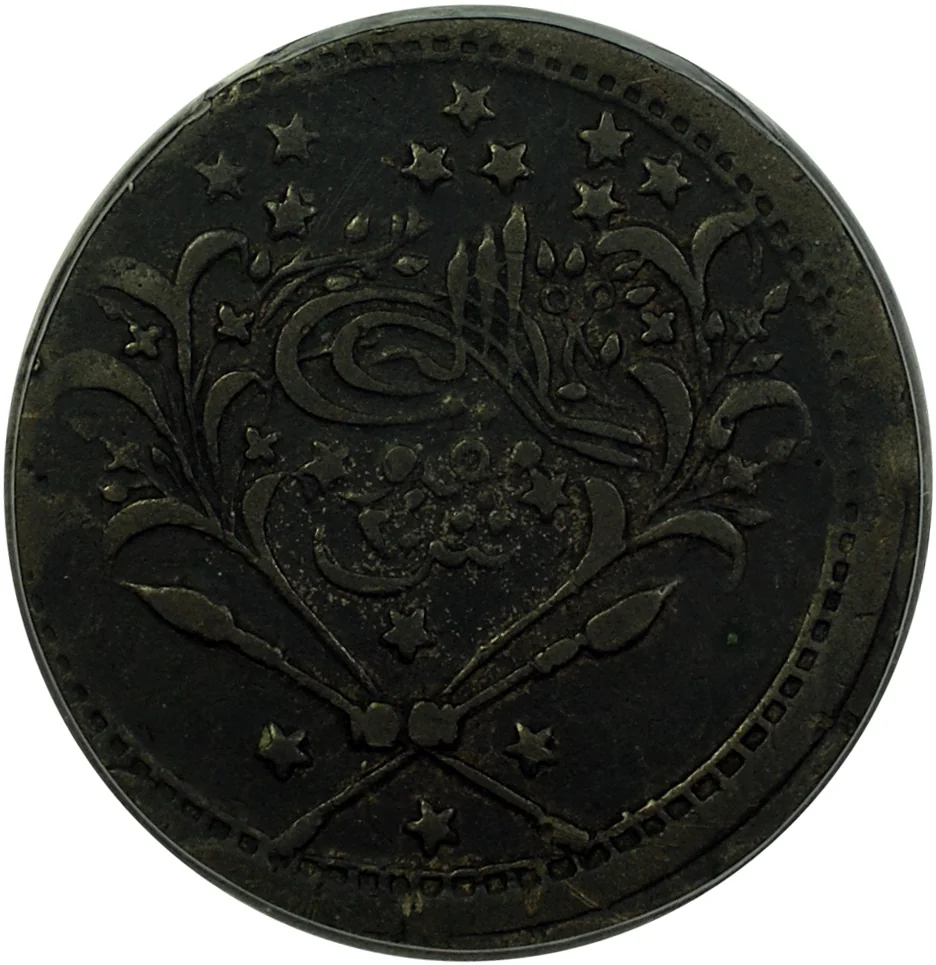
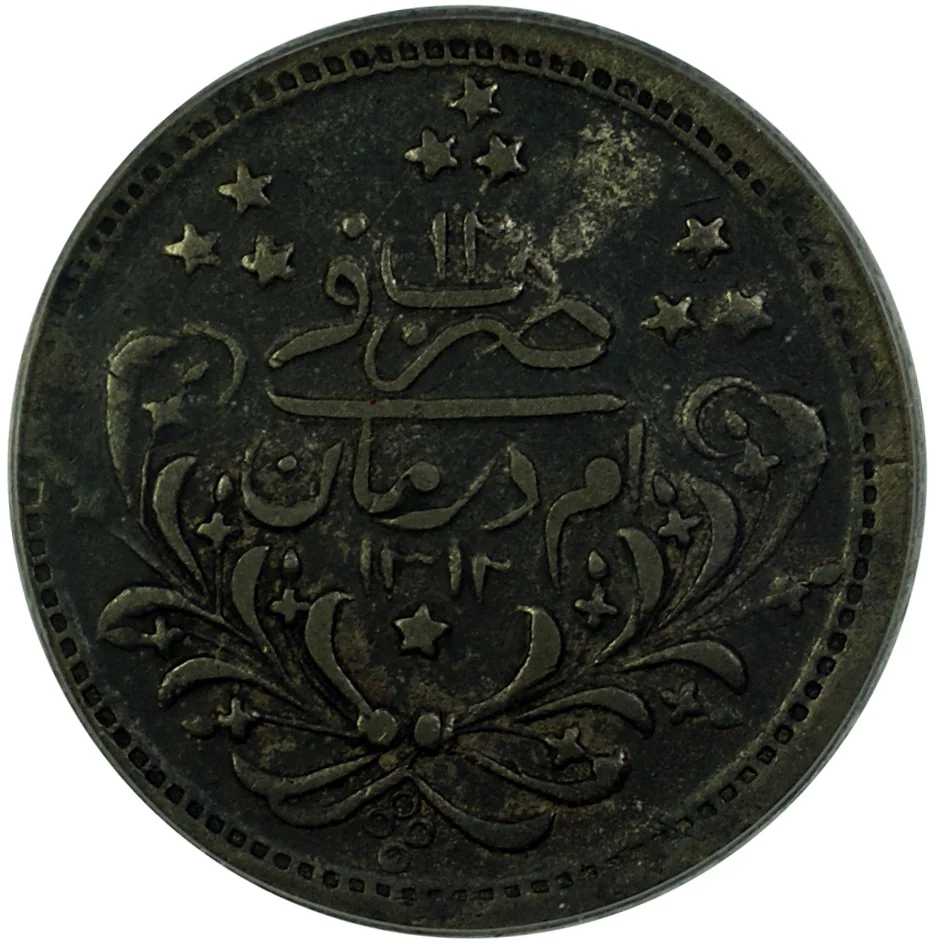
20 Qirsh – Mahdist State
Sudan
Context
Year: 1895
Islamic (Hijri) Year: 1312
Country: Sudan 
Issuer: Mahdist State
Currency:
(1885—1898)
Demonetized: Yes
References
KM: #Click to copy to clipboard26.2
Numista: #114578
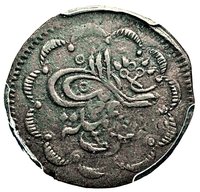
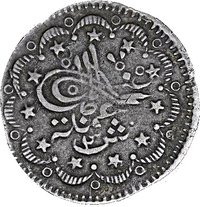
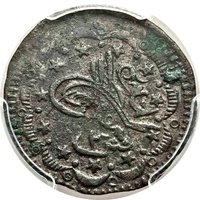
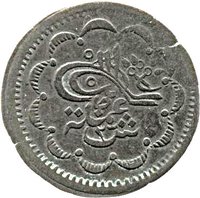
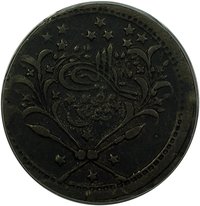
Obverse
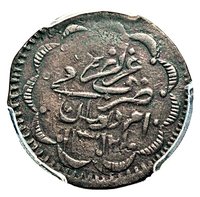
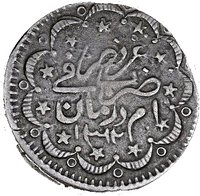
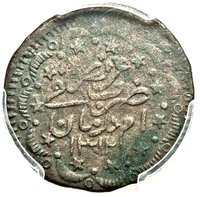
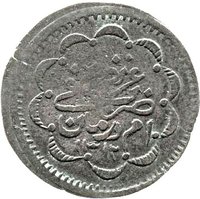
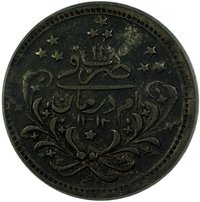
Reverse
Edge
Mints
| Name | Mark |
|---|---|
| Omdurman | — |
Mintings
| Year | Mint Mark | Mintage | Quality | Collection |
|---|---|---|---|---|
| 1895 | — | — |
Historical background
By 1895, the Mahdist State in Sudan faced a severe and deteriorating currency crisis, a direct result of its economic isolation and the policies of the Khalifa Abdallahi ibn Muhammad. The state had inherited a depleted treasury after the long war against the Anglo-Egyptian forces, and its self-imposed isolation cut off access to traditional sources of precious metals. The official currency, the Mahdist riyal (a silver coin), had become critically scarce. To fill the void, the treasury issued vast quantities of low-quality copper coins (milliemes) and paper notes, but these were widely distrusted by the population, who viewed them as having little intrinsic value.
This lack of sound currency crippled the economy. In major markets like Omdurman, traders increasingly refused the copper and paper money, reverting to barter or using older Egyptian and Ottoman coins smuggled into the country. The Khalifa’s government attempted to enforce acceptance of its currency through decree, but this only fueled a thriving black market and deepened public resentment. The crisis was exacerbated by the state’s reliance on confiscation (zaka) to supply its armies and bureaucracy, which further discouraged agricultural and commercial production, creating a vicious cycle of scarcity and inflation.
Ultimately, the monetary chaos of 1895 was a symptom of the Mahdist State’s broader administrative and geopolitical weaknesses. The currency collapse disrupted tax collection, hampered the payment and supply of troops, and sowed discontent among both civilians and soldiers. This internal economic fragility significantly weakened the Mahdist regime just two years before its military confrontation with the reconquest forces under Kitchener, which would culminate in the Battle of Omdurman in 1898.
This lack of sound currency crippled the economy. In major markets like Omdurman, traders increasingly refused the copper and paper money, reverting to barter or using older Egyptian and Ottoman coins smuggled into the country. The Khalifa’s government attempted to enforce acceptance of its currency through decree, but this only fueled a thriving black market and deepened public resentment. The crisis was exacerbated by the state’s reliance on confiscation (zaka) to supply its armies and bureaucracy, which further discouraged agricultural and commercial production, creating a vicious cycle of scarcity and inflation.
Ultimately, the monetary chaos of 1895 was a symptom of the Mahdist State’s broader administrative and geopolitical weaknesses. The currency collapse disrupted tax collection, hampered the payment and supply of troops, and sowed discontent among both civilians and soldiers. This internal economic fragility significantly weakened the Mahdist regime just two years before its military confrontation with the reconquest forces under Kitchener, which would culminate in the Battle of Omdurman in 1898.

💎 Extremely Rare