

2 shillings – British West Africa
Add to wishlist
Context
Years: 1938–1947
Country: Western African States
Issuer: British West Africa
Ruler: George VI
Currency:
(1907—1968)
Demonetized: Yes
Total mintage: 106,407,000
Material
Diameter: 28.5 mm
Weight: 11.31 g
Thickness: 2.5 mm
Shape: Round
Composition: Nickel brass
Magnetic: No
Technique: Milled
Alignment: Medal alignment
flip
References
KM: #
Numista: #8560
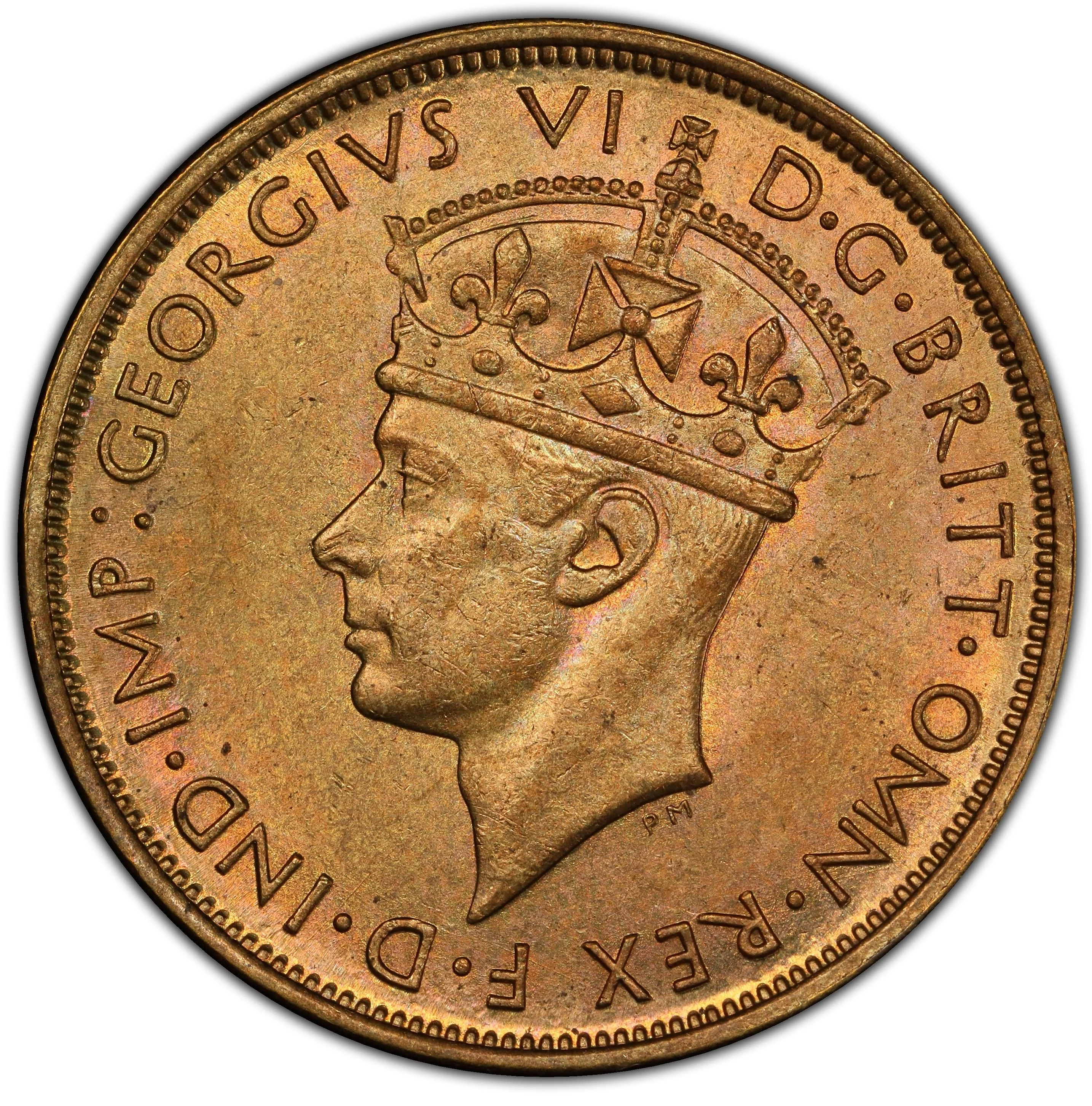
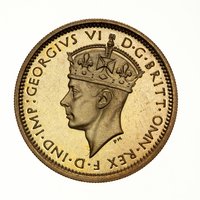
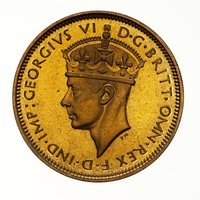
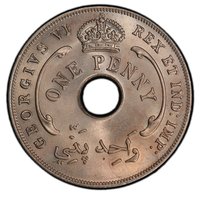
Obverse
Description:
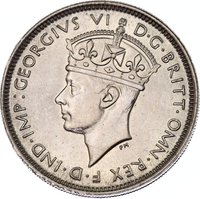
King facing left.
Inscription:
:GEORGIVS VI D·G·BRITT·OMN·REX F·D·IND·IMP
Translation:
GEORGE VI BY THE GRACE OF GOD OF ALL THE BRITONS KING DEFENDER OF THE FAITH EMPEROR OF INDIA
Script: Latin
Language: Latin
Engraver: Percy Metcalfe
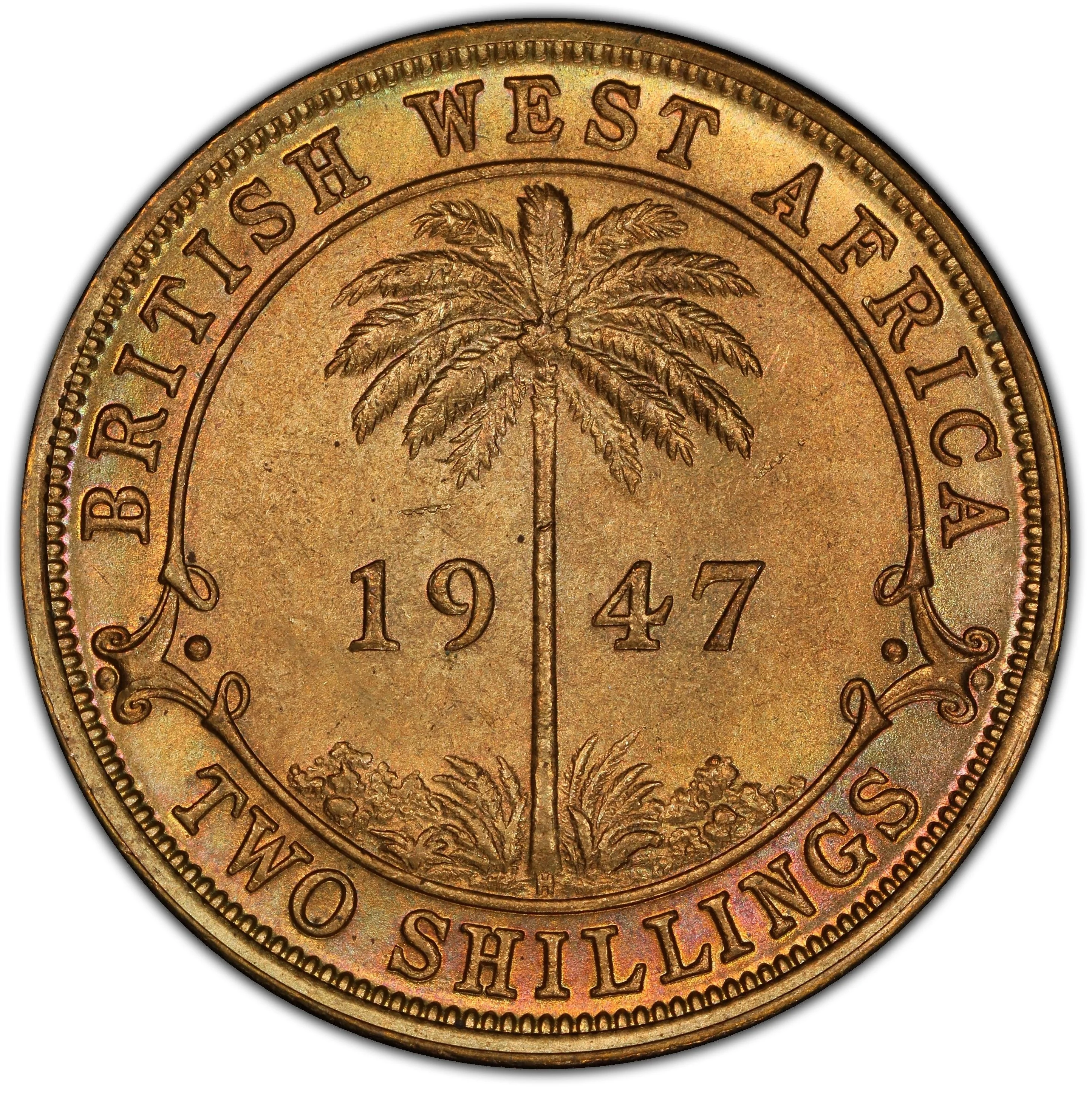
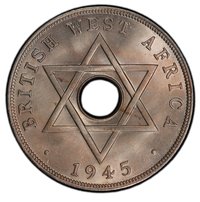
Reverse
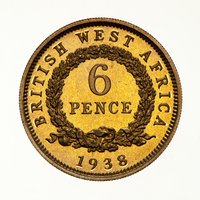
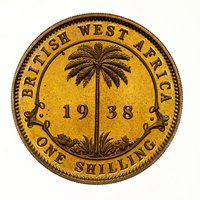
Description:
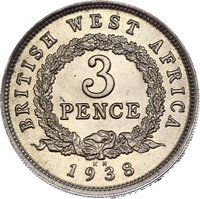
Palm tree in a circle, dates split by trunk. Mintmark at tree base above "I" in SHILLINGS.
Inscription:
BRITISH WEST AFRICA
. 19 47 .
H
TWO SHILLINGS
. 19 47 .
H
TWO SHILLINGS
Script: Latin
Edge
Security
Mints
| Name | Mark |
|---|---|
| Heaton and Sons / The Mint Birmingham | H |
| Kings Norton Metal Company | KN |
Mintings
Historical background
In 1938, the currency situation in British West Africa (encompassing The Gambia, Sierra Leone, the Gold Coast, and Nigeria) was defined by the operations of the West African Currency Board (WACB), established in 1912. This system was a classic colonial monetary arrangement designed to ensure sterling convertibility and financial stability for British trade. The WACB issued a distinct currency—the West African pound—which was rigidly pegged at par to the British pound sterling. The board held 100% sterling reserves in London against the local currency in circulation, meaning the money supply was entirely dependent on the region's balance of payments with Britain, primarily driven by agricultural exports like cocoa, palm oil, and groundnuts.
This currency board model prioritized the interests of British banks and exporting firms, ensuring seamless repatriation of profits and minimal exchange risk. For the local economies, however, it meant a passive monetary system with no central banking functions. There was no capacity for discretionary credit control, lender-of-last-resort facilities, or management of the money supply to meet local developmental needs. The money supply expanded or contracted based solely on the trade surplus or deficit with the sterling area, making the economies vulnerable to commodity price shocks.
Consequently, while the system provided remarkable currency stability and low inflation, it was fundamentally extractive and externally oriented. It fostered economic dependency, channeled savings to London, and stifled the development of indigenous financial institutions. By 1938, this rigid framework was facing no immediate challenge, but its limitations in promoting internal investment and economic diversification were evident, laying the groundwork for post-World War II critiques and the eventual establishment of central banks in the lead-up to independence.
This currency board model prioritized the interests of British banks and exporting firms, ensuring seamless repatriation of profits and minimal exchange risk. For the local economies, however, it meant a passive monetary system with no central banking functions. There was no capacity for discretionary credit control, lender-of-last-resort facilities, or management of the money supply to meet local developmental needs. The money supply expanded or contracted based solely on the trade surplus or deficit with the sterling area, making the economies vulnerable to commodity price shocks.
Consequently, while the system provided remarkable currency stability and low inflation, it was fundamentally extractive and externally oriented. It fostered economic dependency, channeled savings to London, and stifled the development of indigenous financial institutions. By 1938, this rigid framework was facing no immediate challenge, but its limitations in promoting internal investment and economic diversification were evident, laying the groundwork for post-World War II critiques and the eventual establishment of central banks in the lead-up to independence.
🌱 Common