

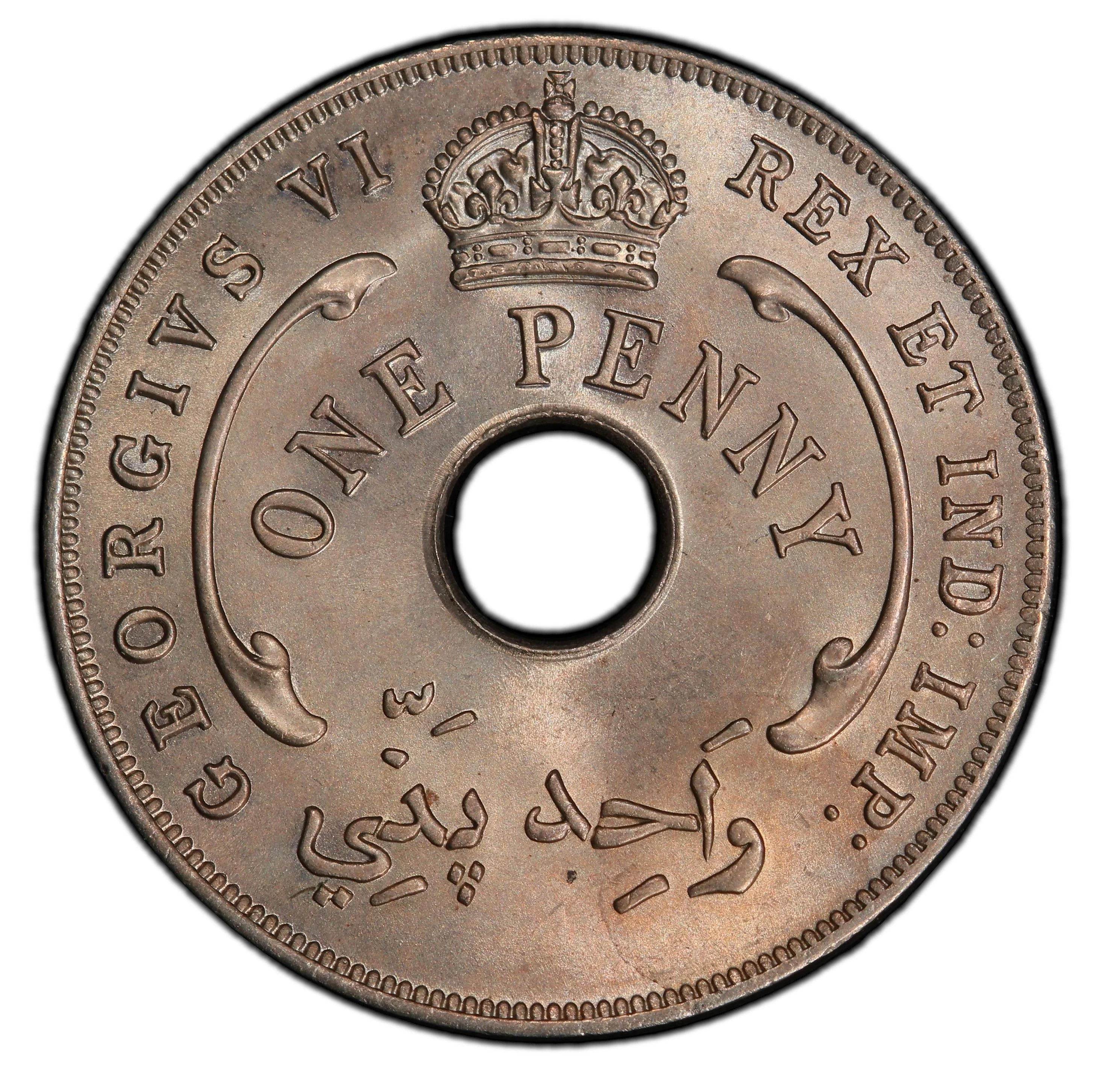
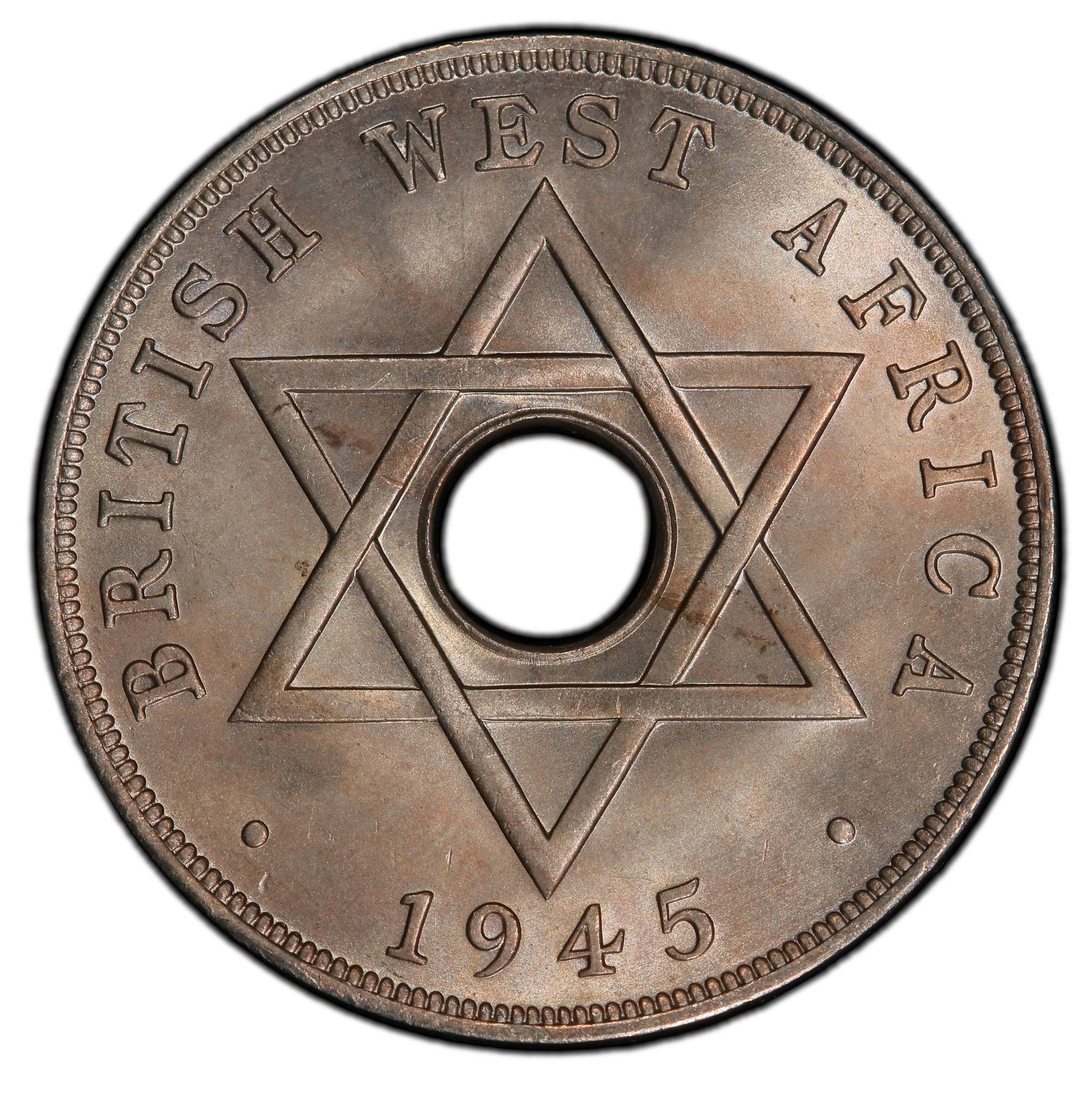
1 penny – British West Africa
Add to wishlist
Context
Year: 1945
Country: Western African States
Issuer: British West Africa
Ruler: George VI
Currency:
(1907—1968)
Demonetized: Yes
Material
Diameter: 30.5 mm
Weight: 9.45 g
Shape: Round with a round hole
Composition: Copper-nickel
Technique: Milled
References
KM: #
Numista: #34060
Obverse
Reverse
Edge
Plain
Mintings
| Year | Mint Mark | Mintage | Quality | Collection |
|---|---|---|---|---|
| 1945 | H | — |
Historical background
In 1945, the currency situation in British West Africa was defined by the West African Currency Board (WACC), established in 1912. This system ensured a strict colonial sterling exchange standard, where the local currency, the West African pound, was fully backed by sterling reserves held in London and pegged at par with the British pound sterling. This arrangement guaranteed convertibility and monetary stability, but it fundamentally subordinated the region's money supply to the economic needs and policies of Britain, leaving no scope for independent monetary policy to address local developmental issues.
The immediate post-war period saw this system under strain. The war had massively increased the circulation of currency to finance the Allied war effort, including the procurement of vital West African resources. This influx of money, coupled with wartime supply shortages, created significant inflationary pressures across the region. Furthermore, the accumulated sterling reserves in London, representing the region's export earnings, were largely immobilized as "sterling balances," limiting their availability for post-war reconstruction and importation of much-needed consumer and capital goods.
Consequently, 1945 stood at a crossroads. The WACC system was criticized by a growing nationalist movement and emerging economists as an instrument of colonial control that stifled economic autonomy. While it provided stability, the debate was intensifying over whether a currency board was sufficient for the developmental aspirations of the region. The post-war years would thus see increasing pressure to reform the monetary system, eventually leading to the dissolution of the WACC and the establishment of independent central banks for each emerging nation in the 1950s.
The immediate post-war period saw this system under strain. The war had massively increased the circulation of currency to finance the Allied war effort, including the procurement of vital West African resources. This influx of money, coupled with wartime supply shortages, created significant inflationary pressures across the region. Furthermore, the accumulated sterling reserves in London, representing the region's export earnings, were largely immobilized as "sterling balances," limiting their availability for post-war reconstruction and importation of much-needed consumer and capital goods.
Consequently, 1945 stood at a crossroads. The WACC system was criticized by a growing nationalist movement and emerging economists as an instrument of colonial control that stifled economic autonomy. While it provided stability, the debate was intensifying over whether a currency board was sufficient for the developmental aspirations of the region. The post-war years would thus see increasing pressure to reform the monetary system, eventually leading to the dissolution of the WACC and the establishment of independent central banks for each emerging nation in the 1950s.
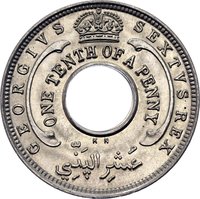
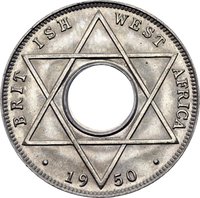
💎 Extremely Rare