

500 colones – Costa Rica
Add to wishlist
Costa Rica
Context
Years: 2006–2015
Issuer: Costa Rica
Issuing organization: Central Bank of Costa Rica
Period:
(since 1948)
Currency:
(since 1896)
Demonetization: 1 July 2025
Total mintage: 64,300,000
Material
References
KM: #
Numista: #8488
Value
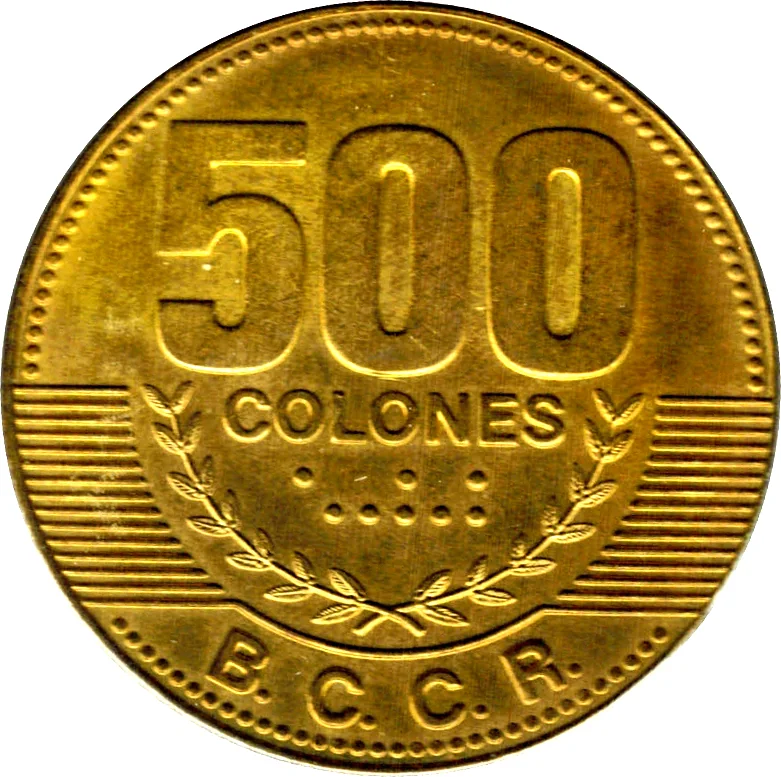
Exchange value: 500 CRC
Obverse
Description:
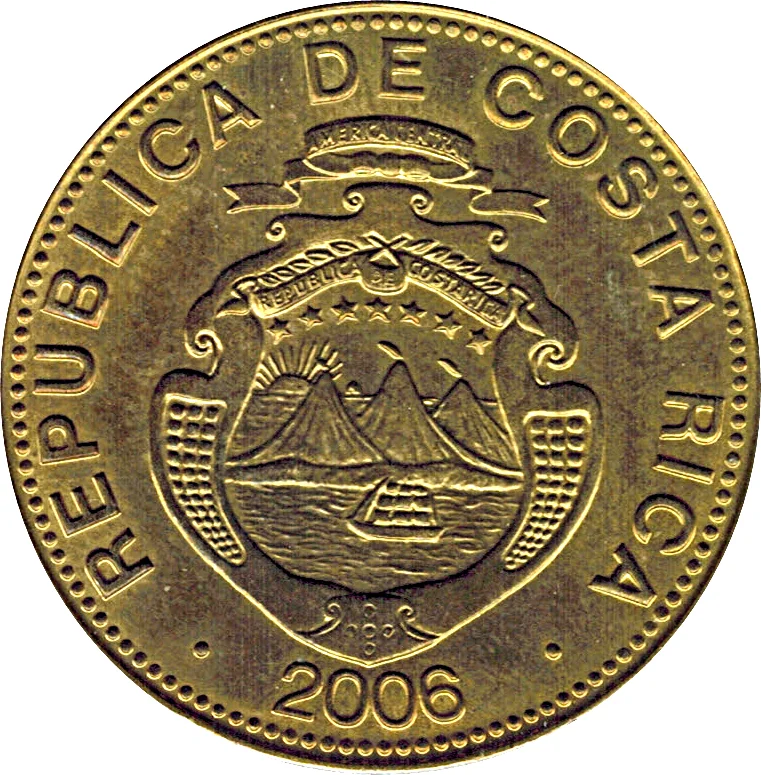
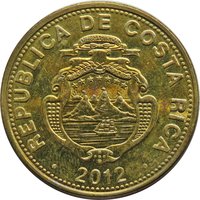
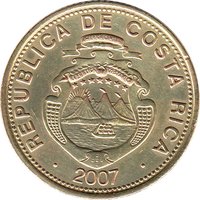
The Costa Rican coat of arms features seven stars (provinces), three volcanoes (mountain ranges), two ships (between two oceans), and a sunrise, with the date below.
Inscription:
REPUBLICA DE COSTA RICA
AMERICA CENTRAL
REPUBLICA DE COSTA RICA
. 2006 .
AMERICA CENTRAL
REPUBLICA DE COSTA RICA
. 2006 .
Translation:
REPUBLIC OF COSTA RICA
CENTRAL AMERICA
REPUBLIC OF COSTA RICA
. 2006 .
CENTRAL AMERICA
REPUBLIC OF COSTA RICA
. 2006 .
Script: Latin
Language: Spanish
Reverse
Edge
Alternating smooth and reeded segments
Categories
| Symbols> Coat of Arms |
| Symbol> Wreath |
Mints
| Name | Mark |
|---|---|
| Casa de Moneda de Chile | — |
| Mint of Costa Rica | — |
| Royal Mint | — |
Mintings
| Year | Mint Mark | Mintage | Quality | Collection |
|---|---|---|---|---|
| 2006 | — | 6,000,000 | ||
| 2010 | — | 38,300,000 | ||
| 2015 | — | 20,000,000 |
Historical background
In 2006, Costa Rica's currency situation was defined by a managed float regime for the colón (₡) within a crawling band, a system administered by the Central Bank of Costa Rica (BCCR). The colón was allowed to depreciate gradually against the US dollar at a pre-announced rate, intended to maintain export competitiveness while controlling inflationary pressures from imported goods. This system created a relatively stable but predictable depreciation, with the exchange rate hovering around ₡500 to the US dollar by the end of the year, a slow but steady decline from ₡440 in early 2005.
The period was marked by significant dollarization within the financial system, a legacy from high inflation episodes in the 1980s and 1990s. A substantial portion of loans (over 50%) and deposits were denominated in US dollars, particularly for large transactions like mortgages and car loans, exposing borrowers to exchange rate risk. This duality created a complex environment where the Central Bank's monetary policy was less effective, as many economic actors operated outside the colón system. Furthermore, strong capital inflows, including foreign direct investment and remittances, alongside a growing tourism sector, consistently placed upward pressure on the colón, challenging the BCCR's management of the crawling band.
Overall, the 2006 currency landscape reflected a transitional economy grappling with the contradictions of openness. The managed float aimed for stability, but high dollarization and persistent inflows highlighted underlying tensions. These factors fueled ongoing debate about the sustainability of the crawling band and intensified discussions—which would culminate in later years—about potentially moving towards a more flexible exchange rate system to better absorb external shocks and improve monetary policy autonomy.
The period was marked by significant dollarization within the financial system, a legacy from high inflation episodes in the 1980s and 1990s. A substantial portion of loans (over 50%) and deposits were denominated in US dollars, particularly for large transactions like mortgages and car loans, exposing borrowers to exchange rate risk. This duality created a complex environment where the Central Bank's monetary policy was less effective, as many economic actors operated outside the colón system. Furthermore, strong capital inflows, including foreign direct investment and remittances, alongside a growing tourism sector, consistently placed upward pressure on the colón, challenging the BCCR's management of the crawling band.
Overall, the 2006 currency landscape reflected a transitional economy grappling with the contradictions of openness. The managed float aimed for stability, but high dollarization and persistent inflows highlighted underlying tensions. These factors fueled ongoing debate about the sustainability of the crawling band and intensified discussions—which would culminate in later years—about potentially moving towards a more flexible exchange rate system to better absorb external shocks and improve monetary policy autonomy.
🌱 Very Common