

2 Rigsdaler – Denmark
Denmark
Context
Years: 1864–1872
Issuer: Denmark 
Ruler: Christian IX
Currency:
(1854—1873)
Demonetized: Yes
Total mintage: 1,233,000
Material
References
KM: #Click to copy to clipboard772
Numista: #83076
Value
Bullion value: $71.86
Obverse
Description:
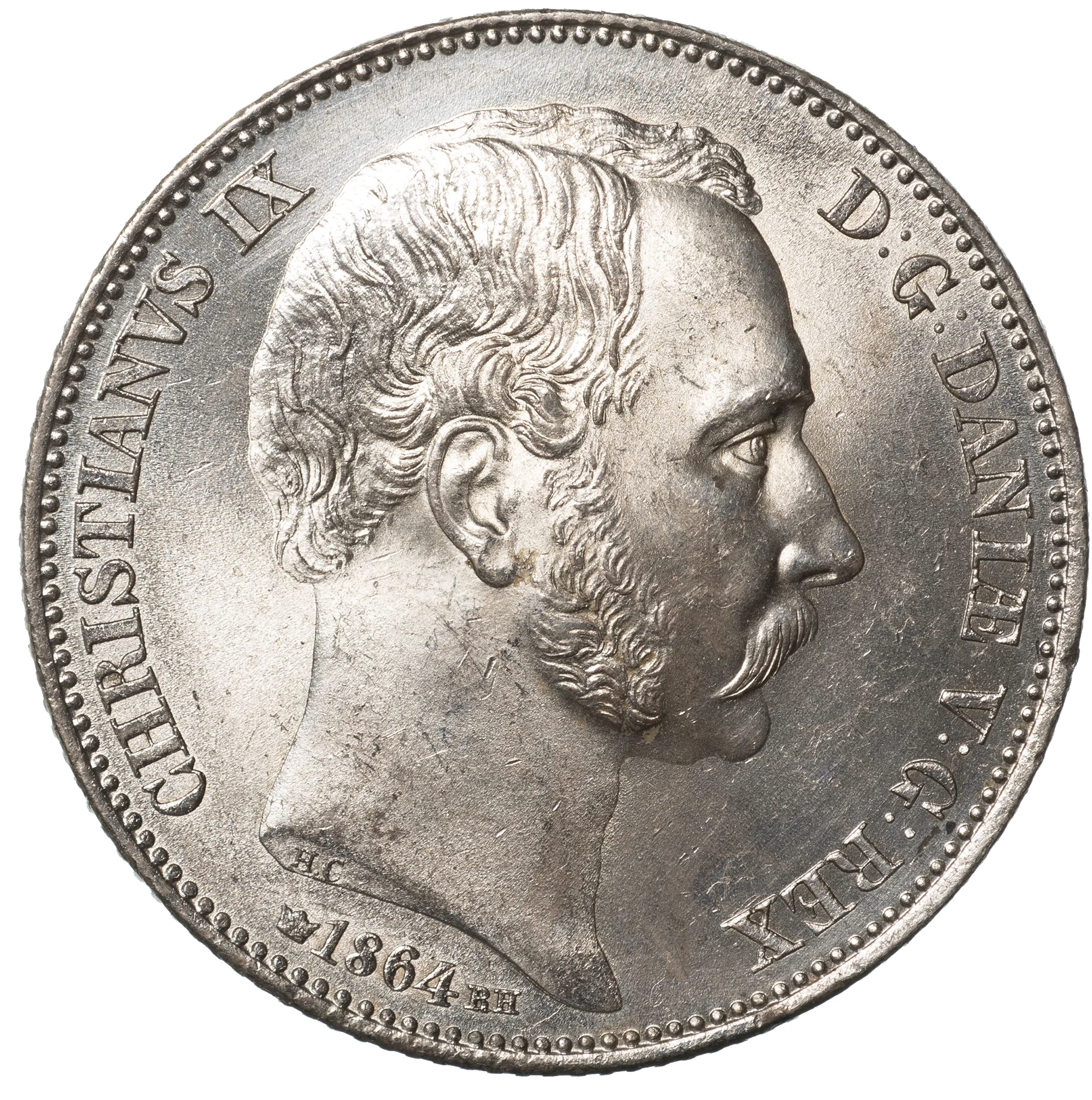
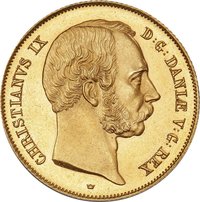
King Christian IX facing right. Date below neck, between mintmark and Mint Master initials.
Inscription:
CHRISTIANVS IX | D : G : DANIÆ V : G : REX
H.C.
♔ 1864 RH
H.C.
♔ 1864 RH
Translation:
By the Grace of God Christian IX, King of Denmark, the Wends and the Goths
H.C.
♔ 1864 RH
H.C.
♔ 1864 RH
Script: Latin
Reverse
Description:
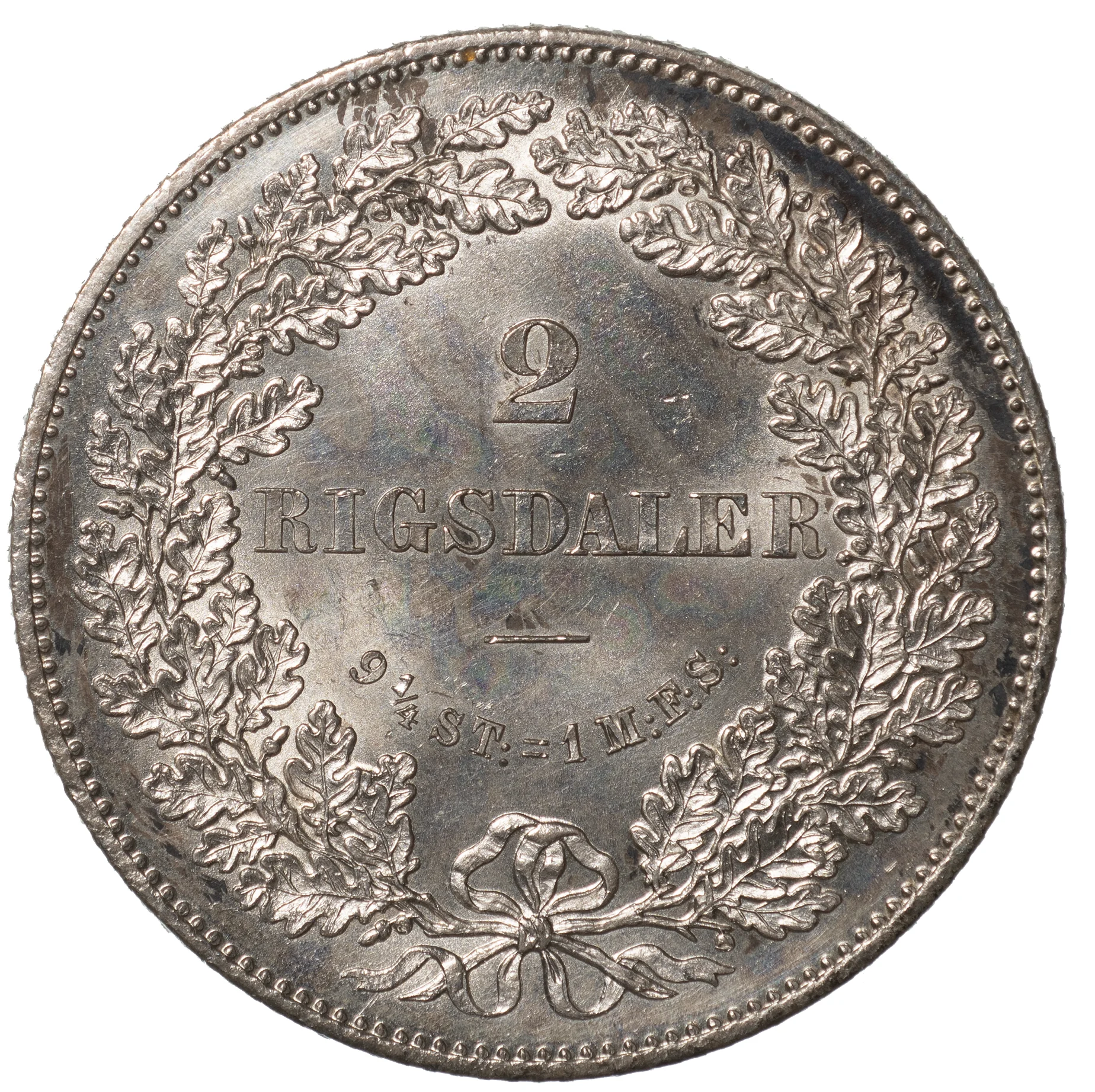
Silver value within a wreath of crossed oak branches.
Inscription:
2 RIGSDALER
9 1/4 ST: = 1 M:F:S
9 1/4 ST: = 1 M:F:S
Script: Latin
Edge
Mints
| Name | Mark |
|---|---|
| Royal Danish Mint | ♔ |
Mintings
| Year | Mint Mark | Mintage | Quality | Collection |
|---|---|---|---|---|
| 1864 | ♔; | 237,000 | ||
| 1868 | ♔; | 261,000 | ||
| 1871 | ♔; | 586,000 | ||
| 1872 | ♔; | 149,000 |
Historical background
In 1864, Denmark’s currency system was in a state of transition, caught between the old and the emerging modern European monetary order. The official currency was the rigsdaler, a silver-based unit that had been the cornerstone of the Danish monetary system since the 17th century. However, the rigsdaler existed in a complex duality: it was divided into both 96 skilling (the older system) and, following a 1848 decree, also into 100 skilling rigsmønt, creating public confusion. This complexity was symptomatic of a broader Scandinavian monetary debate about moving toward a decimal system and aligning with international standards, particularly the Latin Monetary Union’s focus on gold and silver bimetallism.
The political context of 1864 was dominated by the Second Schleswig War, which had profound financial implications. The costly war against Prussia and Austria placed immense strain on the Danish state treasury, leading to significant government borrowing and inflationary pressures. While the currency itself was still backed by silver, the economic disruption and uncertainty of the war—culminating in Denmark’s defeat and the loss of the duchies of Schleswig, Holstein, and Lauenburg—threatened monetary stability. The national focus was overwhelmingly on survival and territorial integrity, with comprehensive currency reform taking a back seat to the immediate fiscal and military crisis.
Consequently, the situation in 1864 was one of suspended development. The groundwork for a modern, decimal currency—the krone, divided into 100 øre—had already been laid in the Scandinavian Monetary Union treaties with Sweden and Norway in 1872. The turmoil of 1864 delayed this transition, making the rigsdaler a symbol of a pre-war Denmark. Thus, the currency of that year represented both the lingering legacy of an old economic order and the impending shift toward a unified Scandinavian system that would finally be implemented in the war’s aftermath to foster stability and regional economic integration.
The political context of 1864 was dominated by the Second Schleswig War, which had profound financial implications. The costly war against Prussia and Austria placed immense strain on the Danish state treasury, leading to significant government borrowing and inflationary pressures. While the currency itself was still backed by silver, the economic disruption and uncertainty of the war—culminating in Denmark’s defeat and the loss of the duchies of Schleswig, Holstein, and Lauenburg—threatened monetary stability. The national focus was overwhelmingly on survival and territorial integrity, with comprehensive currency reform taking a back seat to the immediate fiscal and military crisis.
Consequently, the situation in 1864 was one of suspended development. The groundwork for a modern, decimal currency—the krone, divided into 100 øre—had already been laid in the Scandinavian Monetary Union treaties with Sweden and Norway in 1872. The turmoil of 1864 delayed this transition, making the rigsdaler a symbol of a pre-war Denmark. Thus, the currency of that year represented both the lingering legacy of an old economic order and the impending shift toward a unified Scandinavian system that would finally be implemented in the war’s aftermath to foster stability and regional economic integration.
💎 Extremely Rare