

5 rupees – Seychelles
Add to wishlist
Seychelles
Context
Year: 1972
Issuer: Seychelles
Ruler: Elizabeth II
Currency:
(since 1914)
Demonetized: Yes
Total mintage: 220,000
Material
Diameter: 30 mm
Weight: 13.5 g
Shape: Equilateral curve heptagon
Technique: Milled
Alignment: Medal alignment
flip
References
KM: #
Numista: #8301
Value
Exchange value: 5 SCR
Obverse
Description:
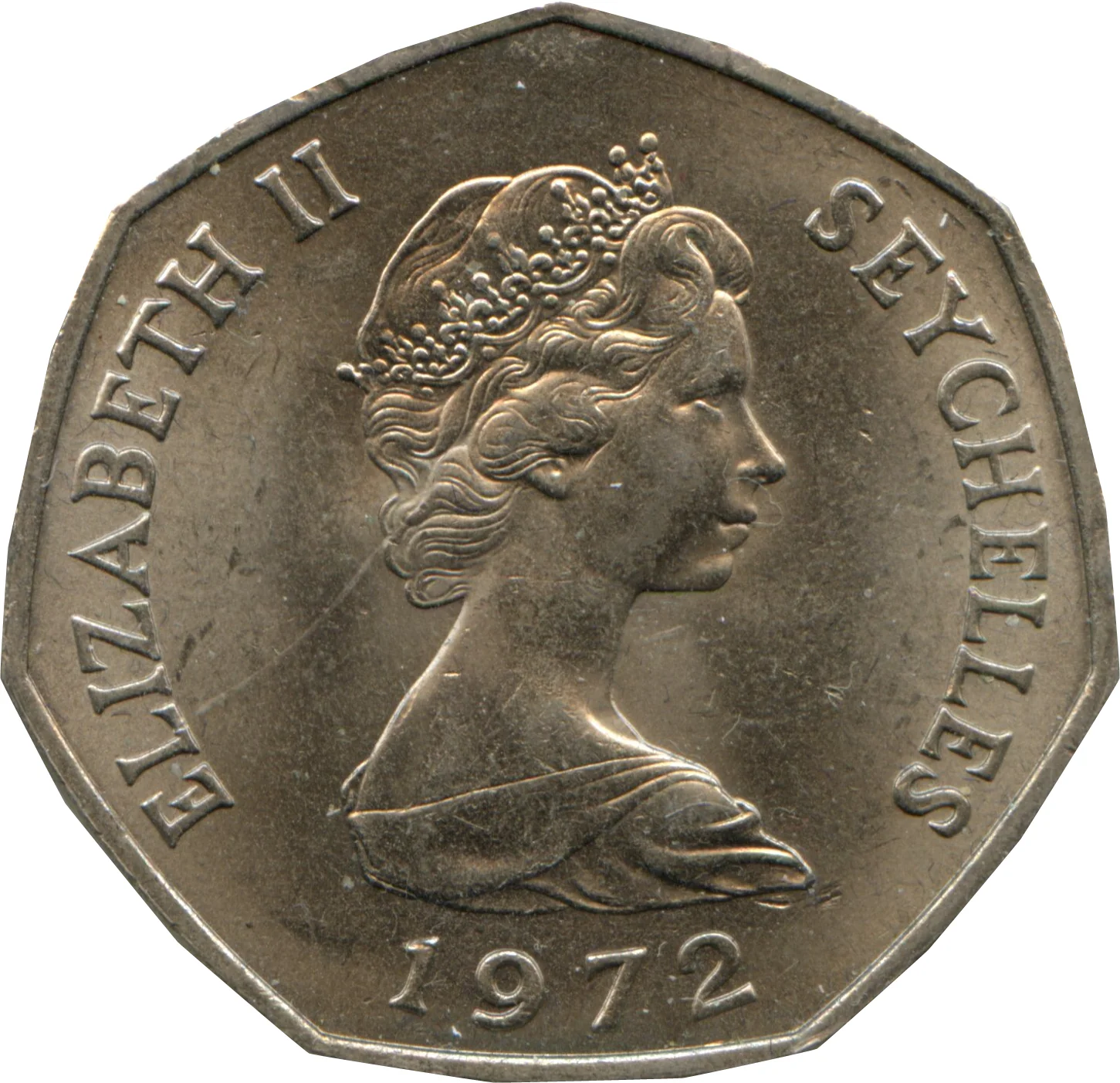
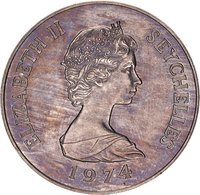
Young facing right, date beneath.
Inscription:
ELIZABETH II SEYCHELLES
1972
1972
Translation:
ELIZABETH II SEYCHELLES
1972
1972
Script: Latin
Engraver: Arnold Machin
Reverse
Description:
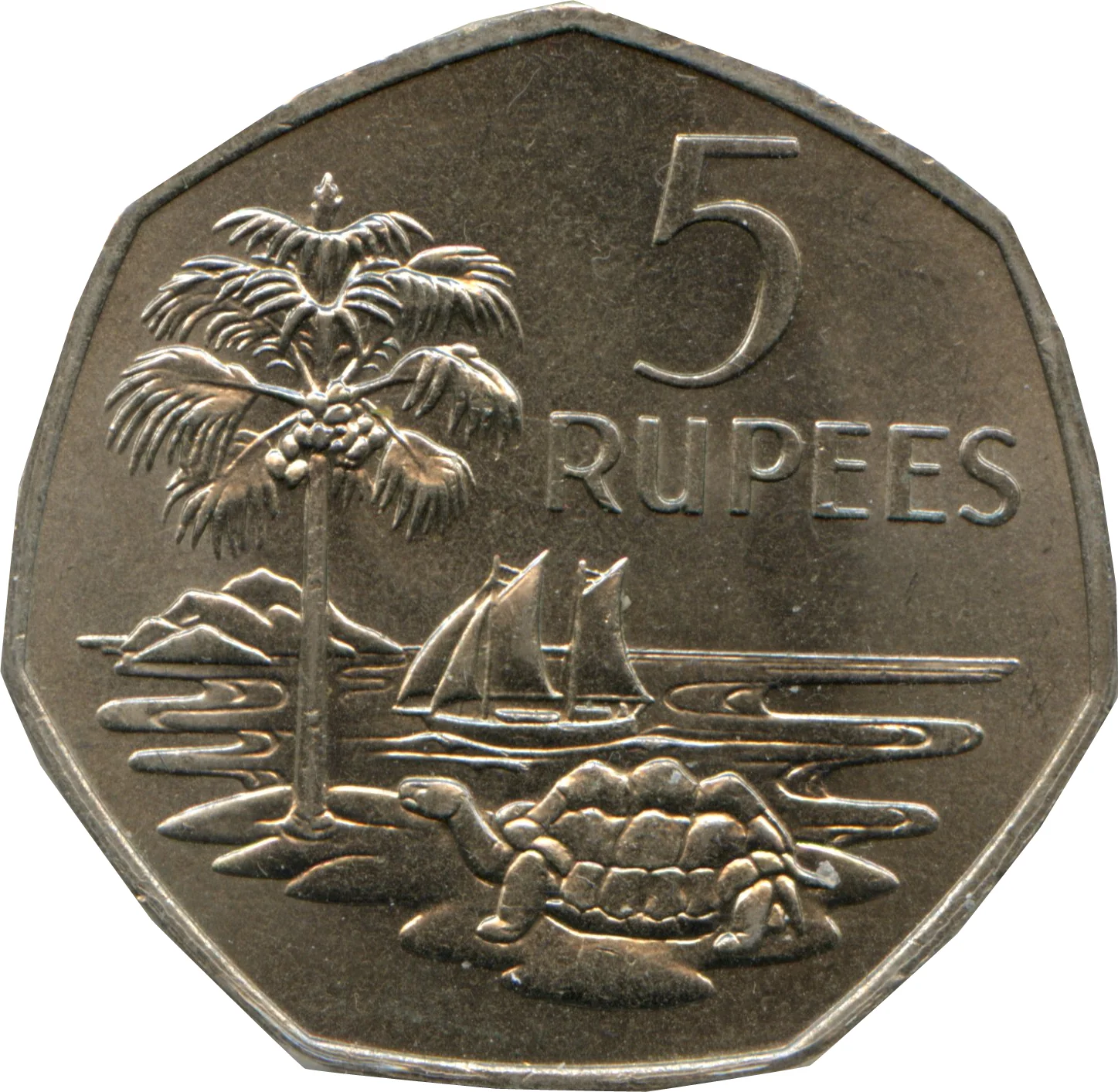
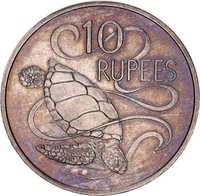
Coconut tree, giant tortoise, beach, and sailing ship. Value upper right.
Inscription:
5
RUPEES
RUPEES
Script: Latin
Engraver: Norman Sillman
Edge
Plain
Categories
| Transportation> Watercraft |
| Symbol> Crown |
| Animal> Turtle or tortoise |
| Person> Monarch |
| Geography> Sea |
| Plant> Tree |
Mints
| Name | Mark |
|---|---|
| Royal Mint (Tower Hill) | — |
| Royal Mint | — |
Mintings
| Year | Mint Mark | Mintage | Quality | Collection |
|---|---|---|---|---|
| 1972 | — | 220,000 |
Historical background
In 1972, Seychelles was on the cusp of significant political change, but its currency situation remained firmly under British colonial administration. The official currency was the Seychelles rupee (SCR), which had been introduced in 1914, replacing the Mauritian rupee. It was pegged to sterling at a fixed rate of SCR 13.33 to £1, a link established in 1934. This peg provided stability and tied the archipelago's economy directly to the United Kingdom, reflecting its status as a British Crown Colony. The currency was issued by the Government of Seychelles, with notes and coins bearing colonial imagery.
Economically, the currency system was relatively simple and served a small, isolated economy heavily dependent on plantation agriculture (particularly coconuts and cinnamon) and a nascent tourism sector. The fixed exchange rate facilitated trade and financial flows with Britain, the dominant economic partner, but offered little monetary policy independence. There was no central bank; currency issuance and foreign reserves were managed by the Commissioner of Currency under the authority of the colonial government. This structure meant that Seychelles' money supply and credit conditions were largely dictated by its balance of payments with the sterling area.
The situation in 1972, however, was one of quiet transition. With the rise of the independence movement led by James Mancham and France-Albert René, discussions about the future governance of the islands were underway. While the currency itself was stable, the political foundations that supported its peg were being questioned. Just four years later, in 1976, Seychelles would gain independence, prompting the eventual establishment of the Central Bank of Seychelles in 1978 and a re-evaluation of its monetary arrangements, setting the stage for the managed float and economic reforms of later decades.
Economically, the currency system was relatively simple and served a small, isolated economy heavily dependent on plantation agriculture (particularly coconuts and cinnamon) and a nascent tourism sector. The fixed exchange rate facilitated trade and financial flows with Britain, the dominant economic partner, but offered little monetary policy independence. There was no central bank; currency issuance and foreign reserves were managed by the Commissioner of Currency under the authority of the colonial government. This structure meant that Seychelles' money supply and credit conditions were largely dictated by its balance of payments with the sterling area.
The situation in 1972, however, was one of quiet transition. With the rise of the independence movement led by James Mancham and France-Albert René, discussions about the future governance of the islands were underway. While the currency itself was stable, the political foundations that supported its peg were being questioned. Just four years later, in 1976, Seychelles would gain independence, prompting the eventual establishment of the Central Bank of Seychelles in 1978 and a re-evaluation of its monetary arrangements, setting the stage for the managed float and economic reforms of later decades.
🌱 Common