

10 rupees – Seychelles
Add to wishlist
Seychelles
Context
Material
Diameter: 38.5 mm
Weight: 28.8 g
Thickness: 3.3 mm
Shape: Round
Composition: Copper-nickel
Technique: Milled
Alignment: Medal alignment
flip
References
KM: #
Numista: #41621
Value
Exchange value: 10 SCR
Obverse
Description:
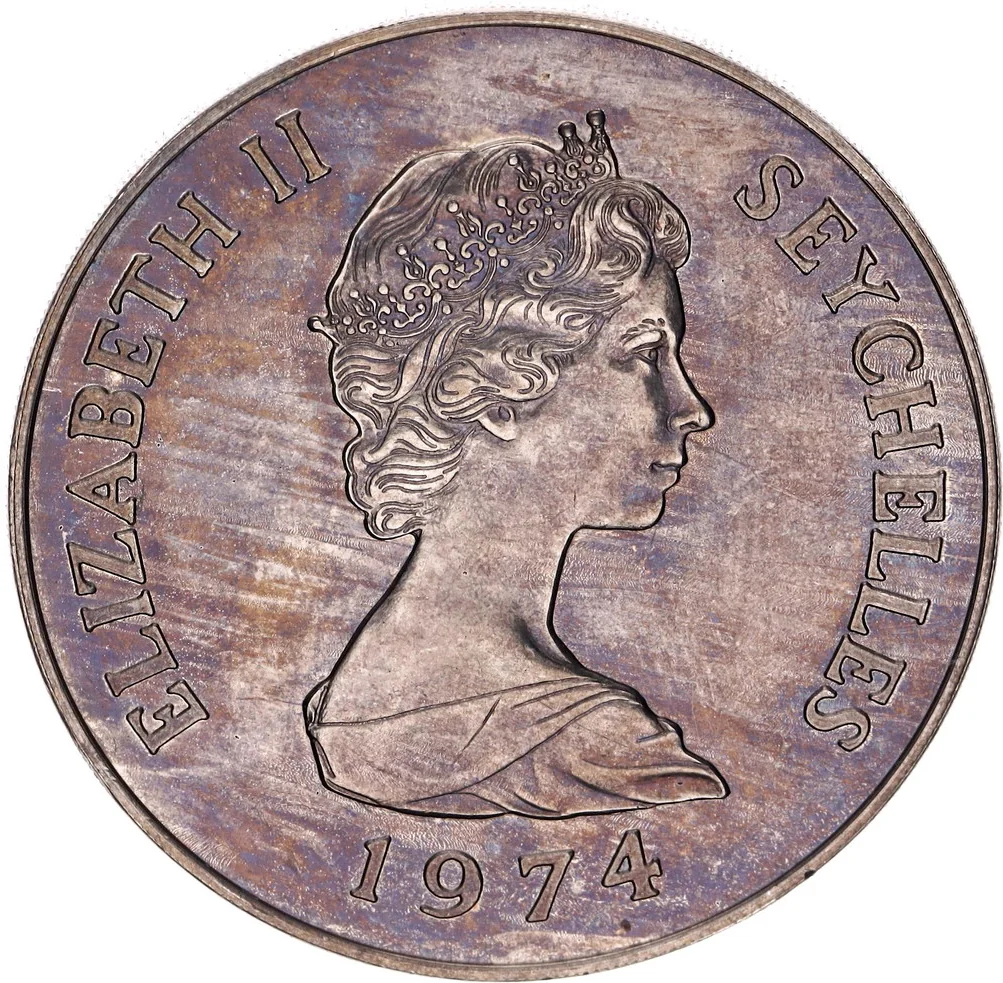
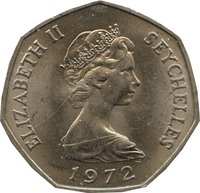
Queen Elizabeth II facing right, date beneath.
Inscription:
ELIZABETH II SEYCHELLES 1974
Script: Latin
Engraver: Arnold Machin
Reverse
Description:
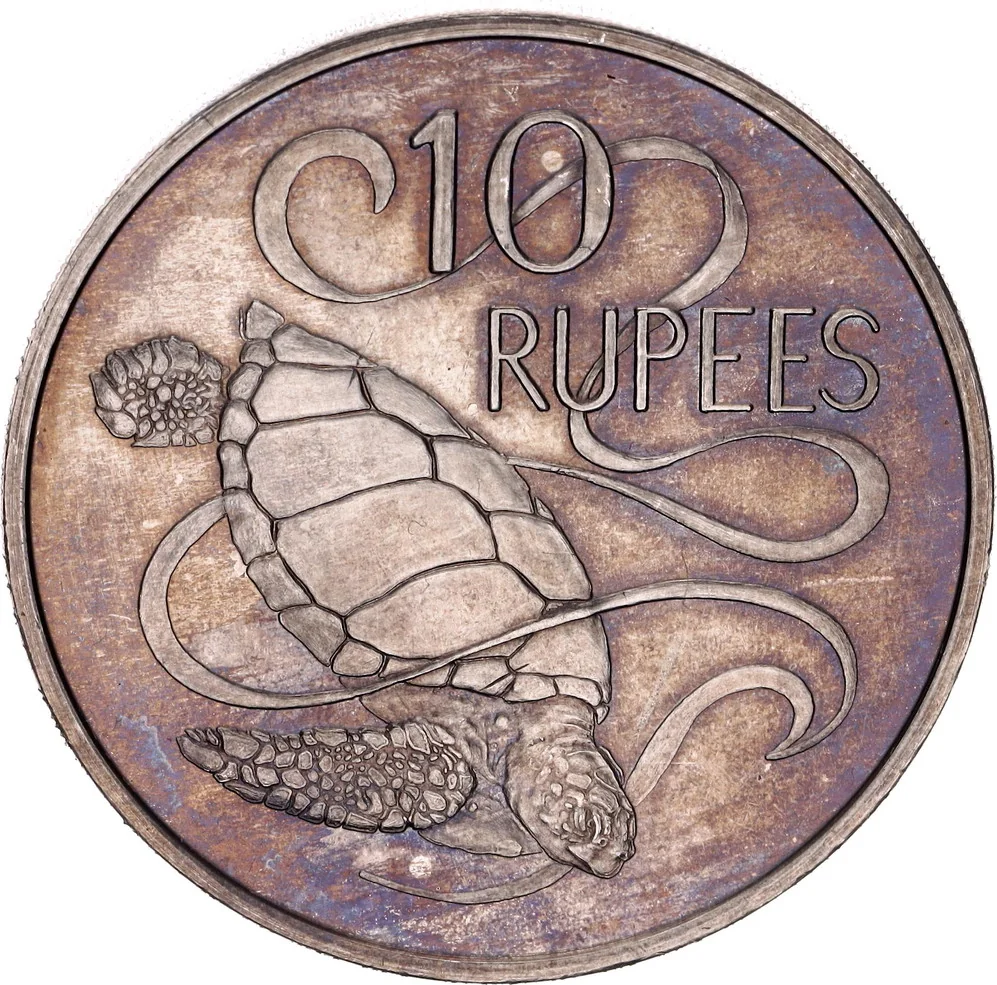
Green Sea Turtle swimming underwater.
Inscription:
10 RUPEES
Script: Latin
Engraver: Suzanne Danielli
Edge
Reeded
Mints
| Name | Mark |
|---|---|
| Royal Mint | — |
Mintings
| Year | Mint Mark | Mintage | Quality | Collection |
|---|---|---|---|---|
| 1974 | — | — |
Historical background
In 1974, the currency situation in Seychelles was one of direct colonial dependency, as the archipelago was still a British Crown Colony. The official currency was the Seychelles rupee (SCR), but it was not an independent monetary instrument. Instead, it operated under a strict currency board system, pegged at par to the pound sterling (GBP). This meant the Seychelles rupee's value and issuance were fully backed by sterling reserves held in London, guaranteeing convertibility but ceding all monetary policy control to the United Kingdom.
This arrangement reflected Seychelles' position within the sterling area and its economic role as a small, remote plantation and strategic outpost. The system provided stability and low inflation by tying the colony's money supply to its foreign exchange earnings, primarily from coconut and cinnamon exports. However, it also meant the local economy was highly vulnerable to external shocks and British monetary decisions, with no capacity for a discretionary monetary policy to address local needs or stimulate development.
The year 1974 was particularly significant as it marked the beginning of a direct political transition towards independence, achieved in 1976. This impending sovereignty brought the colonial currency arrangement into question, setting the stage for post-independence monetary reforms. While the peg to sterling remained initially, the groundwork was being laid for the eventual establishment of an independent central bank, the Central Bank of Seychelles, in 1983, which would assume control over the currency and begin to shape a monetary policy suited to the new nation's own economic objectives.
This arrangement reflected Seychelles' position within the sterling area and its economic role as a small, remote plantation and strategic outpost. The system provided stability and low inflation by tying the colony's money supply to its foreign exchange earnings, primarily from coconut and cinnamon exports. However, it also meant the local economy was highly vulnerable to external shocks and British monetary decisions, with no capacity for a discretionary monetary policy to address local needs or stimulate development.
The year 1974 was particularly significant as it marked the beginning of a direct political transition towards independence, achieved in 1976. This impending sovereignty brought the colonial currency arrangement into question, setting the stage for post-independence monetary reforms. While the peg to sterling remained initially, the groundwork was being laid for the eventual establishment of an independent central bank, the Central Bank of Seychelles, in 1983, which would assume control over the currency and begin to shape a monetary policy suited to the new nation's own economic objectives.
🌟 Uncommon