

5 cents – Seychelles
Add to wishlist
Seychelles
Context
Years: 1964–1971
Issuer: Seychelles
Ruler: Elizabeth II
Currency:
(since 1914)
Demonetized: Yes
Total mintage: 270,000
Material
References
KM: #
Numista: #20575
Value
Exchange value: 0.05 SCR
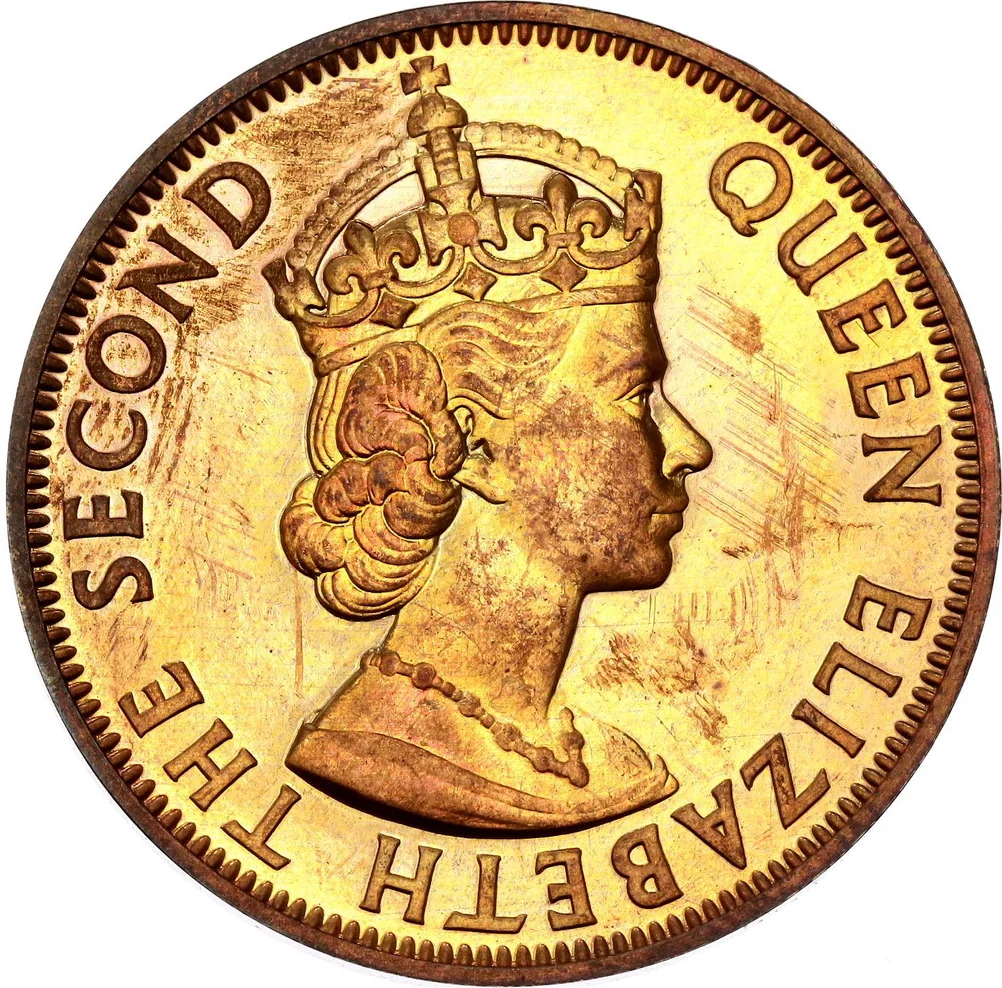
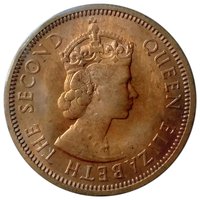
Obverse
Description:
Royal birthright
Inscription:
QUEEN ELIZABETH THE SECOND
Script: Latin
Engraver: Cecil Thomas
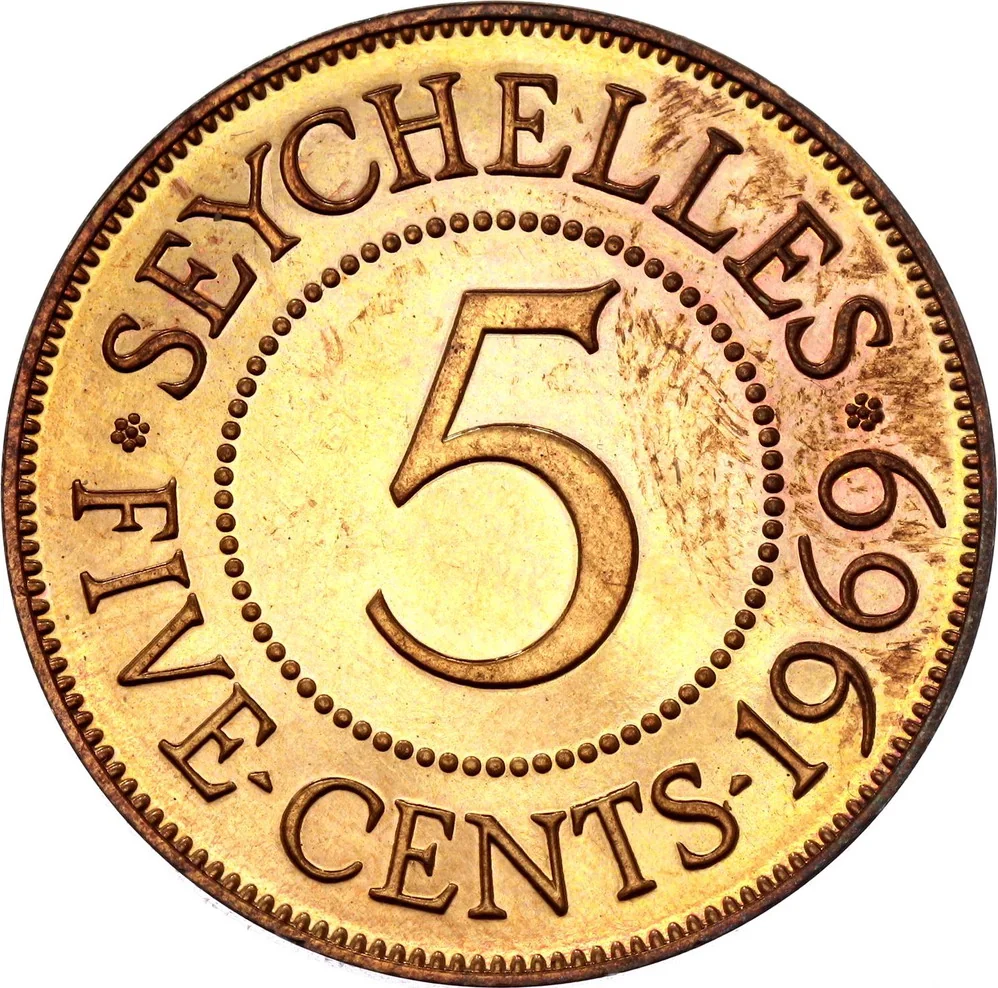
Reverse
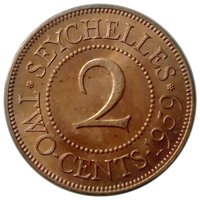
Description:
Beaded circle with encircling legend.
Inscription:
·SEYCHELLES·
5
FIVE·CENTS·1969
5
FIVE·CENTS·1969
Script: Latin
Engraver: George Kruger Gray
Edge
Plain
Mints
| Name | Mark |
|---|---|
| Royal Mint (Tower Hill) | — |
Mintings
| Year | Mint Mark | Mintage | Quality | Collection |
|---|---|---|---|---|
| 1964 | — | 20,000 | ||
| 1964 | — | — | Proof | |
| 1965 | — | 40,000 | ||
| 1967 | — | 20,000 | ||
| 1968 | — | 40,000 | ||
| 1969 | — | — | Proof | |
| 1969 | — | 100,000 | ||
| 1971 | — | 50,000 |
Historical background
In 1964, the currency situation in Seychelles was firmly under British colonial administration, as the islands were a Crown Colony. The official currency was the Seychelles rupee, which had been introduced in 1914, replacing the Mauritian rupee. However, its value was not independent; it was pegged to and directly interchangeable with the Mauritian rupee at par (1:1). This arrangement created a de facto common currency area in the region, facilitating trade and economic links between the two British possessions in the Indian Ocean.
This peg was part of a broader Sterling Area system, meaning both the Seychelles and Mauritian rupees were themselves pegged to the British pound sterling. The fixed exchange rate was set at 1 rupee = 1 shilling 6 pence (or 13.33 rupees = £1). This structure provided monetary stability and tied the colony's economy directly to that of the United Kingdom, ensuring that foreign exchange reserves were held in sterling and that transactions with the wider world were conducted through London.
Economically, the system reflected Seychelles' limited and underdeveloped economy at the time, heavily reliant on coconut plantations (copra and coconut oil) and cinnamon bark. There was little need for an independent monetary policy, as tourism—the future economic pillar—was in its infancy. The currency arrangement was practical for a small, remote colony, simplifying administration and external trade. However, it also meant Seychelles had no control over its own currency valuation, which was entirely determined by British monetary policy and the economic conditions of Mauritius. This dependent framework would persist until the decade following independence in 1976.
This peg was part of a broader Sterling Area system, meaning both the Seychelles and Mauritian rupees were themselves pegged to the British pound sterling. The fixed exchange rate was set at 1 rupee = 1 shilling 6 pence (or 13.33 rupees = £1). This structure provided monetary stability and tied the colony's economy directly to that of the United Kingdom, ensuring that foreign exchange reserves were held in sterling and that transactions with the wider world were conducted through London.
Economically, the system reflected Seychelles' limited and underdeveloped economy at the time, heavily reliant on coconut plantations (copra and coconut oil) and cinnamon bark. There was little need for an independent monetary policy, as tourism—the future economic pillar—was in its infancy. The currency arrangement was practical for a small, remote colony, simplifying administration and external trade. However, it also meant Seychelles had no control over its own currency valuation, which was entirely determined by British monetary policy and the economic conditions of Mauritius. This dependent framework would persist until the decade following independence in 1976.
🌱 Fairly Common