

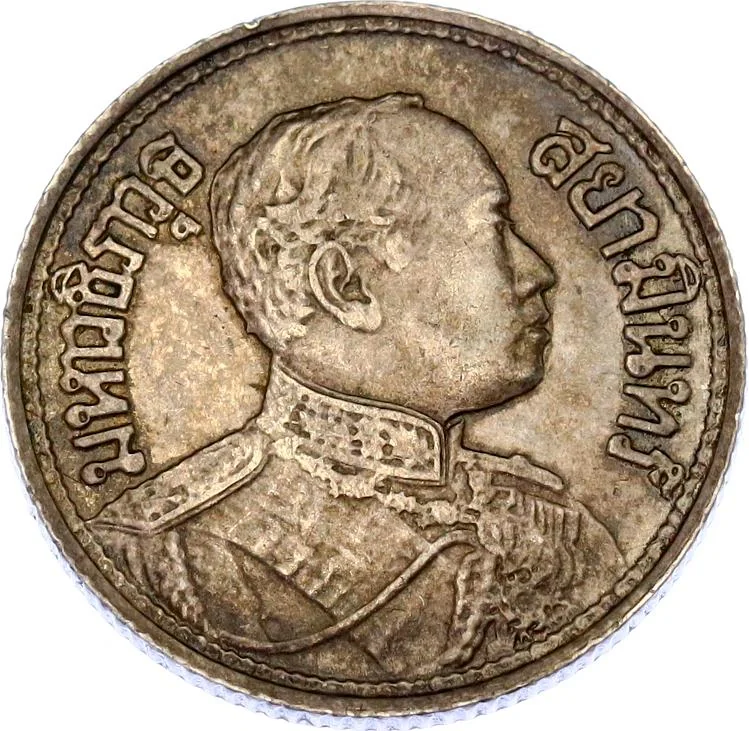
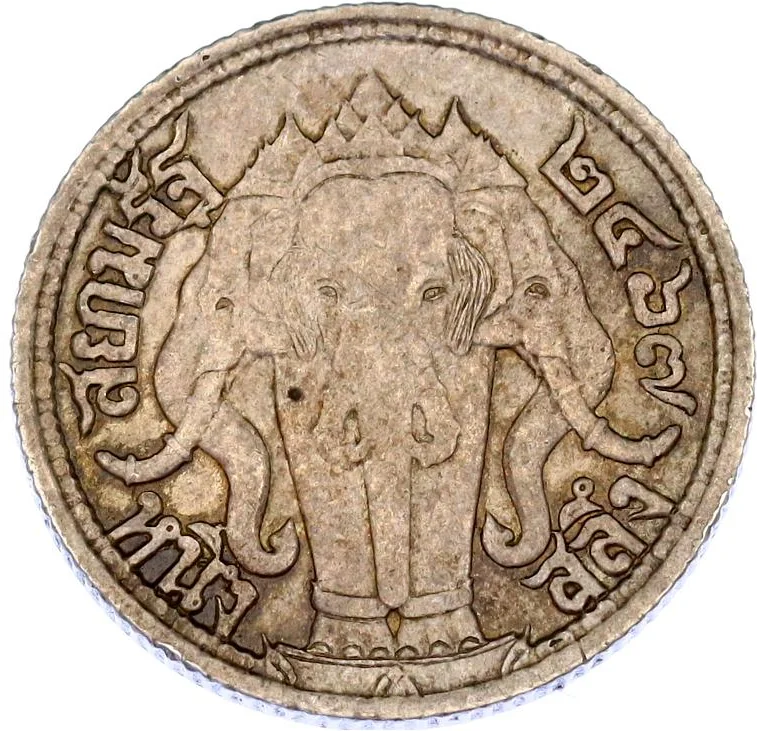
1 Salung – Thailand
Thailand
Context
Year: 1919
Thai Year: 2462
Issuer: Thailand 
Ruler: Phra Mongkut Klao
Currency:
(since 1897)
Demonetized: Yes
Material
References
Y: #Click to copy to clipboard43b
Numista: #114035
Value
Exchange value: 0.25 THB = $0.01
Bullion value: $5.26
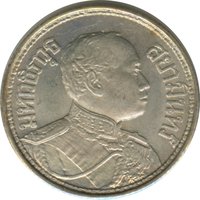
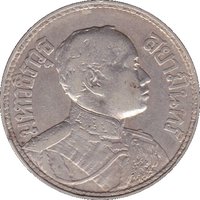
Obverse
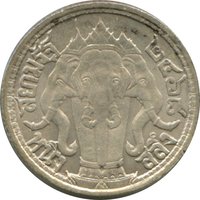
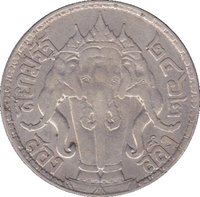
Reverse
Edge
Reeded
Categories
| Animal> Elephant |
| Mythology> Fantastic animal |
Mintings
| Year | Mint Mark | Mintage | Quality | Collection |
|---|---|---|---|---|
| 1919 | — | — |
Historical background
In 1919, Thailand, then known as Siam, operated under a complex bimetallic system that was under significant strain. The official currency was the baht, defined as 15 grams of silver, but the economy also relied heavily on gold sovereigns and British Indian rupees for foreign trade and large transactions. This system created instability, as the global price of silver was highly volatile, having plummeted during World War I. Consequently, the intrinsic value of silver baht coins often fell below their face value, leading to hoarding, melting, and a confusing multiplicity of currencies in circulation, including fractional "bullet" coins and notes from several issuing banks.
The immediate post-war year of 1919 was a critical juncture, marked by a severe liquidity crisis. The government, led by King Vajiravudh (Rama VI), faced a shortage of physical currency as the low price of silver made it profitable to export silver baht coins for bullion. To address this, the authorities had already taken emergency measures during the war, including the issuance of low-denomination "Emergency Notes" in 1915. By 1919, these paper notes had become a crucial but inadequate stopgap, and the government was compelled to consider more fundamental monetary reform.
Therefore, 1919 set the stage for a pivotal transition. The inherent flaws of the silver standard, exposed by post-war economic pressures, catalyzed a decisive shift in policy. Within a few years, this culminated in the Currency Act of 1928, which abandoned the silver standard entirely and established a gold-exchange standard, pegging the baht to the British pound. Thus, the currency situation in 1919 represents the final crisis of the old metallic system, directly prompting the modernization of Thailand's monetary framework in the following decade.
The immediate post-war year of 1919 was a critical juncture, marked by a severe liquidity crisis. The government, led by King Vajiravudh (Rama VI), faced a shortage of physical currency as the low price of silver made it profitable to export silver baht coins for bullion. To address this, the authorities had already taken emergency measures during the war, including the issuance of low-denomination "Emergency Notes" in 1915. By 1919, these paper notes had become a crucial but inadequate stopgap, and the government was compelled to consider more fundamental monetary reform.
Therefore, 1919 set the stage for a pivotal transition. The inherent flaws of the silver standard, exposed by post-war economic pressures, catalyzed a decisive shift in policy. Within a few years, this culminated in the Currency Act of 1928, which abandoned the silver standard entirely and established a gold-exchange standard, pegging the baht to the British pound. Thus, the currency situation in 1919 represents the final crisis of the old metallic system, directly prompting the modernization of Thailand's monetary framework in the following decade.
💎 Very Rare