

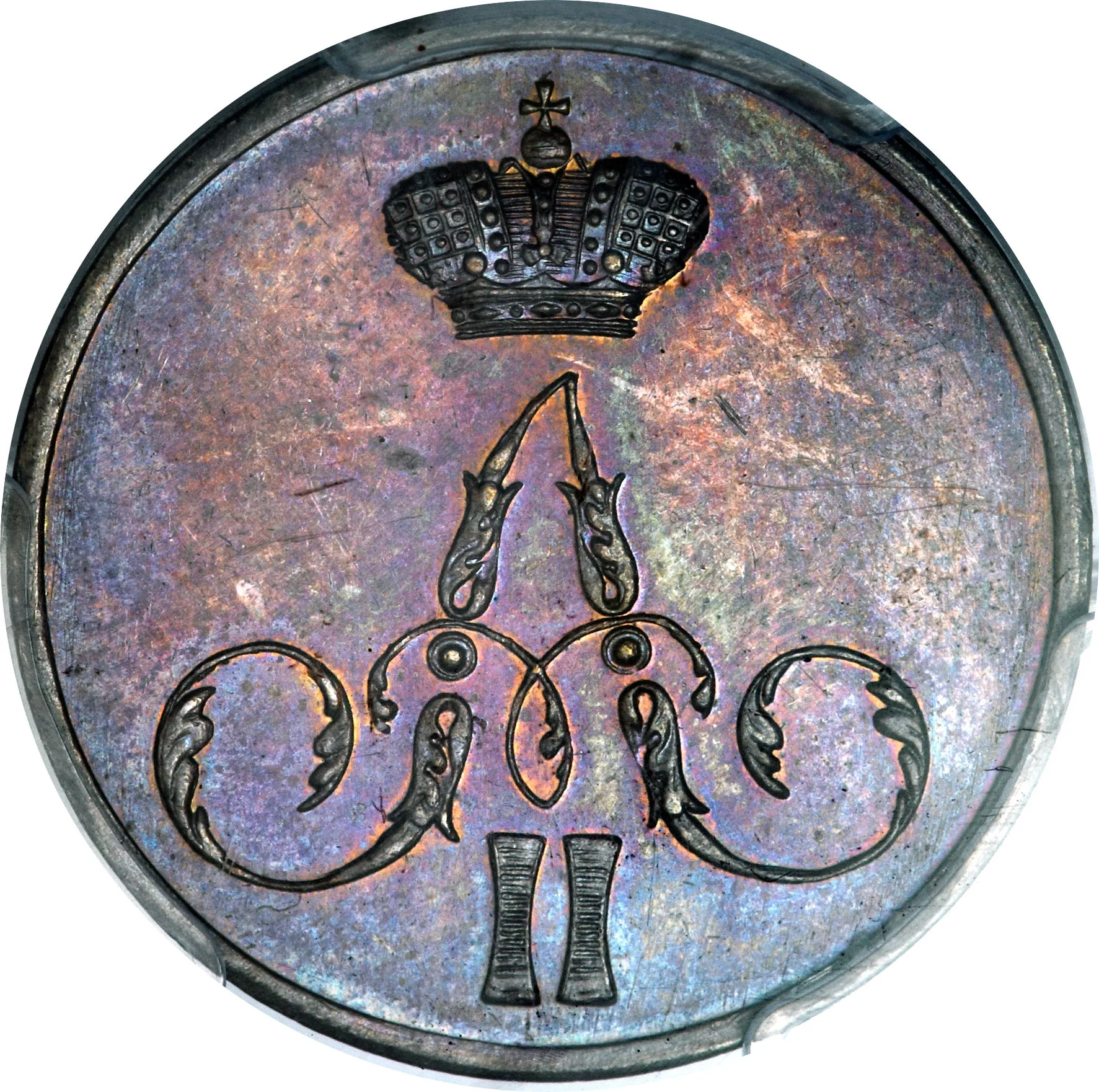
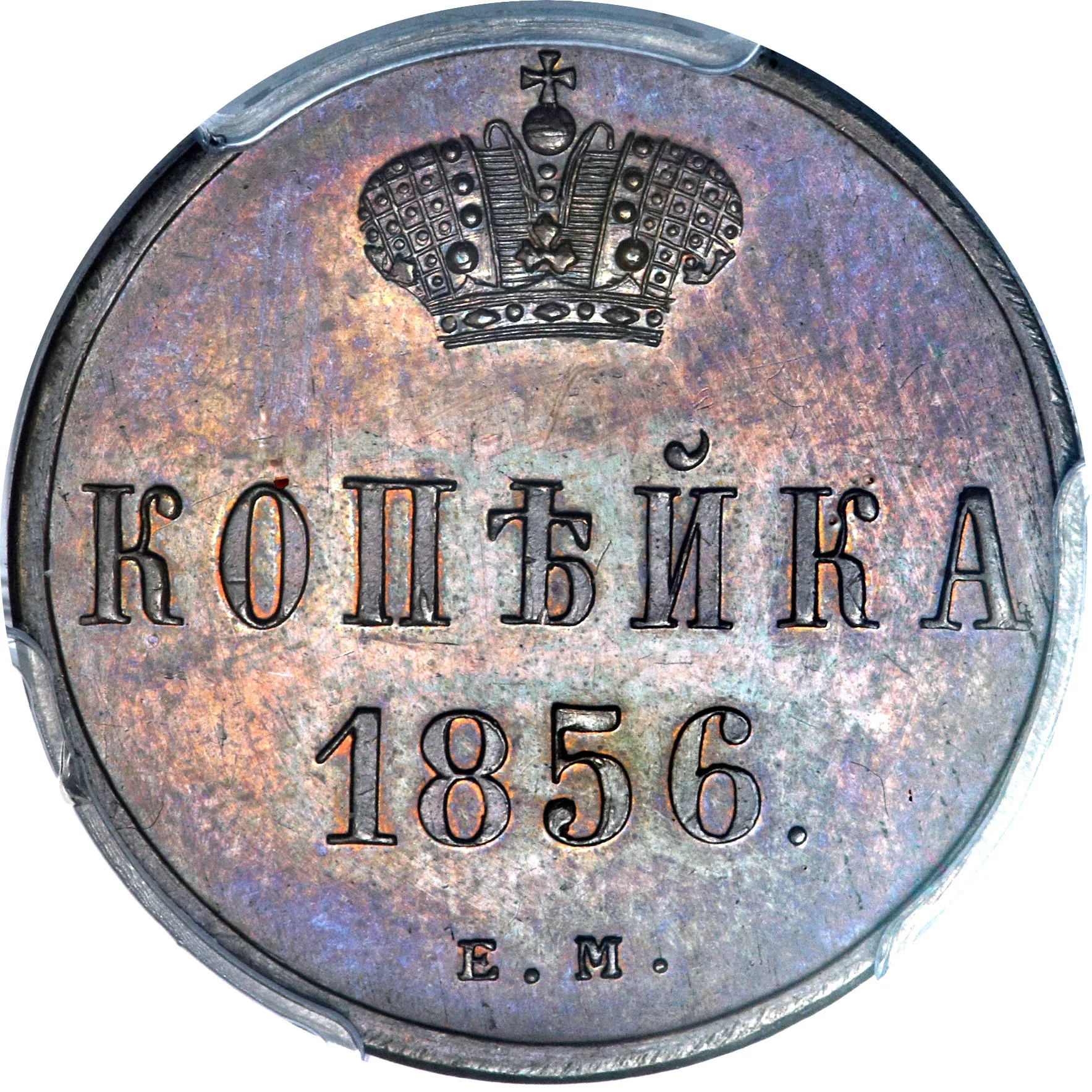
1 kopeck – Russian Empire
Add to wishlist
Russia
Context
Years: 1854–1859
Country: Russia
Issuer: Russian Empire
Ruler: Alexander II
Currency:
(1700—1917)
Demonetized: Yes
Total mintage: 65,384,700
Material
References
Y: #
Numista: #8295
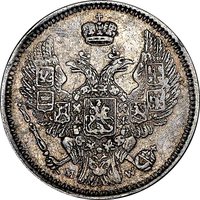
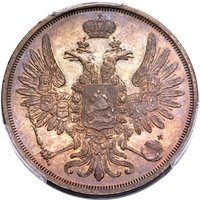
Obverse
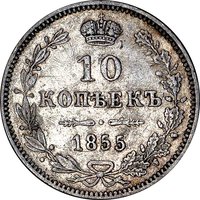
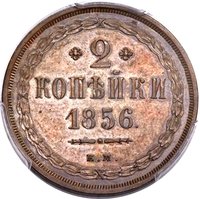
Reverse
Edge
Plain
Mints
| Name | Mark |
|---|---|
| Ekaterinburg Mint | E.M. |
Mintings
| Year | Mint Mark | Mintage | Quality | Collection |
|---|---|---|---|---|
| 1854 | Е.М. | — | BU | |
| 1855 | Е.М. | 24,593,500 | BU | |
| 1856 | Е.М. | 10,641,600 | BU | |
| 1857 | Е.М. | 5,359,200 | BU | |
| 1858 | Е.М. | 13,731,200 | BU | |
| 1859 | Е.М. | 11,059,200 | BU |
Historical background
In 1854, the Russian Empire's currency system was a complex and strained bimetallic structure, nominally based on both silver and paper. The state credit ruble (assignat or assignatsionny ruble), a paper currency, was the primary circulating medium, but it had been irredeemable for specie since the Napoleonic Wars. Its value fluctuated significantly against the silver ruble, trading at a substantial discount, which created a de facto dual-currency system. This instability was a chronic source of internal economic friction, complicating trade and state finances.
The system was under severe pressure due to the outbreak of the Crimean War in 1853. Massive military expenditures forced the Imperial government to resort to the extensive printing of paper assignats to fund the war effort, leading to inflationary pressures and a further depreciation of the paper currency. While the Empire maintained a theoretical silver standard for international trade and some large transactions, the vast majority of everyday economic activity relied on this depreciating paper, eroding public confidence and purchasing power.
Efforts at reform, most notably under Finance Minister Georg von Cancrin in the 1830s and 1840s, had stabilized the ruble's exchange rate and established a silver fund, but they had failed to restore full convertibility. Thus, in 1854, Russia entered a major European war with a fragile and inflationary currency system. The financial demands of the conflict would ultimately expose these weaknesses, setting the stage for the major monetary reforms that would follow under Alexander II and his Finance Minister, Mikhail Reutern, after the war's conclusion.
The system was under severe pressure due to the outbreak of the Crimean War in 1853. Massive military expenditures forced the Imperial government to resort to the extensive printing of paper assignats to fund the war effort, leading to inflationary pressures and a further depreciation of the paper currency. While the Empire maintained a theoretical silver standard for international trade and some large transactions, the vast majority of everyday economic activity relied on this depreciating paper, eroding public confidence and purchasing power.
Efforts at reform, most notably under Finance Minister Georg von Cancrin in the 1830s and 1840s, had stabilized the ruble's exchange rate and established a silver fund, but they had failed to restore full convertibility. Thus, in 1854, Russia entered a major European war with a fragile and inflationary currency system. The financial demands of the conflict would ultimately expose these weaknesses, setting the stage for the major monetary reforms that would follow under Alexander II and his Finance Minister, Mikhail Reutern, after the war's conclusion.
🌱 Common