

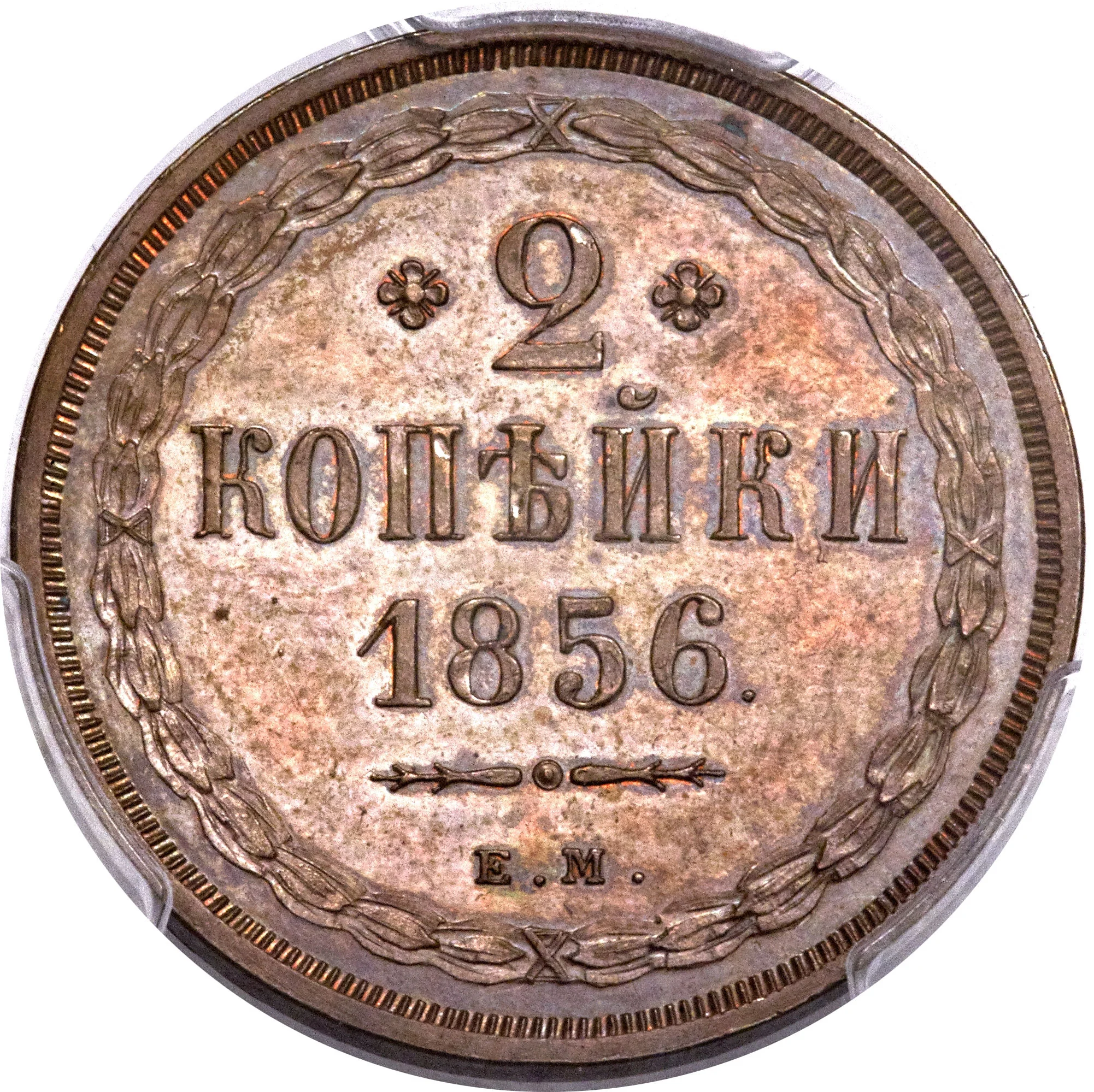
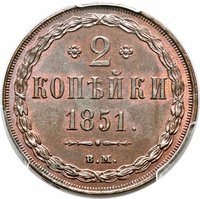
2 kopecks – Russian Empire
Add to wishlist
Russia
Context
Years: 1850–1859
Country: Russia
Issuer: Russian Empire
Ruler: Nicholas I
Currency:
(1700—1917)
Demonetized: Yes
Total mintage: 71,365,000
Material
References
Numista: #25901
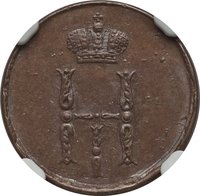
Obverse
Description:
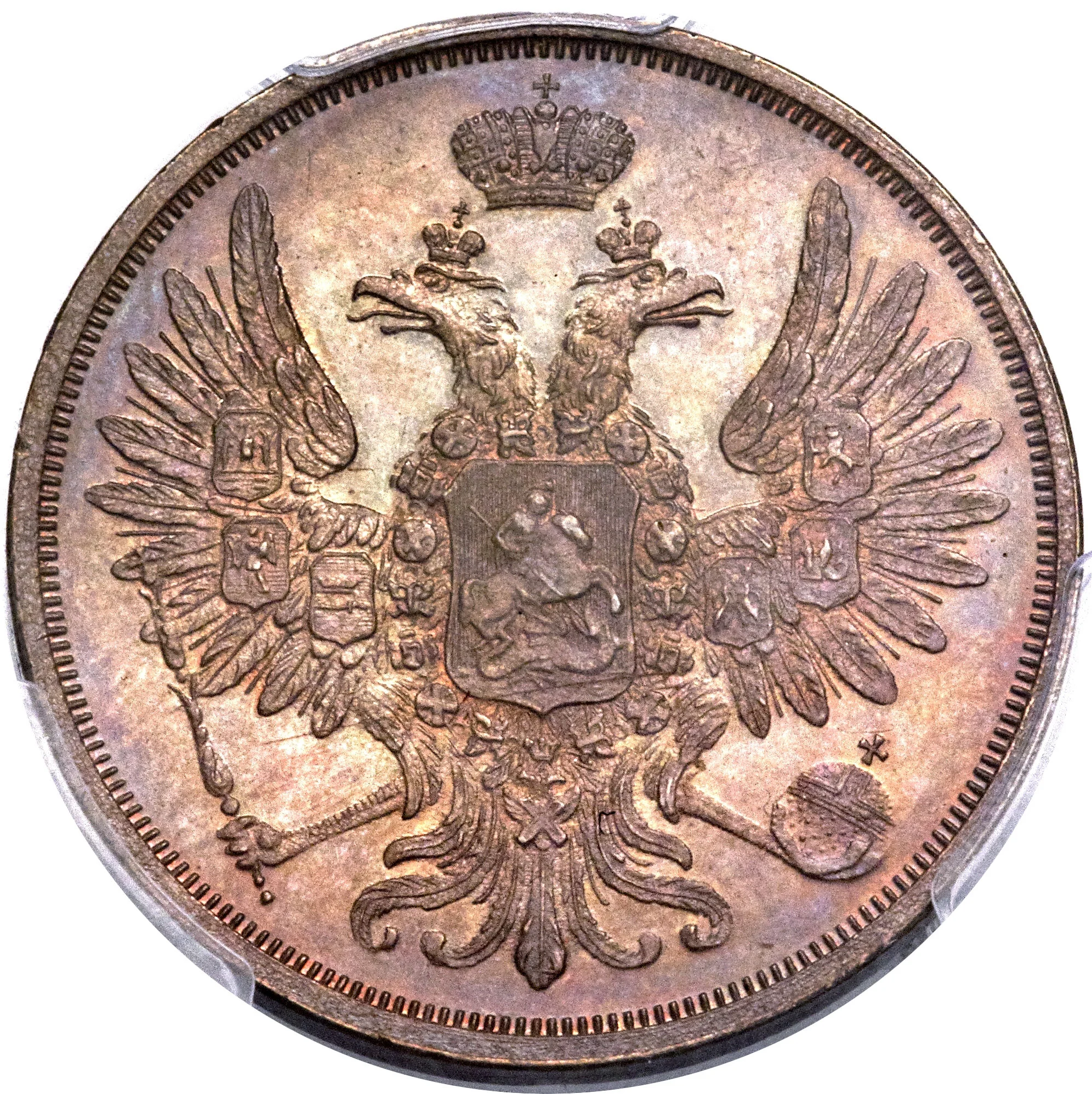
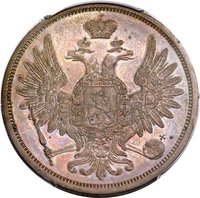
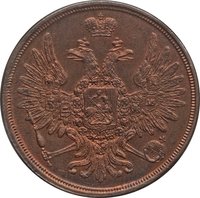
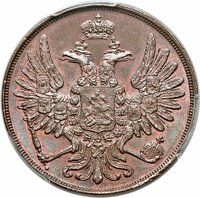
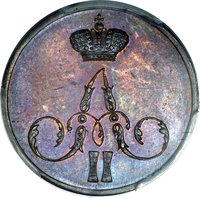
Crowned double-headed eagle.
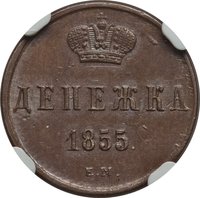
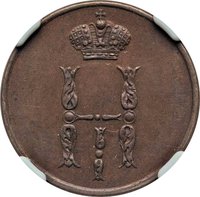
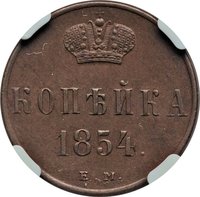
Reverse
Edge
Plain
Categories
| Symbols> Coat of Arms |
Mints
| Name | Mark |
|---|---|
| Ekaterinburg Mint | Е.М. |
Mintings
Historical background
By 1850, the Russian Empire's currency system was a complex and strained hybrid, officially based on the silver ruble but grappling with the practical dominance of paper money. The core unit was the silver ruble, with copper coins for small transactions and platinum coins briefly minted (1828-1845) as an experimental high-denomination currency. However, the true lifeblood of the economy was the assignat (assignatsiya), a paper ruble first introduced in 1768 to finance wars. These notes were not freely convertible to silver and had floated at a depreciated market value for decades, creating a de facto dual-system where goods often had two prices: one in silver rubles and a higher one in paper assignats.
This instability stemmed from chronic state budget deficits, primarily driven by massive military expenditures, including the recent suppression of the Hungarian Revolution (1849) and the looming Crimean War (1853-1856). To cover these shortfalls, the state repeatedly resorted to printing more assignats, which led to inflation and further eroded public confidence in the paper currency. While a significant monetary reform in 1839-1843 had attempted to stabilize the system by introducing a new paper currency, the "credit ruble," backed by silver and intended to replace the assignats, the fundamental problem of deficit financing remained unresolved.
Consequently, the 1850 financial landscape was one of fragile pretense. The credit ruble, though theoretically convertible, was in practice already beginning to strain under the weight of imperial fiscal policy. The system functioned, but with inherent weakness, widespread use of unstable paper, and a looming dependence on precious metal reserves that were inadequate for the empire's ambitions. This precarious situation would be severely tested by the economic demands of the Crimean War, exposing the need for the comprehensive monetary reforms that would follow later in the reign of Alexander II.
This instability stemmed from chronic state budget deficits, primarily driven by massive military expenditures, including the recent suppression of the Hungarian Revolution (1849) and the looming Crimean War (1853-1856). To cover these shortfalls, the state repeatedly resorted to printing more assignats, which led to inflation and further eroded public confidence in the paper currency. While a significant monetary reform in 1839-1843 had attempted to stabilize the system by introducing a new paper currency, the "credit ruble," backed by silver and intended to replace the assignats, the fundamental problem of deficit financing remained unresolved.
Consequently, the 1850 financial landscape was one of fragile pretense. The credit ruble, though theoretically convertible, was in practice already beginning to strain under the weight of imperial fiscal policy. The system functioned, but with inherent weakness, widespread use of unstable paper, and a looming dependence on precious metal reserves that were inadequate for the empire's ambitions. This precarious situation would be severely tested by the economic demands of the Crimean War, exposing the need for the comprehensive monetary reforms that would follow later in the reign of Alexander II.
🌱 Fairly Common